
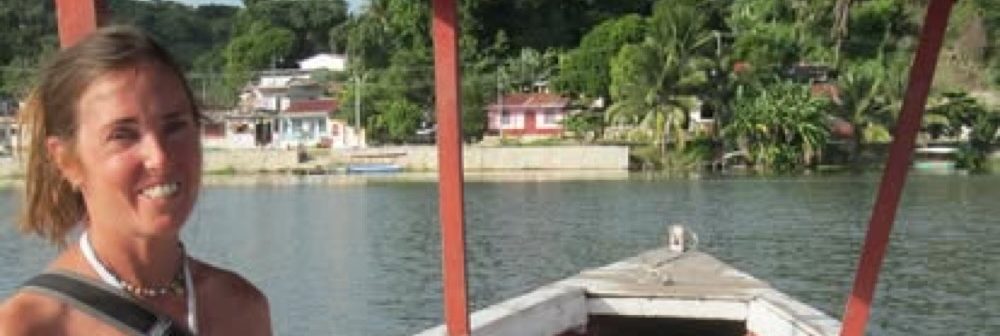
March 14, 2023. I arrived at my local airport in San Jose, CA with a few hours to kill. I was feeling sad about leaving home, and Shawn was kind enough to sit with me for while. I started a story about a hedgehog. I had started spontaneous storytelling with him a few years ago. I start a story, usually with Beatrix Potter type animal characters, and Shawn picks up where I leave off. In this way we trade plot twists until one of us does a wrap. The first time I spun a yarn, I was surprised that he was willing and able to catch the hot potato and pass it back. After our story hedgehog had a host of suitable adventures, I decided to check in. I had found out about needing onward tickets when flying one way to certain countries, in this case Panama and Costa Rica, from a fellow traveler. Prepared, I presented this ticket and overheard an exasperated woman pleading with the ticket counter.
I explained that she could buy an onward tickets for $12 or so. They are legitimate tickets, reserved under one’s name for a short time, usually 24 or 48 hours. As long as they are presented within this time frame, they meet the requirement that some countries have about one-way travelers to show onward travel. I showed her how to buy one, and she thanked me, greatly relieved. This had all started when she sent her surfboard ahead of her to Costa Rica before leaving her home in Canada. Unfortunately, the airline had messed up, sending the surfboard here to San Jose, California (SJC) rather than San Jose, Costa Rica (SJO). As a result, she had needed to buy two additional tickets, one from Canada to here, and then for the leg to San Jose, Costa Rica.
March 15. I found out her name was Heidi. Turned out Heidi and I were both on the American flight to Houston. We ran into each other and she thanked me for my help. She told me about her struggles with osteoporosis, which has made surfing impossible. Almost every time she goes out, she breaks ribs. This would be her last surfing trip to Costa Rica. She had sent her surfboard separately, but the airlines had messed up, sending it to San Jose, California (SJC) rather than San Jose, Costa Rica (SJO). I referred her to my dear friend Richard, a naturopath who has helped scores of people with every ailment under the sun. He believes that true healers help everyone, regardless of financial limitation. So he doesn’t charge.
When I finally arrived in Panama City, I was boiling in the 90 degree heat and thought I had lost Elefante. I went to the wrong terminal and only found out when I was going through customs. I was afraid my pack would be gone when I made it to luggage as I was very late. Thank the gods it was there. I could feel all 36 pounds as I swung it over my shoulders. I held my breath as I went through customs. I had dreaded the moment because I was afraid I’d be stopped for my supplements. With relief I made it through. After some difficulty I found the metro, not realizing it was the first day of the new line from downtown to the airport. Two newspaper press interviewed me, taking my photo and asking how it compares with other subways I had used. I recommended they make the purchase of a RAPI pass easier, perhaps a large sign in English. I wondered whether the photo byline would be “first gringa to use metro in Panama City airport”.
Needless to say, I was exhausted and practically melting due to the terrible two: humidity and heat. I rolled up my pants and kept my pack near as I steadied on the metro. After only one stop, a very polite local started talking to me and suggesting that he could be my tour guide/chauffer around the city. He was getting off a few stops away at San Miguelito, but we made a quick and lasting connection. I would find out later that he seemed prone to accidents, and never found out the extent to which the $80 he asked for was put to good use.
He told me how to transfer and where to get off, and I was happy to make his acquaintance, my first friend in Panama. After he disembarked it took me 40 more minutes to reach my destination, Cinco de Mayo station. I felt out of place lugging my giant pack and felt like a beast of burden. I swore I would bring less next trip. I came out of the dark station into the light and my senses were bombarded by strange smells and derelict buildings. I had planned to walk the mile or so to the hostel, but wasn’t sure whether it was safe, and certainly couldn’t run if someone wanted to rob me. So I started asking about taxis. $5 was the going rate, but that seemed exhorbitant for a mile trip, more like NYC prices. After about 5 minutes, a young man indicated that I should take a particular taxi, which he said had agreed to charge $2.
Before boarding, I bought a bag of green sliced mango. It was a long wait, maybe 5 minutes, before the woman gave me the four dollars in change. I wondered whether it was standard operating procedure to rip tourists off. Wouldn’t be the first time. I got into the taxi and watched as he wove through crowded streets lined with people. We arrived in about 5 minutes, and the driver demanded $5 and I felt deceived. Normally I would just pay, but after my struggle with finding a $2 taxi, I was mad. I started arguing with him in Spanish and a guy with a machine gun came over and asked what was going on. I would find out that tourist police are on every corner of Casco Viejo, machine gun at the ready. I explained the situation. The taxi driver spat keep your money and threw the $5 at me. I didn’t want to a free ride and placed the agreed upon fare of two dollars on the passenger seat.
My hostel, the Magnolia Inn, was a block away. A majestic white villa nestled in the most historical part of Casco Viejo, it gleamed like a pearl in the sun. I would learn that locals flock to Casco Viejo to enjoy rooftop drinks overlooking the twinkling lights of Punta Pacifica. On weekends, traffic jams the narrow road into the historical neighborhood. I rang the bell, and Ximon let me in. He and Eduardo were working the front desk. They were very helpful and gave me a map of the area, explaining where it was safe to walk. I felt like I was in a gringo ghetto, having to pass through a gauntlet to get to the rest of the city. I made it my job to find additional routes that were passable. Ximon recommended that I try a local ceviche place called La bendicion de Mariscos. It was directly across from the very expensive fish market where it seemed only tourists ate. I strolled around the neighborhood and then to the ceviche bar, ordering the Mediterranean, a mix of seafood, and relaxed under their terrace as I sipped a passion fruit smoothie. I was relieved that no one was smoking.
After finishing my meal, I did a fast walk through Santa Anna. Fast because night had fallen and I’d been warned that the district was sketchy. I wanted to stretch my legs after my long plane flight. Behind the fish market I came across a pretty park, and thus discovered the Cinta Costera, a 4.3 mile bike and walking trail lined with parks and gardens stretching from Santa Anna to Punta Paitilla. It was a lovely evening and the best place to catch a breeze. It was still in the high 80s at 9:30 pm.
On my way back, I spied a band of coati (they look like skinny raccoons with possum like muzzles), scavenging for food scraps. Once in Casco Viejo, I slowed my pace and made my way through the lovely main plaza, also known as Independence Square. I sat for a bit, and was approached by an eager young man named Jesus, who was a waiter working in the fancy hotel on the square, Central Hotel Panama Casco Viejo. He was very friendly and offered to give what I understood to be a free tour the next morning. Upon returning to the dorm, I found out that I was relegated to the top bunk. The frames of the bunk beds were metal and very wobbly. I didn’t think I’d be able to make it up and down at night, and hoped I wouldn’t need to pee. It was 11:30pm and had only dropped to 82° outside. My dorm mates apparently didn’t like circulating air, as they had turned off the ceiling fan and the air conditioning. The room was stifling. To make matters worse, my bunk mate coughed incessantly and slammed the door each time he headed to the bathroom, about every half hour.
March 16. I didn’t want to be late to my tour with Jesus at 9am and rushed to Independence Square. I was disappointed that he had sent someone in his place, and his sub indicated the tour was $55. I told him that Jesus had represented it as a donation only tour. I feel bad for him with my current understanding, as he probably had been traveling for 2 hours to get there. This I would only grasp after trying to get around the city on my own. I decided to assuage my disappointment with a latte. I had identified a tattoo parlor near the hostel that had been talked up, but didn’t like their espresso machine. So I headed to Unidos, which was known to be a reputable cafe throughout Panama. The latte was excellent. I would hope so, at $7 USD. The espresso machine appeared to be under the counter, with only a lever appearing. When pulled, crema magically appeared.
I headed back to the hostel to eat breakfast. I had brought dried fruit and nuts from Trader Joe’s, which had almost been seized at the airport as contraband, but was tired of eating squirrel food. I had been not to drink the water at the hostel, so headed to El Rey, an upscale grocery store that catered to tourists. I returned to eat some granola and chat with the maids, to whom I took instant liking. The feeling seemed mutual, especially after I offered them milk for their cafecitos. I talked for about 10 minutes before heading out to the palacio municipal, one of the most beautiful buildings on the main square. I am a sign reader, and almost nothing daunts me. So I spent a rather torturous 3 hours trying to understand their disorganized presentation on the history of Panama, in Spanish to boot. It seemed paradoxical that such a chaotic, unaesthetic exhibit lived in such an opulent building.
From there I headed to the canal museum in a beautiful building that had been the headquarters of the canal construction starting in 1911. It was an excellent museum and I was worried that I didn’t have enough time to see everything. I asked if I could come back the next day and they said not without paying. Given that it was $10 person, I wasn’t here to pay twice. It was a an excellent exhibit and I learned a lot about many things, including racism and how it manifested in differences in income and treatment of American, Panamanians, African Antilles, and Europeans.
March 17. I wanted to see the canal, and was told that the cheapest and best way to do that was to take a bus to Miraflores locks. It turned out to be a long exhausting trip on public transportation, the first of many. I walked to the metro stop at Cinco de Mayo, took the metro to the Allbrook mall where I spent half an hour trying to find the bus to the locks. I ended up in the wrong queue, then called a local car for hire (a local woman had told me about the service), and almost canceled it when I found the right bus, but didn’t want to stiff the driver. I was already on the bus when I changed my mind and jumped off to find the private driver. He was very nice and told me a bit about Panama City on our drive. It wasn’t very far, maybe 5 miles from the plaza, en I got to the locks I found out it was $18 to see the IMAX film And the museum was closed till 2025. I really wanted to see the interactive museum and decided that the other was not worth the money.
Then I walked around the area where the fenced in jungle was and walked to the highway and then started walking back when I met Emilio who was driving Uber gave me a ride back to locks and we talked and he gave me his number and said come for food later. I headed back to the mall and then took the metro to Santa Thomas and walked on Cinta costera out to a section called San Francisco to the union bar on the point. I walked there because I met a nice family. She was Panamanian he was from New York and he runs triathlons and we talked the whole way and then they laughed and said they were going to wedding the next day in Casco Viejo at church Merced and I walked around a bit and then I returned and met Emilio for dinner and talked to him all evening until I was exhausted and asked for a ride at 11 and got scared because he’s been drinking and arrived back to the hostel where I spent the night and got a little bit of sleep.
March 18. I had seen the Mola museum the day before, and was curious about what they represented. Here in Casco Viejo there were many indigenous women selling molas to tourists and I wanted to understand their meaning. I went in and found out that it was free, and eavesdropped on a tour that was been given of students. It was a very interesting museum, and I learned a lot about the indigenous people that have dominion over the San Blas Islands and nearby coast. There were many examples of molas, and other indigenous artwork. I learned about their culture and the belief systems involved in their making. There was interesting lore about a mythical female progenitor who essentially gave power to and informed a Nella, a female shaman of sorts. Upon leaving the museum I did a walking tour of historic buildings in Casco before heading to the church at Plaza Santa Anna. I liked to watch the people hanging out in the square.
Magnolia Inn had grown on me. Other than having to share a room, it was great. I reluctantly organized my things and put my backpack in their storage. Joseph had found an Airbnb for me nearby, and I had meant to go to the hotel at 2pm, but got caught up exploring Santa Ana and looking for an ATM. I went to the museum of Afro Antilles and met a larger than life local woman who took me by the arm to the fish market and root market. She was of Afro Antilles origin and spoke English with me and Spanish to the Chinese fishmonger.
I was struck by her confidence, sense of self, and presence. I really wanted to take photos of the roots and bark being sold at a few kiosks, and ask the uses, but didn’t want to make them feel self-conscious. I made my way to a cheap dollar store where I bought an umbrella and T-shirt. I was craving ceviche and headed back to La Bendicion Mariscos. As I ate my mediterranean mix, I watched a recently released karate kid, and was very impressed by the dedication and prowess of the young African-American actor. I finally tore myself away from the TV and walked around Casco Viejo for a few hours, waiting for Tamir and his girlfriend. I’d been waiting all week to go to the I love Panama chocolate museum/store. I was disappointed to find out that they hadn’t built the museum yet.
I had a really interesting discussion with the young man who started the idea of promoting Panamanian chocolate. He is interested as am I in protecting what is left of the biodiversity in Panama, and felt that that would be a good way to do it. He said that most Panamanians don’t appreciate the preciousness of their native land. He got inspired to try to do something to protect what’s left of the natural world in Panama while following a biologist as a photographer. He told me about a man who is dedicated to saving the Jaguar in Panama and has dedicated his life to educating people so as not to kill it. It rained hard while we were talking, as it had when I was in the canal museum. I was amazed how hard it rained.
I bid him farewell, and left to meet Tamir and his girlfriend. He was coming to get the $20 I had promised him, which became $80 by the end of the night as I gave him to his appeal to help him buy a taxi. I felt conflicted about giving him the money, and felt pressured to do so. I hoped that his promise to give me rides to Portobello and Gamboa would manifest. It was nice spending time with them. We ended up walking along the coast on a walk that both of them had done multiple times as kids, and ran into a folkloric group dressed in costumes representing all regions of Panama.
After Tamir and his girlfriend left to catch the last metro back, I watched a crazy wedding celebration of the well-heeled in the poshest hotel in town. It was fun watching them goofing around, dancing wildly, and getting drunk. I wasn’t the only one snooping. Panamanians walked by and gaped as the wedding party danced for hours, completely ignoring the huge wedding cake and party favors.
March 19. I woke at 11 to an alarm. It was quite loud the night before, a Saturday night in Casco Viejo. It had been my one chance to sleep in a nice room. The bed was hard, and nothing much fit in the room besides the bed, but it was really beautifully decorated. Loud construction was underway in the street behind the room, and I was lucky it was a Sunday morning. The courtyard was filled with plants and a very chlorinated pool, which was so full of chemicals that I didn’t dare enter. I left my things in the room but accidentally locked the wrong door lock and couldn’t get back in with the key. The hotel staff, which were the same as those at the hostel, and my friends, said they would work on it and then I should return in about 20 minutes.
I headed to the I love Panama chocolate place around the corner with whom I’d jawed about Sustainability the night before. Unfortunately, they were busy and the Guayaba-filled they’d recommended me to try hadn’t arrived yet. They told me to come back in a few hours. I headed to the churches of Neri, Saint Francis Assisi, and Plaza Bolivar. Both churches featured extensive crèche dioramas. The dioramas came from the gardens of wealthy Panamanians, who would have them set up at Christmas time. Many were donated to churches for permanent exhibit. At Neri, I spoke with a very kind nun in civilian clothing. She reminded me of Elza Hinostroza, my Peruvian friend who owns big basin café in Saratoga. I liked her and appreciated hearing about the renovations.
Naciminentos are called Belen meaning Bethlehem in Panamá. Assisi church had a big Christmas diorama display inspired by a visit to Minnesota in December. It was a surprise and fun to see all of the figurines and houses. I also enjoyed the art exhibit on the second floor of the church, as well as the lovely blue stained glass windows. I wanted to head to the Bio museum in Amador but wasn’t sure I’d have enough time to get there walking as it was a few miles through dangerous part of town. I used the inDrive application to call a driver and ended up waiting an hour while three agreed and then cancelled. I found out that Amador is very crowded on Sunday afternoons, and the drivers were probably worried about getting stuck in traffic.
I started walking to the museum on the Cinta Costera 3 and finally had a driver from the In Driver app accept my request. A Peruvian lady whom I’d met in Casco Viejo had recommended the app. I’d spent 30 minutes the night before walking with her family. The driver was nice and told me not to walk through El Chorillo, which I ended up doing on the way back. I made it to the museum by 3 PM, which barely gave me enough time to see the exhibit, although they closed the museum earlier than 5 to prepare for an event.
They had an audio guide, but I didn’t have time to listen. There was a section on which plants and animals in Panama were endangered or extinct, as well as the movement of flora and fauna between North and South America, and the geologic process that created Panama. I enjoyed the section which explained the history of human habitation. I wasn’t able to see some of the more interesting exhibits on the natural history of various species, though I did learn about important cultural events in Panama.
When I left, I walked down the canal and took some photos of the sunset, and headed towards Isla Flamenco. Unfortunately, during the walk, I lost my neck scarf which contains polymer clay that kept me relatively cool by staying wet even while very hot outside. I really enjoyed the gardens planted by the museum. They’ve done good work there. On the way to Isla Flamenco I got very hungry, and bought street food, chicken, grilled over kerosene, from a couple with a small cart. I broke down and bought expensive ice cream for the Ron, which may have been the source of the runs later. I had told Emilio I would meet him at Magnolia Inn in Casco Viejo, but couldn’t find a bus. I called and asked if he could pick me up. He was angry and shamed me. I felt like a kid back in my dysfunctional household.
I picked up my backpack and said goodbye to Eduardo and Ximon. While there, I overheard a biology student from Oregon university talking about working with sea turtles. We went back to Emilio‘s and I had a lumpy sleep on the couch. I left the doors open to get air, but it was so loud from the main road between and construction of the hospital that I finally closed them. I had a very troubled sleep.
March 20. I woke and joined Emilio for breakfast. I had my granola and he had fried sopapillas which I did not want. People eat a lot of fried food here and I don’t like it. We had a nice chat and about 1130 I decided to head out to park a Metropolitano. I bought an empanada and walked there. It seemed a little dicey in some areas where there were auto mechanics and recycling shops, add metal, recycling, and garbage. But I made it paid. My fee convince them that I was a Panamanian or that I lived here for a year and then sit out on the trail. I met some Germans who showed me a sloth in a tree. And then I continued walking up the hill on the trails and meandered around. I asked the Ranger about another sloth that was in the tree with his baby, but I could barely see it. I climbed to the top with a German college student who just started an exchange program. She hopes to do some extracurricular activities.
On the way down, I spotted a toucan and saw a sloth hanging from a vine. It hung there for over 10 minutes and didn’t seem to move. I wondered how it could be so strong. Finally, I walked out of the park and went to the mammal trail. About 530 I decided to catch a bus to the Vis Argentina neighborhood and caught a bus to the University of Panamá. I walk to campus to the neighborhood, which has a strip of trees in the center and a park and few cool places to i decided not to buy food there because it was pretty expensive, but read reviews for the best Gelateria in Central America and had to go. It was very expensive and the server gave me a big scoop of chocolate and two tiny scoops of the other flavors. It wasn’t worth it. I tried to walk back to Emilio’s house via the Cinta Coasterra, but couldn’t find my way to the shore and ended up on the freeway. I walked next to a person who was sleeping on the bridge. A guy at a hotel told me to turn around.
On the way back I saw two women street artists juggling and clowning at a stoplight. It was the first time I saw something like that here. I walked through the downtown back to the coast. The downtown is not pedestrian friendly, as it is very built up, but I was able to find my way down to the coast. It was strange walking there after being in the much more Panamanian part of town, Panama viejo. I arrived back at the apartment and had a nice dinner with Emilio and set up a bed in his office. Unfortunately something didn’t agree with my stomach, probably the tap water, and I had diarrhea all night. I didn’t get to sleep till 3. Needless to say, I am very sleep deprived after being in the hostel for four nights. I’m still uneasy about giving Tamir $80 to help him buy a taxi and probably won’t get rides as promised. I hope he was honest with me. I had decided to give him 20 but he talked me into giving him more.
March 21. Happy spring! I’ve lost track of everything from St. Patrick’s Day to the first day of spring. The temperature is always 90 here, and about 95% humidity. I’m sweating so much that I don’t pee even though I’m drinking water all day long. I’m not big on the tropics for that reason. I like variability in weather, not the same thing every day.
I woke up late not having slept well. Emilio was gone. I was extremely worried that I was locked in because he locks his gate and door and I can’t get out without a key. I thought that he had left for the day. I called in a panic. He finally answered and said he was coming back. I washed the dirty sheets and put my things away and had granola. Around 1130 he offered me a ride to Ancón hill as he was headed to his bank in nearby in Albrook. He dropped me off on the freeway, and I proceeded to run across 2 four-lane highways. Panamanian don’t stop for pedestrians. I headed toward the hill walking through a neighborhood where many Americans lived during our control of the canal. It’s a really pretty area. The colonial style houses have big Gardens with grass that’s cut short as a golf course. I started walking up what looked like a trail but it was full of palm fronds and other debris, and I could barely get 10 feet, so I decided to turn back and headed further along until I came to canal zone buildings. From there I’m headed up to the guard house for Quarry heights. Walking in there felt like going into another world.
There was a guy selling palettas. The houses were white with intricate wooden carving, more beautiful than any. I’d seen thus far. They were beautiful gardens and spacious promenades. Well, I didn’t know was that I wasn’t allowed to walk in that area. High security apparently. looked incredibly beautiful. The guards yelled at me and started coming towards me. I didn’t wanna take any chances, so I headed back. I told them I was uncertain of how to get to the hill. Which was true. They directed me to the left. I enjoyed the walk and made it to the top without seeing any animals as I had hoped. I wasn’t that impressed by the view. I had seen much better view at the park Metropolitano. I ran into 2 tourists heading down the hill Mark and Julius. They has a rental car, and were heading to Amador. I asked if I could come with them as I had lost my cooling scarf there the day before and hoped to find it. I knew it would be a needle in the haystack. I said I would walk down with them, but they said don’t miss the climb to the top, as they weren’t sure where the car was, and thought it would take them a while.
There was one house that had a particularly beautiful garden, and all the birds in the area seemed to be hanging out in a large tree next to it. I was glad to see that at least one person in Panama cares about conservation. I met Mark and Julius at the gate to quarry heights and we drove to Amador. I showed them a cheap place to eat called Mi Ranchito that Id seen the night before. We all had hoped to go to park Culebra, but it was closed. While they ate, they told me a bit about their journey as crew for boats. They were crew on a boat from Guatemala on the Caribbean side, and stopped in the Bay Islands off Honduras. They suggested I make a profile and try to crew. It sounds glamorous but being a sailor isn’t all it’s cracked up to be. They offered to take me with them to Santa Catalina island and Bocas del Toro. I was very tempted, but I told him I didn’t have my backpack and they replied who needs things. The main reason was I wanted to let Emilio know. I wished them a good day and walked to Isla Flamenco looking for my cooking scarf. After 45 minutes I gave up and asked if I could get a ride back.
They dropped me off near the overpass to Casco Viejo and I walked back and then walked around the old town for a number of hours went into some churches, saw some colonial church art, which was nice, didn’t make it into la Merced, which has a museum, but ran into the very sweet woman who works at Neri church again, and met a nice French woman from Brittany with whom I spoke. I met her when I was speaking with a guy who is working for his friend who just open lot Divina Comida en bolivar Square. He is an is Muslim from Columbia in the coffee growing region. It was interesting talking with him. He said he teaches English most of the time. I went back and said hello to Ximon at the hostel. He is from Venezuela and was telling me about having his tools robbed three different times. I asked him whether he came here to avoid the violence there. He said that he liked it better here. Another hostel employee, Eduardo, told me about living in the canal zone and having to give up his house and about the student protest in 1968. Ximon is a very hard worker and was very busy so I didn’t talk long.
I got some Chinese dumplings and then walked back to Emilio‘s via the Cinta Coastera. it was a nice evening but I sweated a lot today. The trade winds from the north east blow up until April. So the nights get a little bit cooler. Thank God. I guess in the rainy season that’s not the case. I got back and wrote my blog and talked with Emilio a little bit. He told me about his cats owner, who he thinks is a prostitute. We talked about prostitution for a while. He doesn’t think that it’s a problem for the women who work. He says it’s easy to spread your legs and in the casino he frequents they get paid $200 per act. I disagreed and said that many women don’t have a choice and are limited in what jobs they have the opportunity to do. I was exhausted and finally went to sleep about 1130.
March 22. I slept in until 10 or so. It was the first deep sleep I think I’ve had this whole trip. I had a dream about Hala and Shawn being in bed together and I got jealous. I woke up and spoke with the indigenous man who helps Emilio. He’s from Chiriqui. We ended up talking about his grandfather who owned a farm and had cows horses, pigs, chickens, roosters, doves, as well as many fruit trees, and a big vegetable garden. I asked him to help me find my mouthguard and he did. It was a miracle. It was under the couch where I had my things in the corner in a very dusty corner. Shockingly he was able to see it. I gave him a hug and asked him if it was OK. Then we had a nice conversation in Spanish about life here.
He said he’s going back for Semana Santa to his town. We talked about where he’s from and the beautiful places there. I wasn’t clear about where he would recommend going, but it was really nice to talk with him. I ended up adding to the soup that Emilio had made cutting up a bunch of my potatoes, onions, garlic having some stuff. It felt good to cook some thing. Finally around 130. I headed up to the bus stop on 45th St. and waited for an inordinate time. I was talking with a Colombian girl who moved from Cali with her mom. She was nice and we talked for a while about life here and how she has more opportunities than she did there. It took an hour to get to Panama Viejo with the bus. From there, I paid for the $10 for his fee to look at the ruins and entered the site and began looking at things. It was really interesting. I wanted to make sure I had time to see the museum so when I got to the area, I went in and read as quickly as possible. It talked about The history of the formation of the city the cast system how people were organized the reason that the pirates were able to invade how the city was laid out the role of religion, the role of slaves and Friedmanand creole’s – quite a mix. Creoles and Spanish made up 10% of the population and the rest were slaves.
There was also a an exhibit about Jews who converted to Christianity in order to survive, but it was closed. There was some really interesting information about burials in both jars and laid out. There was one woman in particular, who was very important and was buried on top of tens skulls more than 700 years old and might have been ancestors. she was also buried with many riches and a jar on her head intended for her. Indigenous people opened her tomb hundreds of years later, and added some items and refreshed the grave. They also showed how a wealthy person would have lived at that time with the private quarters on the second floor, including a platform where women only were allowed, mostly doing sewing and embroidery. Men had to be invited in order to get on the platform.
On the first floor was the merchandise and sales and in the back was the office where they would show a very wealthy patrons expensive wares. The list of items that were available was pretty extensive including a lot of spices. When the pirates looted Panama City in 1671 the Spanish thought they wanted to populate the city, so they burned it. The king of Spain said there must not have been much goods wealth lost here because very little of it was registered, meaning that the majority had not actually paid the tax that the Spanish government charged for items shipped. At the end I walked around the ruins until about 6 o’clock and had a good time reading the signs and walking through the stones. It’s a beautiful site and I was impressed that it was in as good condition as it is.
There’s a lot of garbage on the edge of the estuary. It’s shocking how much garbage there is. Lots of sea birds were in the mud flats and they’re trying to reestablish the mangroves on the edge and plant certain trees in the center that that are similar to those that were found at that time. However, most of them have died, and I don’t much effort made in the establishing them. It’s been 20 years and nobody’s even tried to plant new ones. They were also supposed to plant mangroves, but they didn’t and in fact, some of the mangroves affirmed, perhaps, by the people who live in very poor neighboring barrio, who lives mostly in hammocks and shacks. live in shacks and hammocks. I took my time walking through the ruins and enjoyed watching the sun tipping lower in the sky. I took a bus to the downtown and walked from there to San Francisco, which is a nice part of town. I walked around a bit thought about getting gelato, but decided not to, and headed back slowly to Emilio‘s, enjoying the breeze on the coast.
March 23. The best laid plans of mice and men. I’m experiencing what it’s like to be a Panamanian. I just missed the bus today to Gamboa and the next one doesn’t come for four hours so I won’t make it back in time. I decided to explore the residential areas of aqua and Clayton instead. Two days ago, I lost my neck scarf filled with special polymer that stayed wet and cool in the heat. And last night I lost my night guard for my teeth. To top it off, I’m sleeping about 100 feet from a construction project for a hospital that’s literally going all day and night. There are 3 huge cranes and cement mixer trucks and nonstop use of jackhammers and honking incredibly loud truck horns all night long. And I have to wear earplugs during the day because taxis honk every 30 seconds on more to get your attention as do other drivers.
I’m sensorily overwhelmed. The best laid plans of mice and men: It’s ironic that the train that I was hoping to take is no longer running to Colon because it’s out of service. The museum I hoped to see in the Miraflores Locks canal is closed for the next three years, which I found out after taking a bus for an hour to get there. They charge $18 just to see the boats in the lock and watch an IMAX movie. I decided not to on principle.
Needless to say, I had a nice walk and enjoyed seeing some animals in gardens of houses near the jungle. It was nice to finally see some residential areas that had trees. Mostly what I’ve seen in town is not attractive at all. Before I left for the residential areas, I was in the mall trying to find a neck scarf which I finally did. I spoke with an Australian who recommended Sunglass Islands to me. We’ll see whether I end up going. It sounds like it’s complicated and expensive to get there.
Emilio told me that the dining table he has was one used by Pinochet. Given his love of Trump I’m sure he is proud of this fact. The chairs are certainly plush. He went to the US when Allende was elected because he didn’t want to live with a communist government. Ironic because I consider myself a socialist, if not a communist. He told me over the course of the four days that I spent with him about his life. His wife Irena died some years ago but as far as the state of the flat, it seems like yesterday. He first went to the US when he was 28 and spent a year there as a printer in New York City. He’s a big patriot of American hegemony and loves Trump.
He showed me a Halloween costume he made of Trump, complete with a suit and cap with his iconic strawberry blond combover. After being in America for a year, he returned to Chile and from there went to Panama where he met his wife Irena, of Dutch descent. He has a very cute cat named Miño who was rescued as a kitten from a garbage can. She is very skittish and didn’t seem to trust me despite my efforts. Emilio watches television for hours every day at a volume of 70. He has two 55 inch sets, one in his bedroom and one in his office. He was shocked that I hadn’t seen any American films. My daily routine was to talk with him for a half an hour or so in the mid morning, then leave for the day and return around 830 or 9 PM. It was in a fairly central location near El Congrejo and the Santo Tomas metro station.
March 24. Turns out there is 24 hour construction going on within feet of Emilio’s apartment. Cement trucks speed around, stopping on a dime just outside the room where I’m sleeping. The wall across the way amplifies the construction noise. Nevertheless, I roused myself at 830 and left for the Allbrook Terminal to catch a bus to Colon. I was lucky to catch one within 10 minutes. A helpful passenger told me she would help me find the bus stop in Sabanitas to Portobelo. Luckily, I quickly caught one of the crazily-painted Rastafarian buses with a bizarre horn blasting Punta, a kind of Caribbean music from this region. It’s always interesting to ride local buses. It was mid morning and the bus was filled with young students wearing crisp uniforms. It was fascinating to watch them acknowledge one another and the rapidity with which they jump on and off the bus. I noticed that locals, no matter how old or disabled, often end up standing on the bus, and jump on and off very quickly. In some cases, the bus only shows down. Americans would’ve taken 20 times longer. It’s a privilege to be slow and make everyone wait.
After a bumpy three hour ride, I arrived in Portobelo. It’s a beautiful historic port town on the Caribbean facing Isla grande, which is a 15 minute boat ride offshore. I disembarked from the converted school bus and walked up a road away to a hostel to ask about accommodations. I wasn’t planning to stay the night, but wanted to inquire for future reference. The woman said it was $10 a night for a dormitory of 8 and 170 per day to go to the San Blas islands. I’m surprised that it’s so expensive.
On the way back I saw a young girl probably five with a big smile and long braids dancing back-and-forth like she was doing the salsa. I saw a sign for soup and such and asked about it. It was way more expensive than I had paid in Panama City and I decided against it. In principle, I don’t like paying gringo prices. From there I headed to the church and took some photos. There is a tour of Taurus there. From there I walked to the fort and took some photos. A nice woman offered to take my photo and then asked to take a photo with me. I was honored. Then I walked along the street toward the other fort.
On the way, I saw a colorfully painted mural outside an art gallery. Ana Gonzalez, a Venezuelan woman, was very kind, and in Spanish told me about the Casa de La cultura Congo, a project of Fundacion Bahia de Portobelo. From the profits they offer free art and music classes to the children in the community. The gallery is full of self taught local artists and showcases the interesting mix of cultures of the people of that area, including the large number of descendants of former African slaves. It is a mix between the indigenous people, the Spanish, and the African slaves. The resulting mythology is reflective and includes supernatural beings, nature spirits, and oreishas or gods. I was tempted to try to stay at her hotel, as well as to eat at her lovely restaurant that fronted the sea. However, I didn’t know how much time I had before I had to catch the bus back, as I didn’t want to get stuck in Sabanitas just outside Colon without a ride back. I had been warned that people from that area didn’t like Americans. Not that I blame them.
From there, I headed to the other fort and walked through to the other side of the road but there is a monument and hid under a banana tree is rain came down. And I caught the street back and went to the bay and sat next to a bunch of coral that had washed up. I selected a piece and let the ocean love me. Since I had arrive 20 minutes ago, I felt like a big magnet was sucking my energy down into the Earth and I found myself unable to move quickly. My movements became very slow, and as I was sitting in that spot, I felt that I couldn’t get up. But fear of getting stuck propelled me, as well as my curiosity about a conservation program for children which Ana had told me about in the main plaza. I made my way there just as the clock struck 2pm.
There I met Jonathan Zelcer, owner a tour company called Truly Panamá. He said that during the pandemic, he reevaluated and decided he wanted to give back to the community and not just choreograph experiences for tourists visiting Panamá. Apparently has some very wealthy clients from all over the world and always asks whether they want to give back to the community or just having a relaxing vacation. He said that many of his clients already have their own philanthropic organizations that are very active. He offered me a ride back in a comfortable van to the city. We had a great conversation on the way back. We even talked about the holocaust because he’s of Jewish descent and I spoke about my relatives who were in various camps. We talked about the importance of history and remembering. In Portobello he was working with Reef to Reef planting new coral near Portobelo. They were offering a program for kids on reef conservation and included an art project. He told me about Jason, an American who lives in the mountains and is an expert on the local trails and flora and fauna. Before we left a group of women approached us about their work on empowering women and addressing domestic Violence.
The two hour conversation with Jonathan on the way back was a highlight. In the course of talking about what Panamá could benefit from, I mentioned Santa Clara County‘s renewable energy program and told him I would put him in touch with Tara Martin-Milius. I also had the pleasure to speak with the female artist working with him on the project as well as a young Costa Rican who is his operations manager.
Jonathan said he could drop me off in Casco Viejo, though I said it wasn’t necessary. As it turned out, his driver fairly chucked me out near Parque Metropolitano and I walked there hoping I could get in before it closed. It was lucky that I had walked in that area before, because I knew exactly where it was when they dropped me off. I got a ride with the national police to the park, and they made me talk to the security officer who said I wasn’t allowed in this late. The police asked where I was going, and I told them I was walking to the bus stop. I didn’t want to risk being in the park after hours.
I walked to the bus stop and headed to Vía Argentina where I had explored the day before. I walk through the university of Panamá which has some very interesting sculptures and memorial plaques. From there I headed to the Argentina, and ended up walking all around El Congressional. I found a really nice coffee place OK beautiful window and for you. It turns out the woman was trained at the culinary Academy, and I took a picture of her diploma. It was one of the few places that reminded me of quaint cafes in California. After walking for about 45 minutes to an hour I reached out to Erynn. It turned out she was staying in the neighborhood across from the park and we met there and had dinner at an expensive local Panamanian place that I had seen when I was there last. I ended up spending $18 on dinner which is a lot for me but it was nice to catch up with her.
She told me about her decision to move to Panama made in the last week after her visit with Loren and checking out the neighborhood where she was staying. She got a very nice Airbnb for $46 a night and I was envious. She had reached out to a gay couple as well, who lived in the area and were ex-pats. The neighborhood she was staying in, is very popular with American ex-pats. It’s probably one of the most liberal parts of Panama City. After our visit, I headed back to Emilio‘s and did my usual writing of my blog, taking a shower, and waiting until he turned off the television to talk for a bit. I was lulled by a false sense of tranquility as there was a break in the construction, but was rudely awakened at four in the morning. I moved my bed across the flat to a quieter location so I could sleep for a few hours.
March 25. I woke suddenly around 9:30 AM and took a shower did some writing and prepared to leave. I packed my things and had a nice chat with Emilio, who told me that life in Panama was like America in terms of how distant people are from each other as compared to Chile where families spend every weekend together. I told him that Polish immigrants to America are very similar. Because he is retired he gets to use the club Union for free. It is the most exclusive club in town, and offers a pool and gym, as well as game rooms and food drinks, and all kinds of other amenities. His flat which is quite large and car are paid for. He won’t go back to Chile because he could never afford a place in Santiago like the one he has. He told me to send a loaded, blond American between 40 and 50. I roll my eyes thinking about it. He’s about 75, can’t walk very well, and is very sexist. He’s also a very kind person which is what enabled me to stay with him despite his comments and shaming. I didn’t like his attitude at times.
He offered to give me a ride to a Albrook Terminal and I took it. We hugged each other, and I thanked him for his kindness. He recommended that I look for friend, Albertina Arias de Tejeira, canopy lodge, who lives in El Valle and suggested that I tell her I’m a friend of his, and see if she would let me put my tent on her land. I made my way to the bus terminal and bought a ticket and then stood in line and waited with some Canadian women. They had just arrived from the airport. I also spoke with a woman from El Valle de Anton. She asked where I was staying, and I said I didn’t know. She said she would call her brother and see he might rent out his house to me. I imagined that it would be fairly expensive, but waited to hear. Because the bus was so crowded and we didn’t stop or get out, I never found out whether she reached him. Unfortunately.
The route along the Panamá highway was very ugly. It took us 3 1/2 hours to reach our destination, and on the way stopped in many squalid looking places. The bus was packed with people standing, and as usual we were practically on top of one another. The driver drove as fast as he could and I wondered whether we would make it in one piece, particularly when we headed into the mountains. I had no idea where to get off, but decided to get off at the center. When I arrived, the guy helped me with my backpack and I walked around asking people where I might be able to stay.
 Lisa Karpinski