
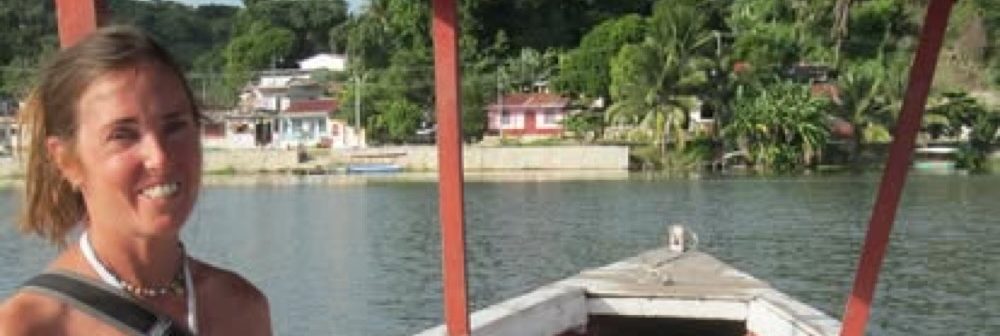
July 1, 2022. Given that I hadn’t gone to sleep till 1 a.m., I had a better sleep than expected. I woke with a start, worried Roel and Coosje were waiting for me to eat out of politeness—they were. We had a leisurely breakfast outside. They had a lovely garden, front and back, and I was charmed by their multi-story condo. It was compact yet comfortable. Roel is quite a traveler and was helping me brainstorm travel ideas. He suggested that I could do a bike trip (using his bike), and suggested I join “Friends of Nature”, a Dutch nonprofit that would give me access to campgrounds in the Netherlands. I bought a membership, but probably wouldn’t end up using it since I didn’t know where the sites were.


I was first introduced to my Dutch friends at the Unitarian Church in Sunnyvale where their daughter and I both attend. I had shared that I would be visiting Europe that summer, and they invited me to stay with them in Eibergen. I greatly appreciated their kindness and hospitality. It made the trip less lonely.
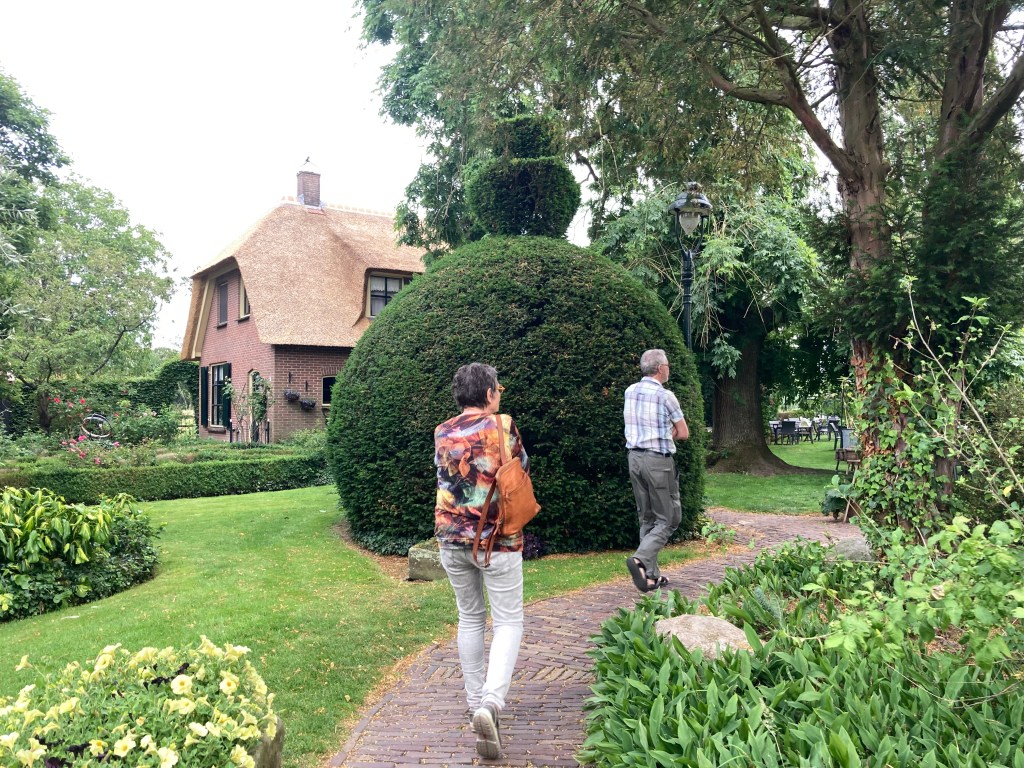
After relaxing in their back garden, I did some chores: washed clothes, vacuumed the car, and unloaded groceries. It’s funny what a luxury having a clean car and clothes can be when you’re on the road. Roel suggested we take the 3/4 mile walk to Kruidenhof te Mallum, a pollinator garden which he has managed for 4 years. I’ve been told they now have drone footage and a walking tour of the place: http://www.kruidenhof-te-mallum.nl/. I was impressed with its rich biodiversity and the bees and other insects busy at work. It is planted in a circle with spokes emanating out like a medicine wheel. Nearby was a stream and water mill which Roel planned to get working again.

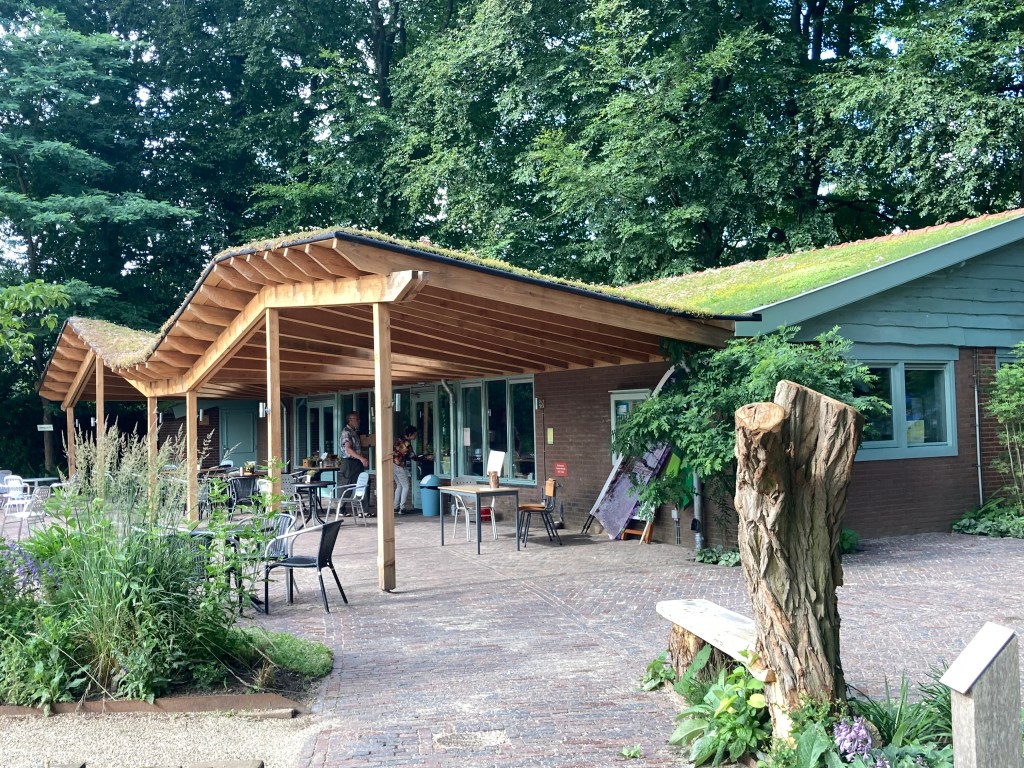

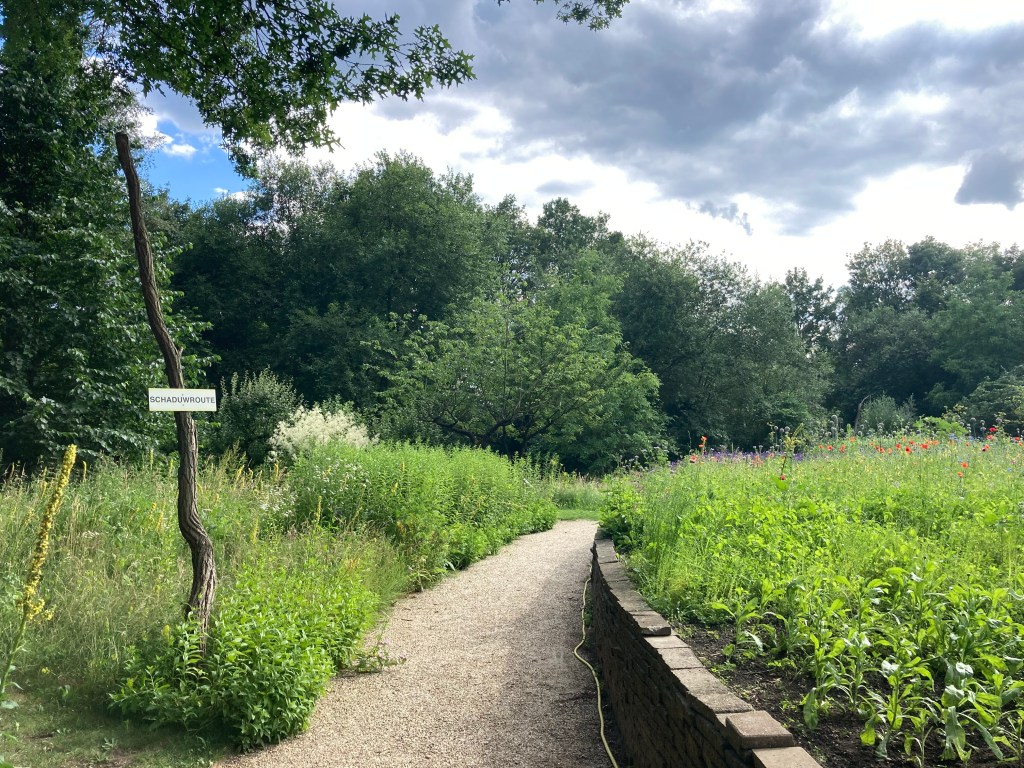

The garden was a sight to behold, and I marveled at the dedication of volunteers who keep this and so many other nature preserves in the country going. I wish there were more places like this near my home in the US. Roel had worked for the municipality on issues of land use and recently retired, but continues to volunteer and was assisting a professor from University of New South Wales with sea level rise issues.
It was a lovely day. I walked around the garden, enchanted with the beauty of the vibrant flowers and the humming of bees. We sat at a lovely outdoor table and had homemade apple cake and coffee, then took a stroll to look at the old water mill and surrounding farmland. On the way back we learned that Coosje had left it on the side of the road, thinking that the car’s steering was off. We walked to the car and Roel tested it. He appeared to be the problem solver in the family.
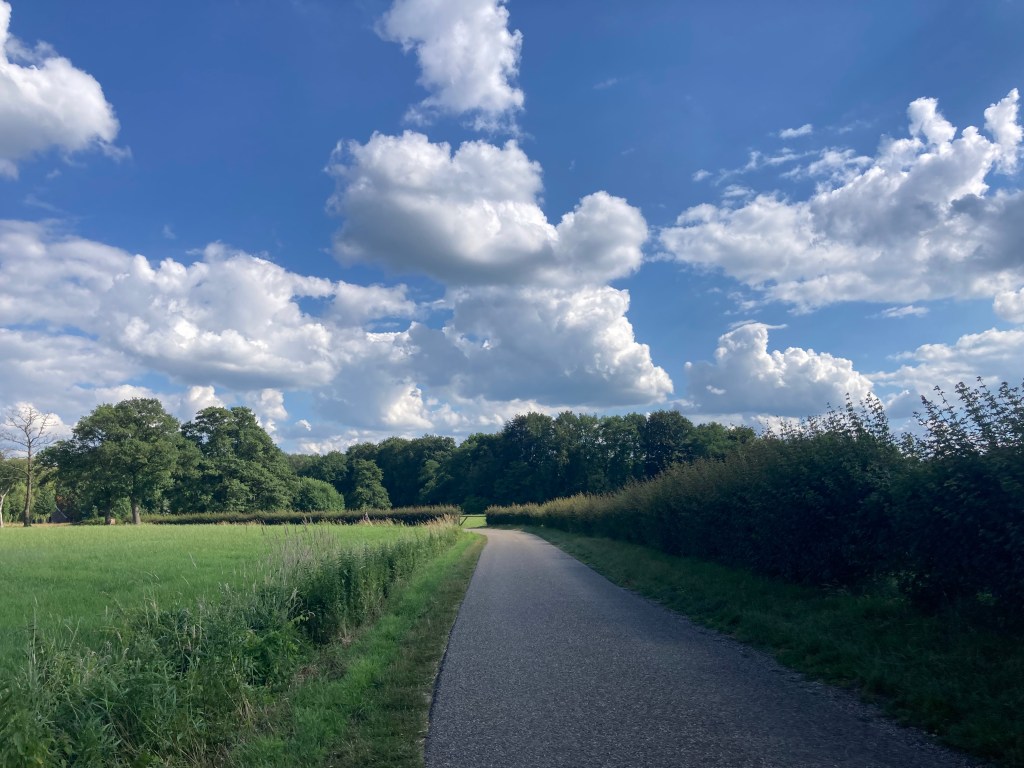
After the short walk home, I had 2 hours to kill before we were to go to a pancake dinner in the forest. I decided to head back to the garden, and walked in the opposite direction of the house down a country lane lined with trees. There was a sign that said “private,” and I worried I was trespassing, but Roel said it was fine. I saw two guys bird hunting with shotguns and a dog—terrifying. They were so close to the road I worried they might accidentally shoot me.
On the way back, I stopped at a mysterious gate—there was a sign explaining that it had been the site of a castle in the 1100s and was now a labyrinth. As I walked through the gate, I got a call from JC. He told me Becky had died just after I had texted him with a bad feeling. I’d talked to her less than 12 hours before she passed. I howled with grief. Somehow I hadn’t believed she would die so soon. It felt surreal that I had talked to her less than a day before she died. JC cried too, and I told him it was no accident that he had called me while I was here, in the labyrinth surrounded by willow trees and a flowing stream. It was a magical place and I asked the forest to hold her spirit close and help it find its way home. She dearly loved nature and would have loved this spot. Her loss hit me very hard. He said he needed a distraction and asked if I could send photos and short quips about my European adventure. It would take his mind off the grief.
When I got back to the house, I told my friends about Becky and the labyrinth. Roel said he had had a hand in creating that magical spot with a friend. What a remarkable coincidence. Somehow the place had power. I have always felt that way about nature. It was helping heal my broken heart.
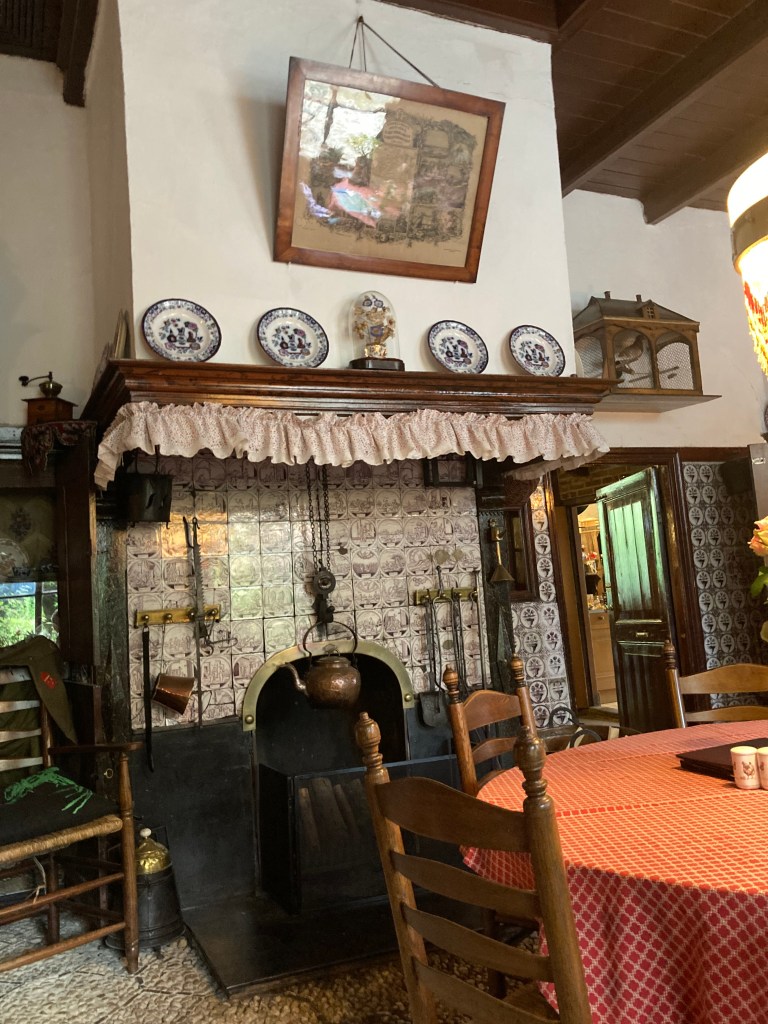
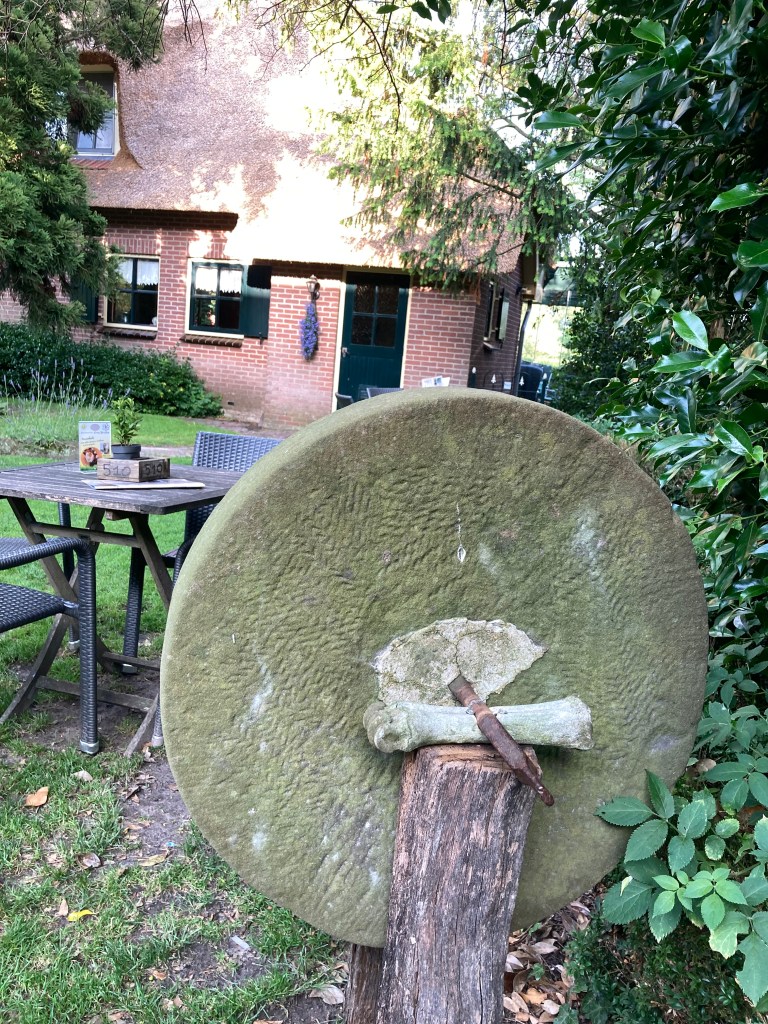
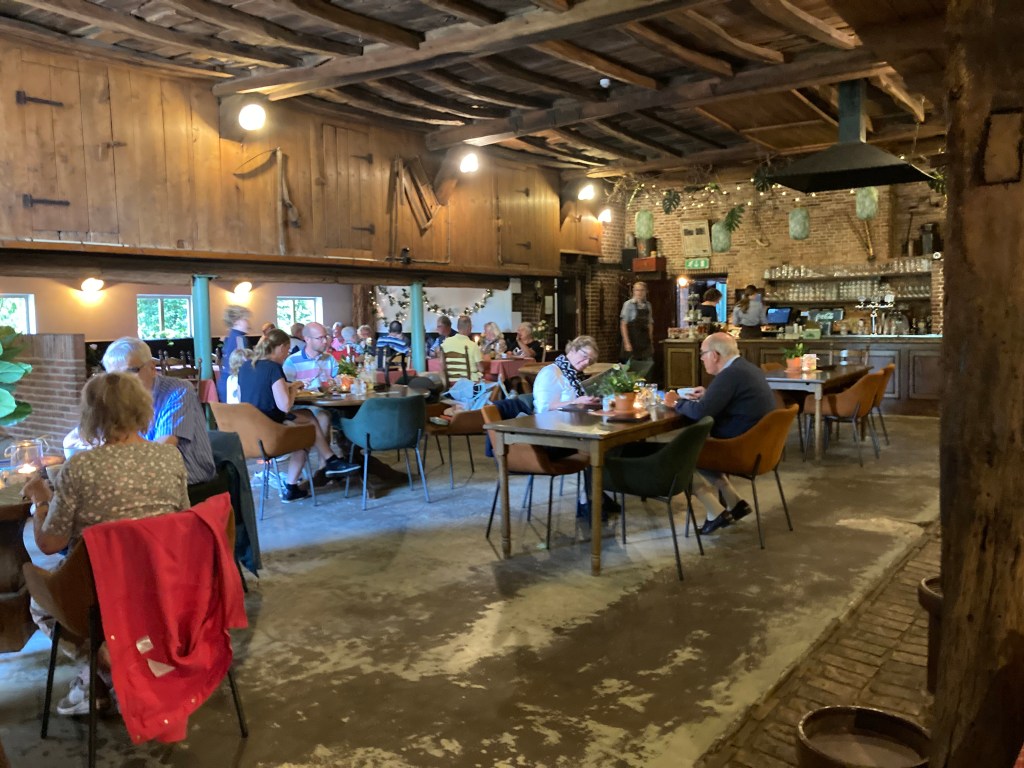
My friends suggested we eat at Erve Brooks, an old farmhouse restaurant, unchanged over the centuries. It was still a working farm, and I walked around the property, looking at the scattered farm implements. Inside the house were lots of old things including the wood stove that was still in use. I ordered a savory pancake topped with salmon and we ate in silence. After soaking in the ambience, we headed home. I was happy to have an early night.
July 2. I couldn’t sleep. Becky’s death had hit me hard and I lay in bed thinking about our last words. I had been kind and had told her how much I loved her. But I wish I had said more. If I’d known it was the last time… A few years earlier I had asked her to help me have courage in the face of my breast cancer diagnosis. She had shared a special song that she had made to herself in the face of possibly dying of bladder cancer. I cried remembering that song.
Roel and Coosje suggested an excursion to Doesburg, Bronkhorst, and Zutphen. They said it would make the most sense if I drove, since I could stay as long as I want and they would take the train back. I was nervous about driving them. I’ve had really anxious passengers before like my mom, and I get really uncomfortable when I think people feel unsafe with my driving.

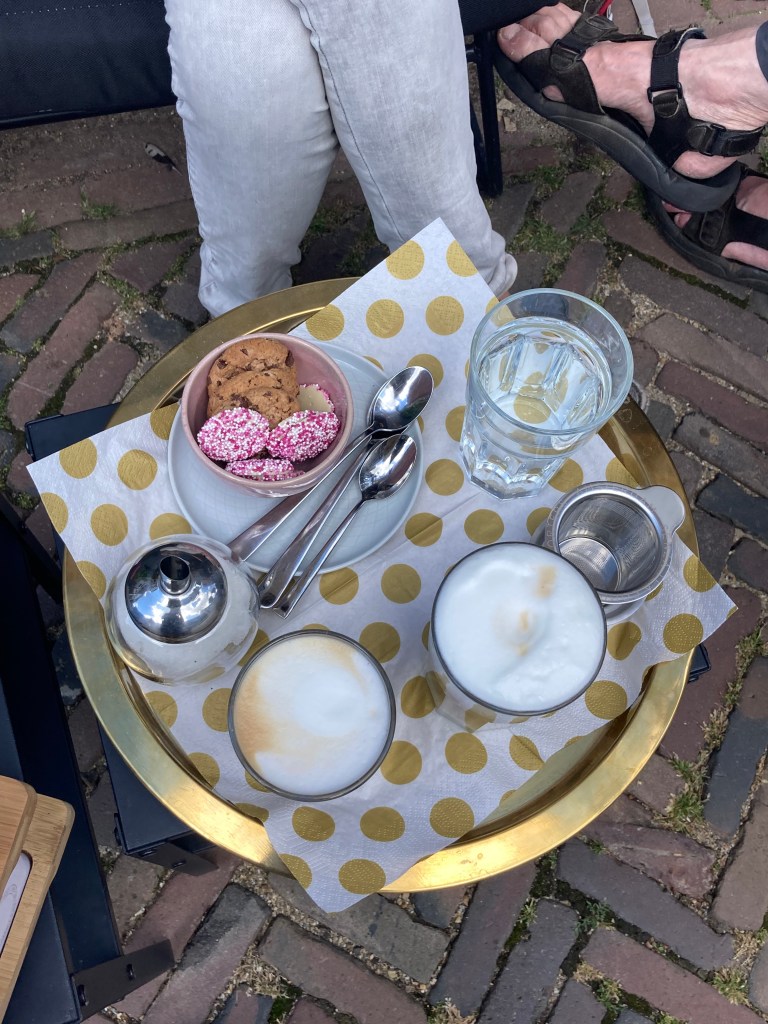
Doesburg was a gorgeous medieval town. I wanted a latte and found a nice cafe, Coffee and Cotton, and we sat outside enjoying the sun and coffee. I was impatient to explore as I’d never been here before and knew they didn’t want to be here long, so I excused myself after 10 minutes and suggested we meet up shortly. They wanted to take a more leisurely pace and agreed.

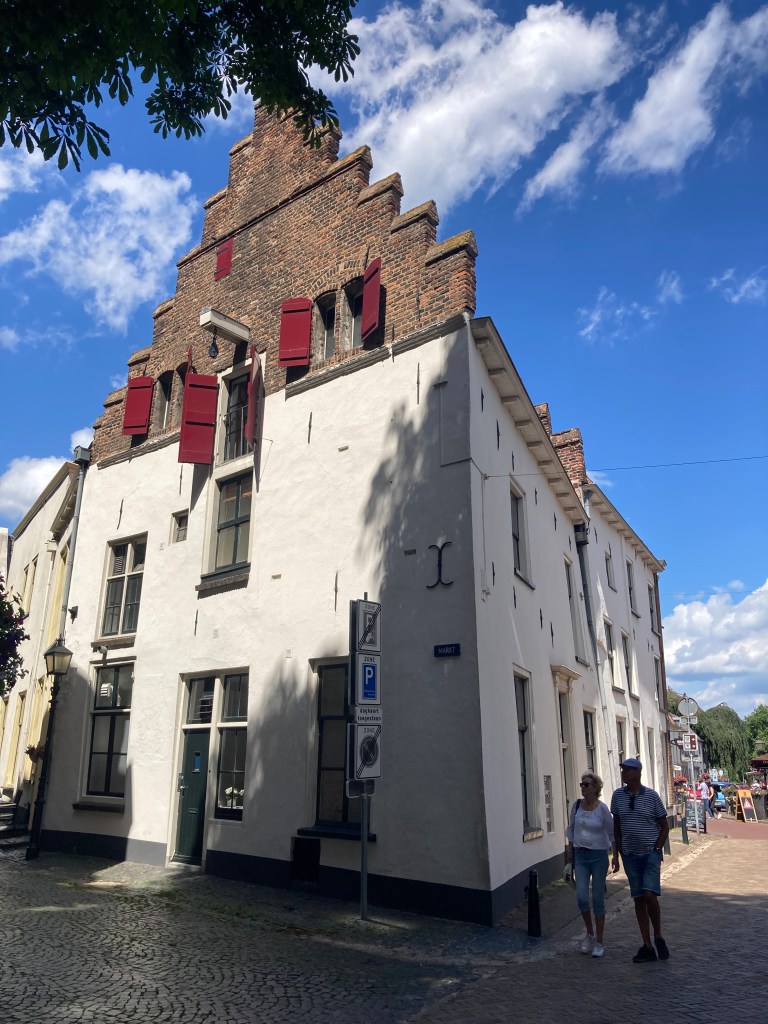
First I checked out the mustard museum—I liked the grinding stones and hand mills that they used to use. I found a medieval herb garden set up by the townspeople, and the city museum, which was free and had a lot of good information, but mostly in Dutch. I would have taken the time to translate the signage, but my friends would soon be waiting for me, so I skimmed and snuck a few photos before heading out. As always, I visited the cathedral which was quite modern. As always, I had to use the bathroom. The lady said no need to pay.


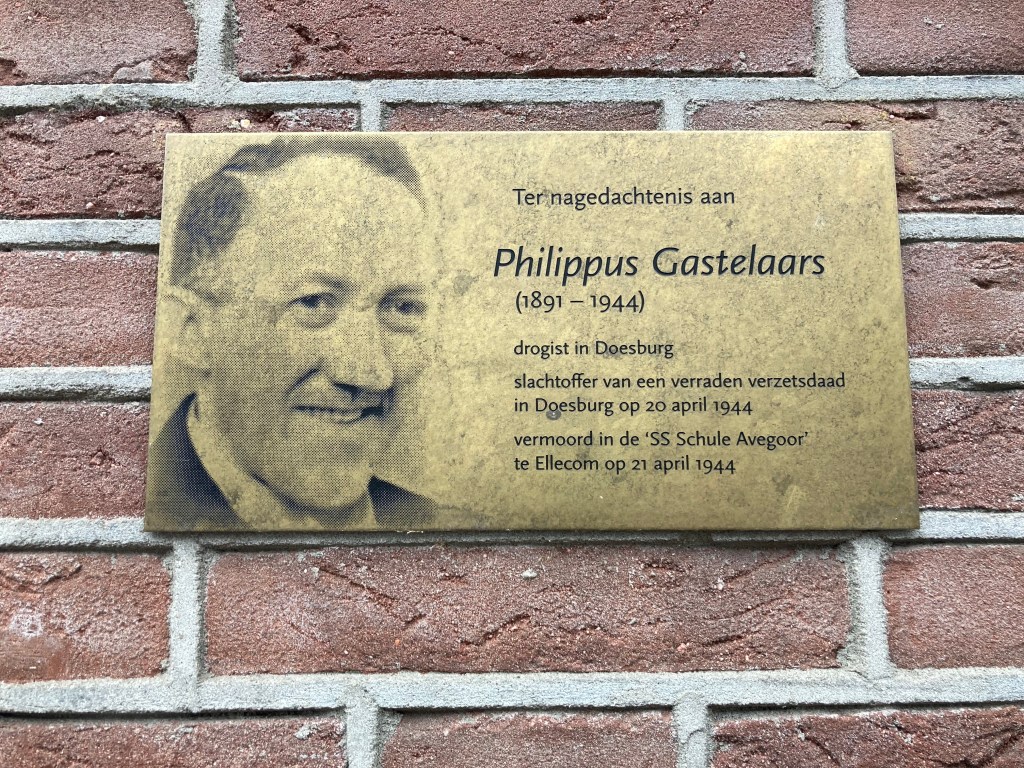
I spied a plaque across the street indicating that this had been the Jewish quarter. All had been deported to death in the camps in spite of Dutch efforts many sacrifices by the Dutch people to prevent it. I felt very sad thinking about my father’s uncle, a piano teacher and Polish national, who had been deported to five concentration camps and somehow survived. A grueling nightmare. His son told me how his father would ritually reenact those years down to the striped uniform and wheelbarrow of rocks. Such things are never forgotten and the scars go deep. I am always amazed that most people don’t know about the 3 million Poles who were killed in the camps. Not Jewish Poles, Poles. The Germans hated Polish culture and wanted to wipe it from the face of the earth. If it weren’t for stubborn resolve, the Nazis might have succeeded.
My musings were interrupted by an art deco mural that caught my eye. It was on the side of an old bike shop where I’d stashed a jar of mustard I purchased at the mustard museum. I set off to find my friends.
We headed to Bronkhorst—the smallest town in the Netherlands, a village of 20 or so houses. After a 5 minute walk we were already at the other end of town and my friends suggested lunch. We sat outside under puffy clouds and blue sky, and in the interest of time I scurried around for a few more minutes before our food came. I headed down a dirt road toward the river and ran into a group of students from Norway who were staying in the Netherlands for the better part of a year. I daydreamed about living here.
I loved the rural feel of Bronkhorst—the orchards, windmills, cobblestone streets, and half-timber houses. On our way to Zutphen, Roel insisted that we take a ferry—the shortest ferry I’ve ever been on. It was literally a one minute trip. He insisted on paying. That was the kind of person he was.
In Zutphen, they accompanied me to the tourist information office before taking the train home. I wandered around the town until about 9:30, photographing buildings and cathedrals. I loved the architecture of the place. Lovely. All the museums were closed, and the town glowed in the golden hour. It reminded me of Anders Zorn’s painting Midsummer Dance.
Back in Eibergen, I talked to Roel, who was still up reading a book about the cathedral in Barcelona. He was enthusiastic with praise and highly recommended it. I liked talking with Roel. He was full of ideas, enthusiasm, and always had projects in the works. Their living room was lined with books, and though most were in Dutch, I felt comforted by their presence. My living room is lined with eight 6 foot bookshelves, full to overflowing.
I said goodnight and headed upstairs. It seemed a concert was starting up, with the loud strains of music reverberating through the house. It was a warm evening and I had the skylights open to get some air. My room was in the attic – I could look through the skylights and just see people on the street below. I didn’t like the music, which sounded cacophonous. Suddenly, strains of Carole King’s “So Far Away” broke through the noise. It even sounded like her. Maybe magical thinking, but I felt like Becky was reaching out from afar.
July 3. Despite the music that seemed to go on until four in the morning—seriously, it was like a never-ending soundtrack for a party I wasn’t invited to—I somehow managed to sleep. I played rains sounds on my phone to drown everything out, and that did the trick.
I woke up around noon, had a lazy breakfast, and then spent some time debating what to do with my day. Eventually, I decided to head back to Zutphen. I didn’t get there until two, and made a beeline for De Burgerzaal Zutphen, which, thankfully, was open. Over the centuries, the Burgerzaal served as a butcher’s hall, a court of justice, a prison and a butter hall. It is part of the old town hall and is now used for public events. Volunteers from the guild welcomed me and explained the history. I was particularly taken with the wood beam ceiling, a gem of craftsmanship.
I was told Zutphen had over nine hundred national monuments including churches, city gates, municipal buildings, courtyards, even shops. If I had adequate time I would have climbed the Wijnhuistoren to take in a view of the city, visited the synagogue Sint Janskerk, and explored the medieval chained library De Librije. Maybe I could do the latter as I was headed to Sint Walburgiskerk where the library also lived.
The church was stunning. It had been built as a Roman collegiate church around 1050, rebuilt 200 years later as a Romano-Gothic basilica, and after a fire in the belfry in 1446, the stone tower was remodeled, so it towered over the town at 350 feet. I marveled at the wall and vault paintings dating from 1400. I looked in at the Librije Chained Library which had been modeled after monastic reading rooms. It is one of the oldest public libraries in the world, dating back to the 16th century. There was a special exhibit of books I had hoped to see, but it wasn’t available on the weekend. At least I had been able to see the church. It was like stepping into another world.
I made my way to Stedelijk Museum Zutphen, a cultural history museum focusing on the local area (Achterhoek region). Fascinating stuff about one of the oldest cities in the Netherlands right here in Zutphen. They presented the attack by Vikings in 882 as a crime scene and laid out archaeological finds as a walk through the ages. They talked about the Hanseatic League – which gave Zutphen the nickname ‘The Richest’ – and the violent Eighty Years’ War. The glitter and glamour of the nobility of the province of Gelderland, including the famous silver collection made in Zutphen, and the ravages of the Second World War. Especially striking were objects that are among the oldest in the Netherlands, such as the ‘oldest watch’ (the Zutphen quadrant from 1300), the ‘oldest comic’ (the ‘Letter of Complaint’ from 1493) and the ‘oldest photograph’ from 1839.
From there I headed to Museum Henriette Polak, a collection of modern classical painting and sculpture in the Netherlands which opened in 1975. With urging by artist Joop Sjollema, Polak-Schwarz founded the museum to show Dutch figurative art rooted in the academic tradition. There was also a really intriguing art exhibit. I found myself especially inspired by the founder and Sjollema who had been so important to the museum’s establishment. Both had been independent, trailblazing, and creative forces in their time. The fact that the founder was Jewish added a layer of cultural context to their resilience and work.
I left and headed to look at some of the national monuments. I marveled at the city gates, then decided to leave the city to check out De Loonse en Drunense Duinen National Park—JC had told me he and Becky had really enjoyed it. I got there around seven, but the guy at the gate was honest with me—said it probably wasn’t worth the €11 since the museum (the Kröller-Müller) and the sculpture garden were already closed, and although I’d have access to the iconic white bikes, my time would be limited. He suggested I walk the fields instead.
So I did. I drove a bit past the entrance and parked, walking through the wide, golden fields until I hit a fence. It was peaceful and quiet, the light soft and low—honestly, just what I needed. I snapped some photos and then headed back into town for another short walk.
At some point, I talked with my mom. She had seen a pulmonologist at Sutter Health, which made me feel better. Huang had reassured her that the MAK wasn’t nearly as bad as she had thought and that my mom should be okay. That lifted a weight from my mind.
On the way back to Eibergen, I drove via Castle Ruurlo, which we had visited on my only other visit to Eibergen. I remembered the wonderful art museum, Museum MORE, located in the 14th century castle with a real moat and Orangerie where we had delicious pastries. Although the place was closed, I walked around the grounds, soaking in its beauty. I wanted to walk more but didn’t want to get in trouble for trespassing on the grounds.
When I got back, Roel and I had a heartfelt conversation—about spirituality, pilgrimage, and what Christianity means to him. It was one of those unexpectedly deep and meaningful talks. He was heading out the next morning to help a friend, so we said goodbye, as I was departing in the morning. I crawled into bed around midnight, full of thoughts and very ready for sleep.
 Lisa Karpinski