

July 12, 2022. I woke around 9 having slept poorly due to worry. I’d been tossing and turning thinking about the two months remaining and had no idea how I was going to manage—particularly where I’d sleep given that I couldn’t afford to stay in hotels. I showered, packed, said goodbye to Andy, thanking him profusely for the respite of the past few days. The day before I’d spotted a nice looking cafe called Kaffeerösterei Adot, but I found it was closed. Frustrating. Traffic in Germany is so slow—every light makes you wait forever. Honestly, the U.S. feels lightning-fast in comparison.

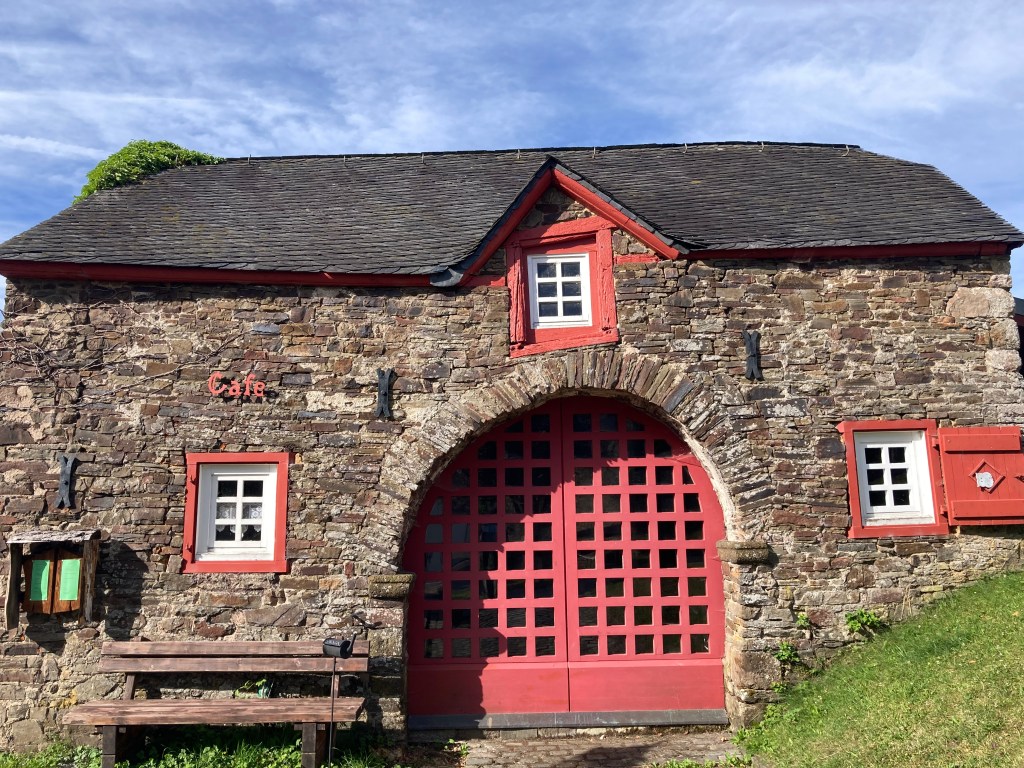
I considered finding another café but figured it would take longer to drive than walk, so I hoofed half a mile to Frederick’s Café and got a really nice latte. On the walk back to the car, I stumbled across another spot called Hot Shots that looked even better—maybe next time.
I had hoped to visit Schlösser Augustusburg und Falkenlust in Brühl, listed as a UNESCO cultural World Heritage Site since 1984. Unfortunately for me, they were closed on Mondays. The Augustusburg and Falkenlust Palaces were built in the early 18th century, and the palaces and adjoining gardens are considered masterpieces of early Rococo architecture, which I particularly love. Damn!
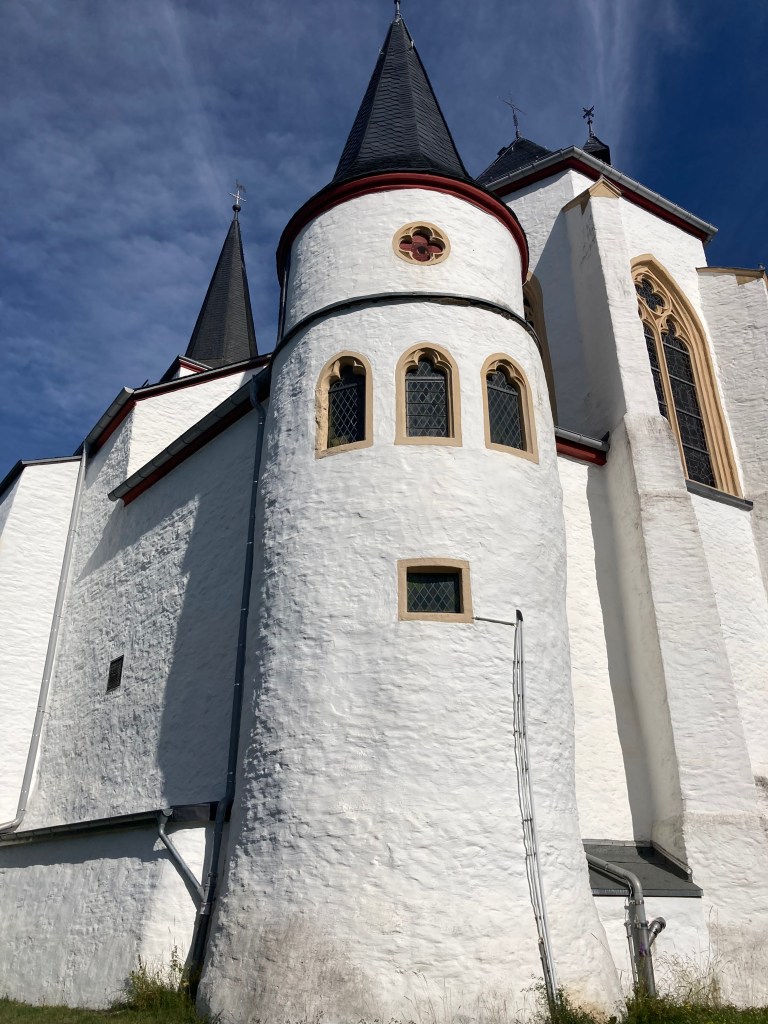
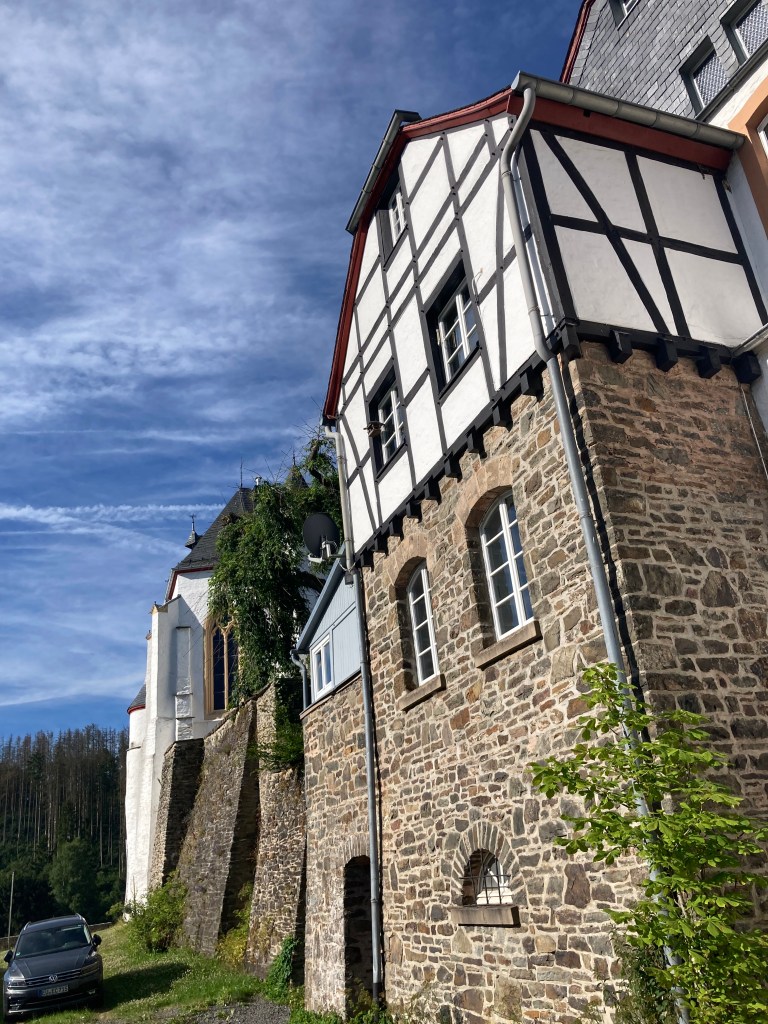
As a consolation prize, I headed to Aachen, parking just outside the old town along a tree-lined boulevard next to a big park. I was pretty immediately impressed—within five minutes of walking, I found myself in front of the cathedral and the town hall where Charlemagne once ruled.

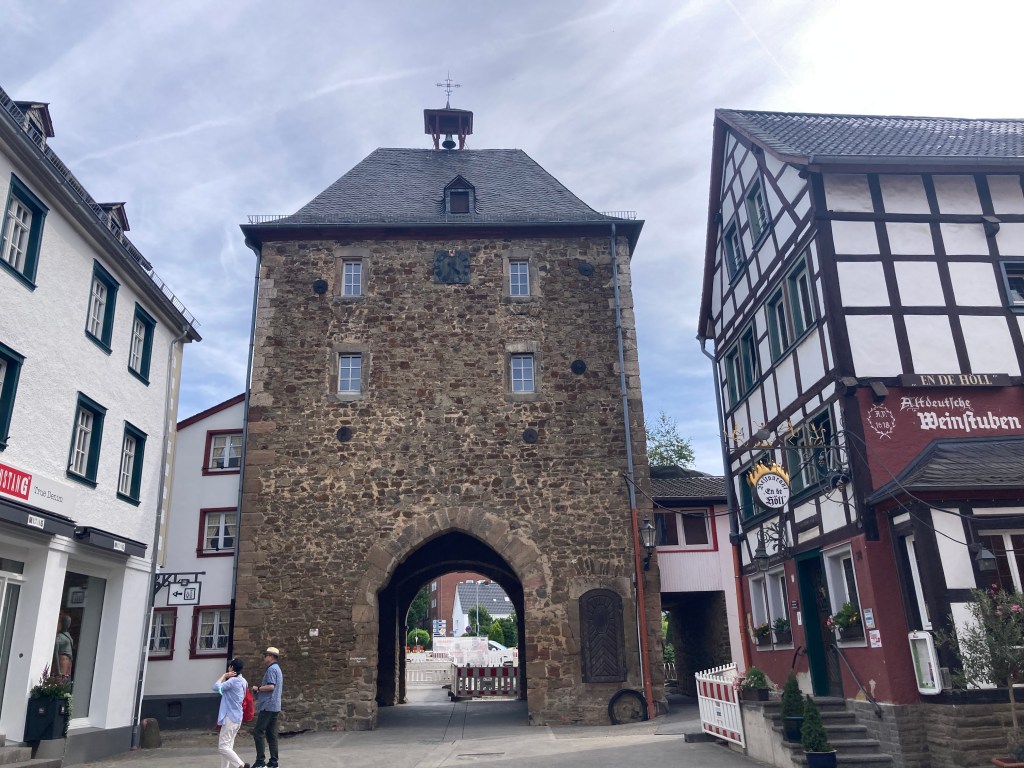

I saw someone walk into the town hall without paying, so I decided to be bold and try the same. Snuck past the checkers and got in—took some photos of the grand rooms inside. Then I wandered into the cathedral, which, to my surprise, was free to enter. The architecture was stunning—heavily inspired by various Italian churches, which I learned from the display outside. You’re technically supposed to pay a euro to take photos, but I didn’t have one on me and noticed that plenty of others were snapping pics without paying, so I joined in… discreetly.

The mosaics on the ceilings were gorgeous, and there was an unusual side chapel that really caught my attention. I’ve never seen a church designed quite like this one—with arcades circling a central seating area. It’s a UNESCO site for good reason. After soaking that in, I explored some other nearby buildings and found an archaeological dig on the site of the old Roman and Celtic spa. I even tried the sulphuric spring water—definitely an acquired taste.

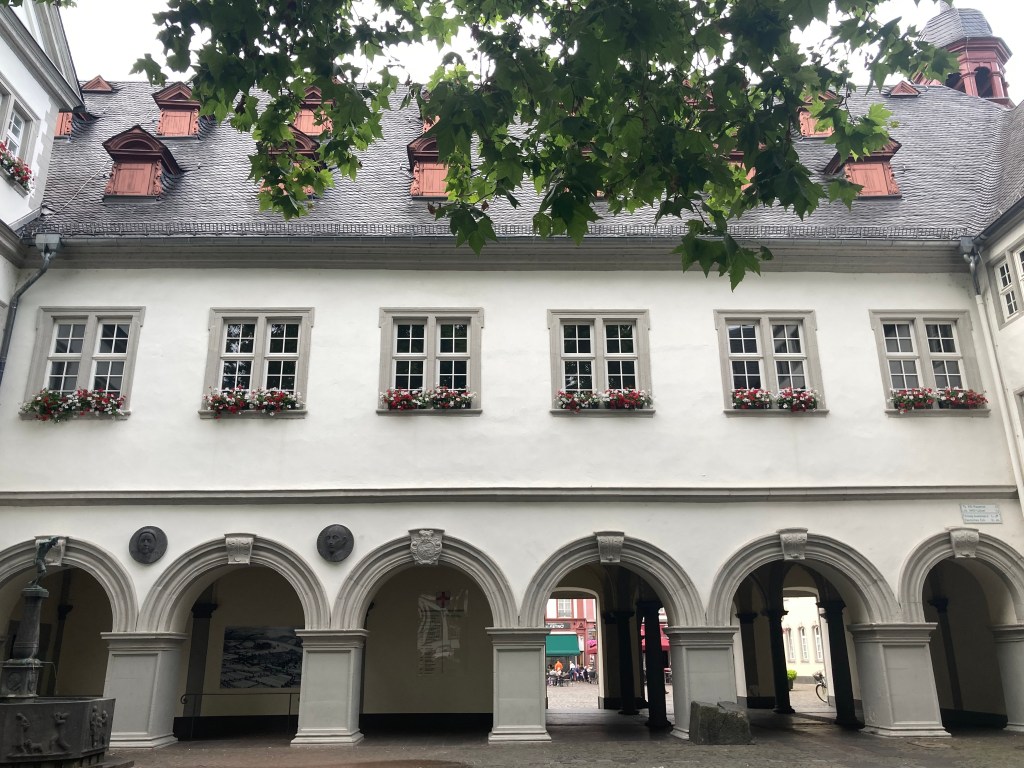
After wandering the old town for a while and being thoroughly impressed by Aachen, I headed out to Monschau, wanting to hit a couple of towns in one day. I lucked out and found a gas station that had AdBlue where I could just pay for what I needed—about 7.5 gallons for only €3. Huge relief, since the last place wanted to charge €45 for a full 10 gallons. Also found out that fuel prices in Germany are being artificially lowered by 30 cents per gallon until September—score!
Feeling a bit more relaxed, I made it to Monschau and parked near the Handwerkzentrum, which had just closed. The town is adorable—set right along a river in a steep canyon, with old timber-framed houses clinging to the banks. I popped into the Evangelical Church, which was peaceful and lovely—it had even won “Church of the Year” and I could see why. There were also some cool artist interpretations of scenes from the town displayed inside.
I would’ve liked to stay longer, but the day wasn’t done yet. I started heading toward Blankenheim but didn’t quite make it. Instead, I looked for a place to camp nearby. The first spot I tried was a trailhead parking area, but there were dogs barking nearby and I got spooked. So I moved on and ended up in a quiet spot at the edge of a forest near a small town. Just as I was setting up my tent, I heard gunshots—hunters. Way too close for comfort. I barely slept—maybe half an hour. No one bothered me, but I was rattled.
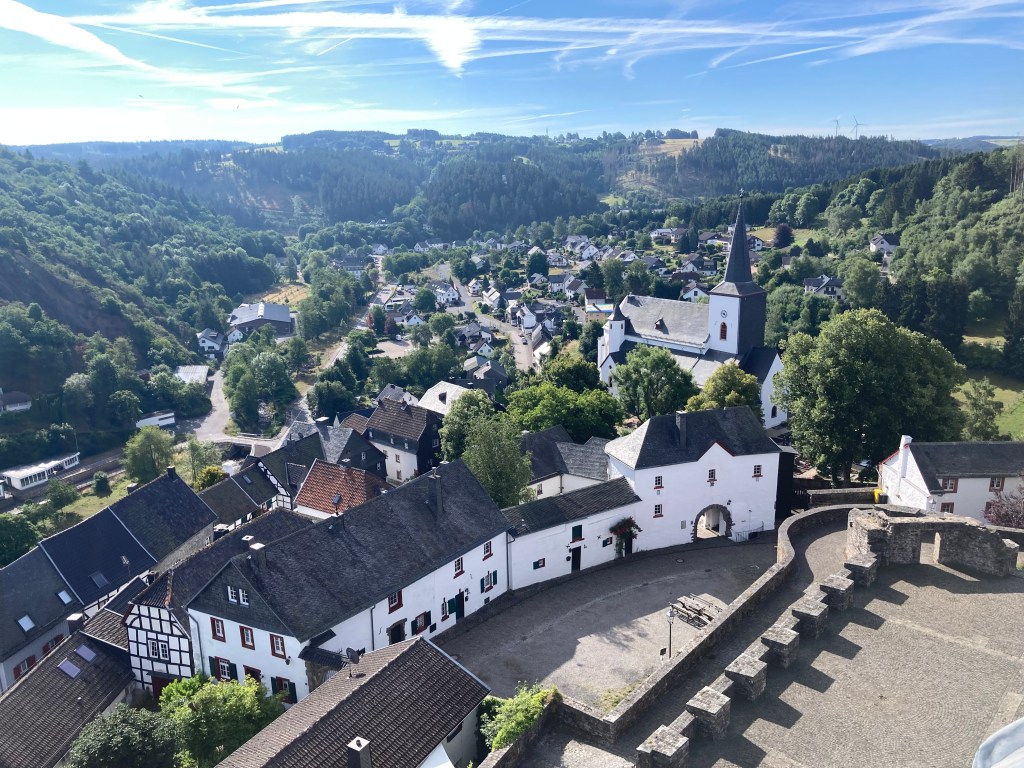
July 13. In the morning, around seven, a woman came by with two ferocious barking dogs, but she called them off. I got up, packed, and moved on. I stopped at a tiny hilltop village on the way to Scheiden—completely empty. I took the chance to dry out my tent, which was soaked from the meadow, and explored the castle ruins a bit. Then I rolled into Scheiden, grabbed a coffee and pastry, sat for a bit, checked out the town and its old buildings, then made my way to Blankenheim—recommended by Roel.

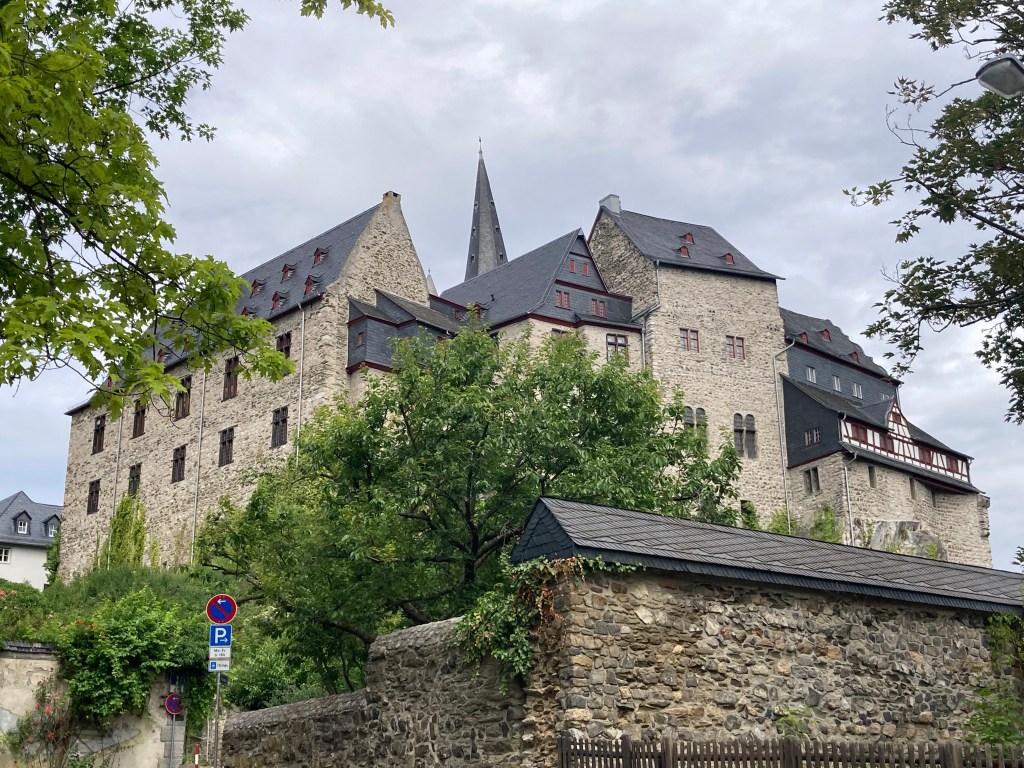
Blankenheim is part of a pilgrimage route, but most of the information was only accessible via hiking or biking paths. Still, I managed to find the Roman villa ruins and translated the signage from German. Then I explored the old water tunnel and the castle above. The castle is now a youth hostel (as are so many in Germany), and I asked about prices—€44 per night for a private room, not bad at all. Though, the place was swarming with screaming kids, so probably not the best night for it.
I walked through the castle and took my time translating the exhibits, which felt oddly satisfying. Then I climbed up to the old water tunnel again and admired the ingenuity of it all—they’d diverted water several kilometers through mountains to supply the castle. The original gardens are gone now, unfortunately.
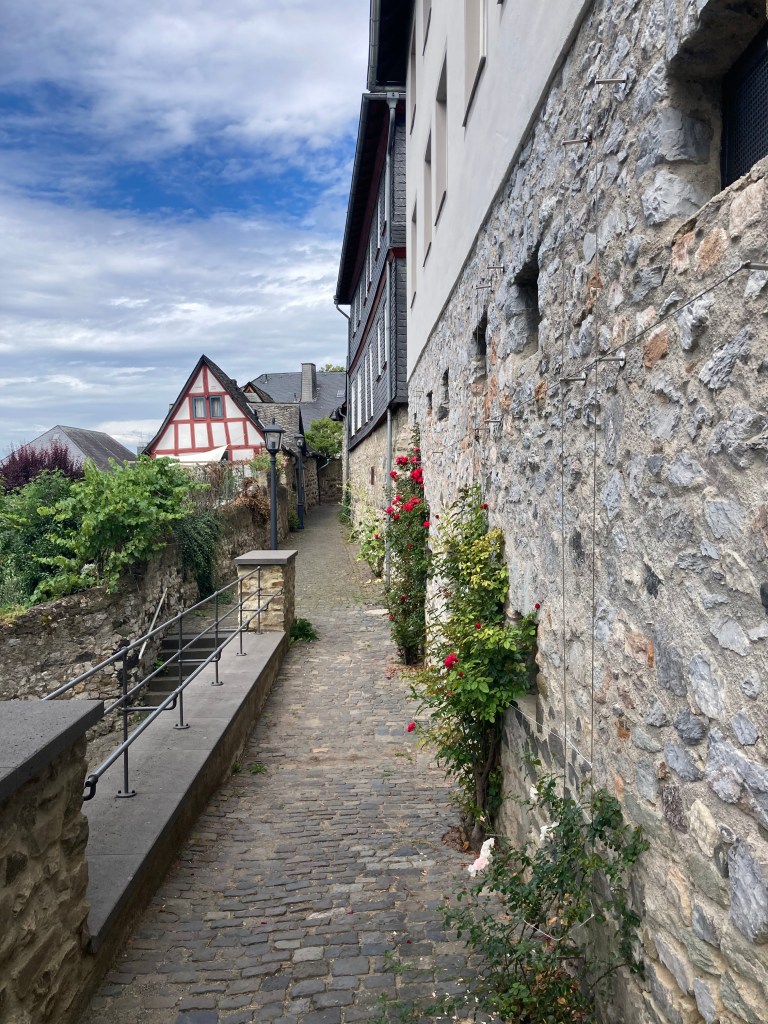
Before leaving, I discovered the old town nestled beneath the castle. It was beautiful—quiet, atmospheric, full of charm. I wandered through, took a bunch of photos, and passed a plaque marking the source of the Ahr River—the one that flooded parts of the region, including Bad Münstereifel, in 2021. The plaque gave thanks and called for harmony with nature.


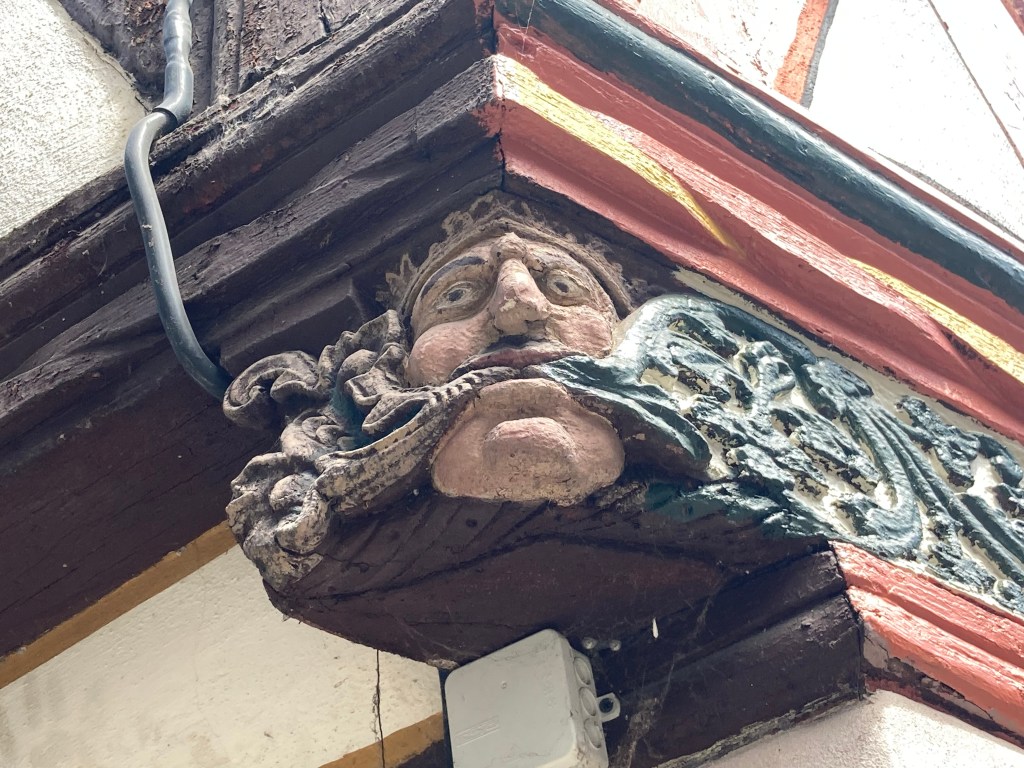
I ducked into a tiny old church—simple, peaceful, clearly ancient. A woman walked in carrying flowers, and for a moment I thought she might ask me to leave, but she didn’t. I noticed a chalk sign on the window welcoming pilgrims on the Way of St. James, with a number to call if they needed a place to stay. I really loved that.
I liked Blankenheim a lot—one of those places I could see myself staying in longer. But I pressed on, heading toward Bad Münstereifel. Unfortunately, the town was still a mess from the 2021 flood—construction everywhere, roads blocked, streets impassable. It looked like they were filming something about the flood, too. Hard to believe it had been over a year and a half; the pace of repairs felt slow.

I tried to visit the cathedral, but it was closed, as was another church. I headed up to the old castle, but it was boarded up—maybe still shut down post-flood. After an hour or so, I decided it was all too commercial and moved on toward Koblenz.

At first, Koblenz also struck me as overly commercial, but then I found the actual old town along the Rhine. I parked and wandered through some beautiful squares. It was a hot day, but lovely. I followed the crowds to a gelato place—clearly a local favorite—and it did not disappoint. I took a long walk along the Rhine, then stopped for dinner. The food was good but super slow—I waited 45 minutes even though they said it would take five.
The Renaissance-style architecture here is beautiful. I took more photos and soaked in the vibe. There was a flamenco guitarist playing near the river—he was incredible. I didn’t have any change, so I gave him five euros and instantly felt a little guilty for not being more frugal. But I love supporting street artists when I can.

Later that evening, I headed toward Limburg an der Lahn, a town a few people had recommended. I found a quiet spot on the edge of a field near the forest—looked like a logging area—and settled in for the night.

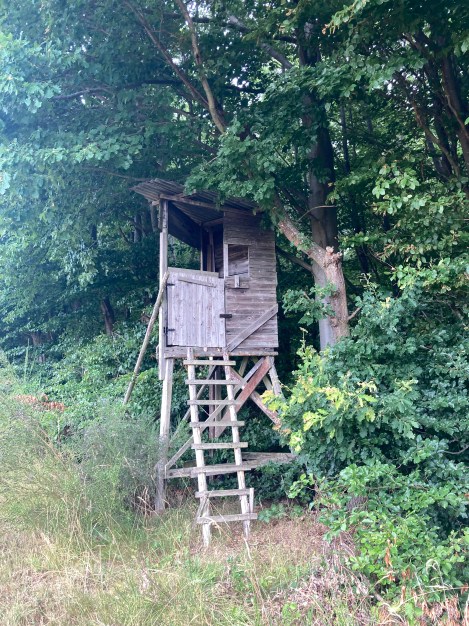
July 14. I got up at 9am, noticing what looked like a hunter’s shack just below where I camped. Although I had camped a stone’s throw from a fairly busy road, the traffic didn’t wake me. Probably because I was so exhausted. As I was packing up my tent, disaster struck: my car key fell out of my pocket. I spent the next 15 minutes frantically searching for it in the meadow. I started to panic—what was I going to do if I couldn’t find it? Fortunately, just when I was about to give up, I found it in a completely different spot than where it had fallen. Maybe the fairies were messing with me.
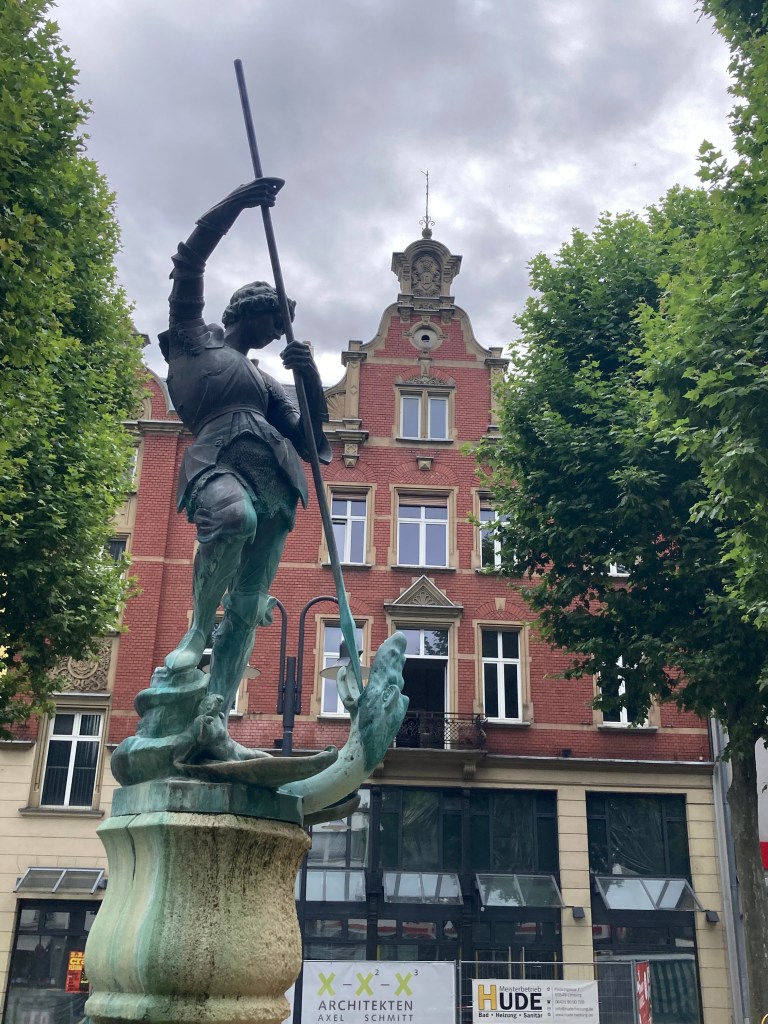
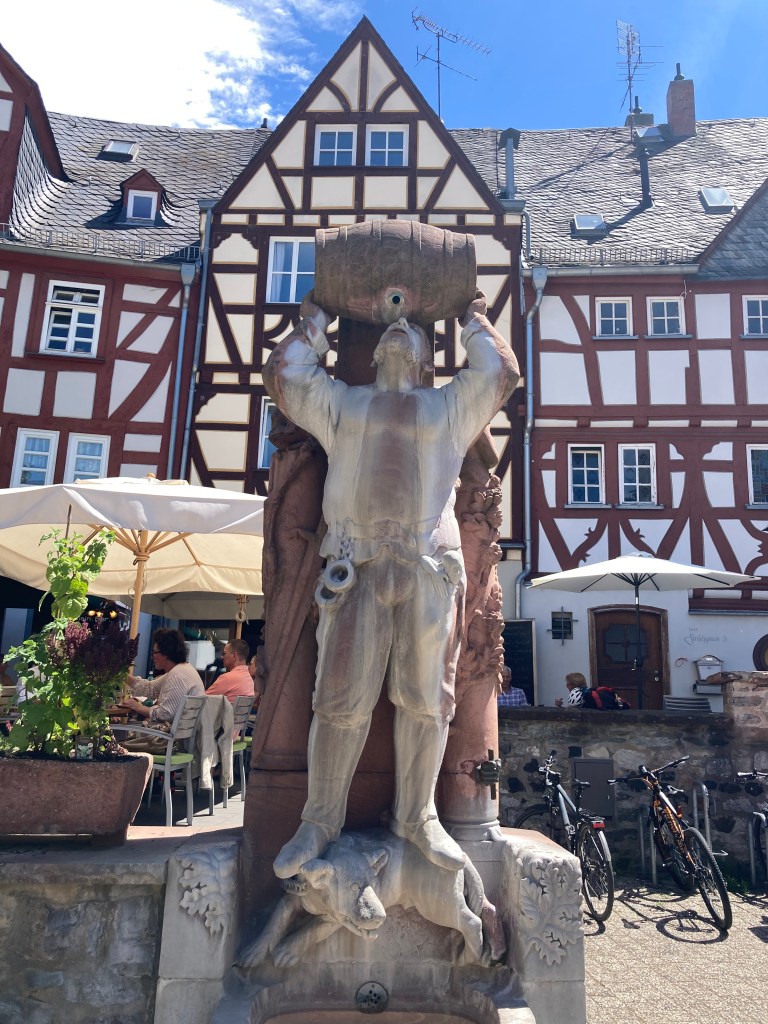
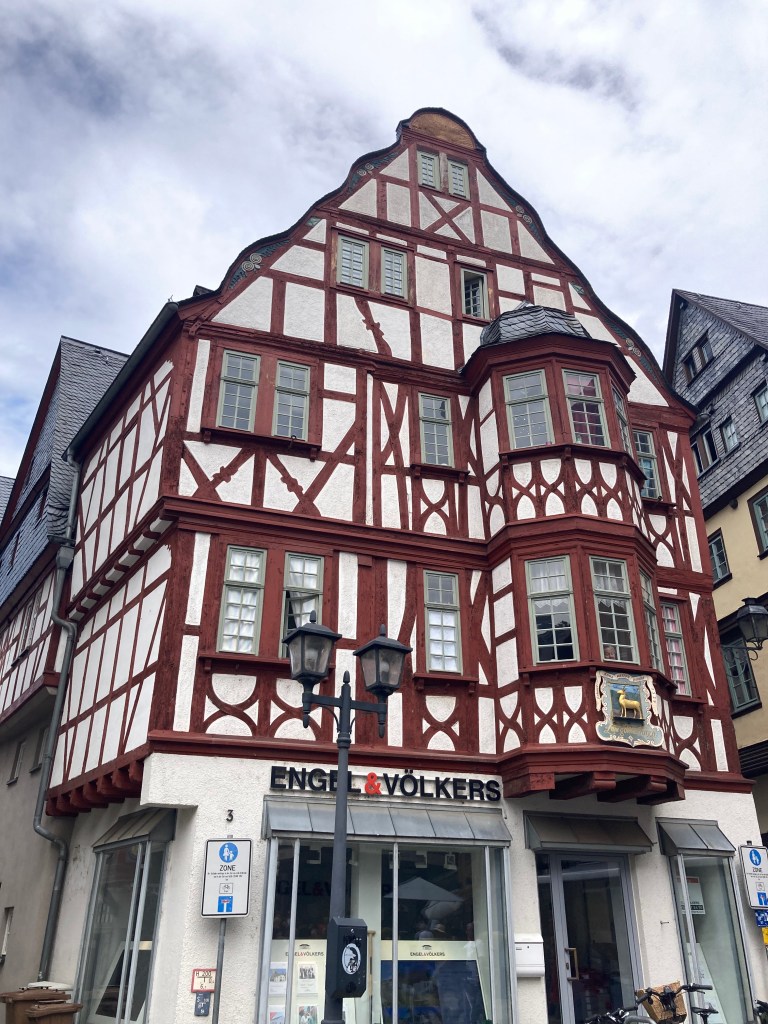
After my heart rate returned to normal, I headed to Limburg an der Lahn. It’s a lovely old town, but I was surprised at how small it felt. I spent several hours there and stumbled upon an interesting house that had been owned by a wealthy Jew. They’d also found archaeological remains of a ritual bath outside the house. I couldn’t resist reading the signage, and went on to look at the cathedral. I found out that the whole town had been built around the cathedral, like how castles were often placed at the center of towns. I took in every detail of the town, from the chapel to the fountain, which featured a man drinking beer from a keg—though I couldn’t quite make sense of the image of a black man in his back pocket. I wondered if it was a reflection of racism against Africans. I found out that the town used to be a major trade hub, with wagons passing through from Frankfurt to Cologne.
Next, I headed to Wiesbaden, another place I’d been recommended. It’s a grand spa town with impressive colonnades, and I parked near the stunning casino. I treated myself to some gelato, though it set me back €9 for four scoops (ouch). I headed to Schlosspark Biebrich (Biebrich palace park), which had been designed as a French formal garden, but expanded and changed to an English landscape garden in the 1800s by Friedrich Ludwig von Sckell. The grounds were lovely, but there wasn’t much shade, and I beat a retreat to the old town on the other side of the river. The scorching temperature (it was 94°F) didn’t help my impression of the town, most of which had been destroyed during the war. The narrow streets of the old town were even hotter, and I finally took refuge in an air-conditioned chocolate shop, where a kind saleswoman said I could buy one piece (I’d asked if there was a minimum). I savored the rich pastiche knowing the chocolate I had in the car would surely be spoiled in this heat.

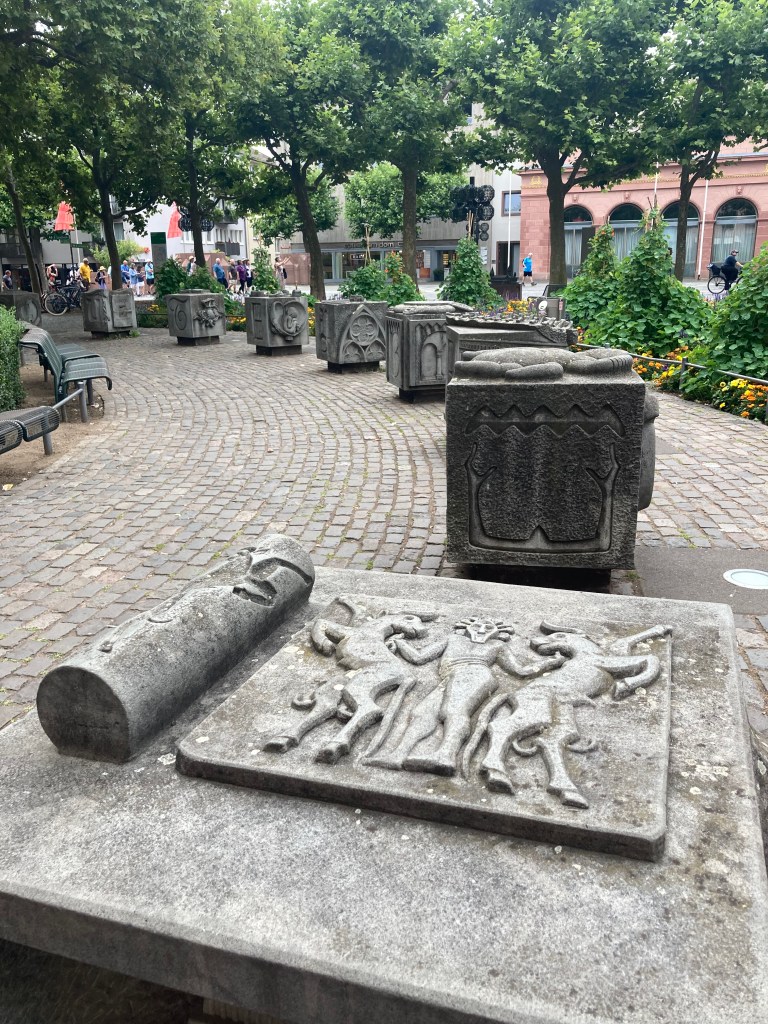
From Wiesbaden, I made my way to Mainz. I was considering going to Bingen, but the extra half-hour detour didn’t feel worth it, especially since I’d been there before. Mainz’s old town, like many along the Rhine, had that charm, with narrow streets leading down to the river. I parked near the citadel, which houses a Roman amphitheater, but unfortunately it was closed. However, I discovered two interesting museums: a Fauschnat Carnaval museum and the Gutenberg Museum. I was excited to visit the next day. I walked along the river for a ways, admiring the red stone walls of fortifications from time past. The breeze off the river was a bit cool, a relief after such a hot day.

I headed toward the Electoral Palace, former city Residence of the Prince-elector and Archbishop of Mainz. It is one of the important Renaissance buildings in Germany. I’d hoped to sleep nearby but it was crawling with people, so I continued on, exiting at the next forest I saw. Unfortunately a sign read “prohibited military area enter at your own risk”. As I was too exhausted to continue, I decided to camp just below the prohibited area in what looked like the edge of a farmer’s field.

July 14. I didn’t sleep much. At 4am, tractors started rumbling near my camp, and it felt like garbage trucks barreling past. I was too exhausted to get up, but I only managed about an hour of sleep before the noise started again. By 7, I was scared out of my tent and decided to head into Mainz. Thankfully, I found a lovely café where I could have a latte and charge my phone. One of my guilty pleasures was reading the New York Times (though often nail biting, as news isn’t exactly relaxing) and New Yorker. My mom had gifted me a subscription to the latter and I enjoyed reading articles when I had time. Sadly, I rarely had time, as I would use the little time I had to write notes about my journey. Not nearly as enjoyable as reading the New Yorker.

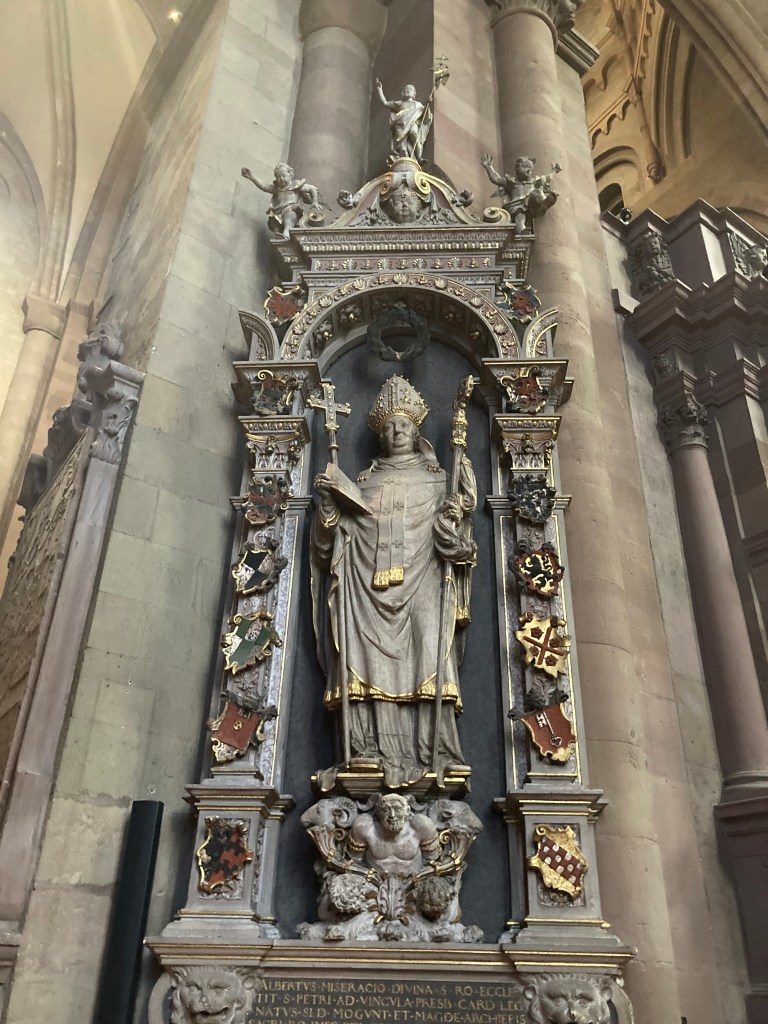
I waited for the cathedral to open at 9. It was massive and stately, but the cloister walk and the enclosed garden were the real highlights for me. The old tombstones on the walls of the cloister were fascinating. I didn’t need to pay to see the treasury museum, which was a pleasant surprise.

Next, I visited the Gutenberg Museum. It was fantastic—especially the live demonstrations of how the printing press worked. I spent hours there, learning not just about Gutenberg’s legacy but also the history of printing in China, Korea, Japan, and the Arab world. It was particularly exciting to see old documents, including one of Gutenberg’s Bibles. Gutenberg, born in Mainz, was more than just the father of the printing press—he was an entrepreneur who had started by making pilgrim badges.

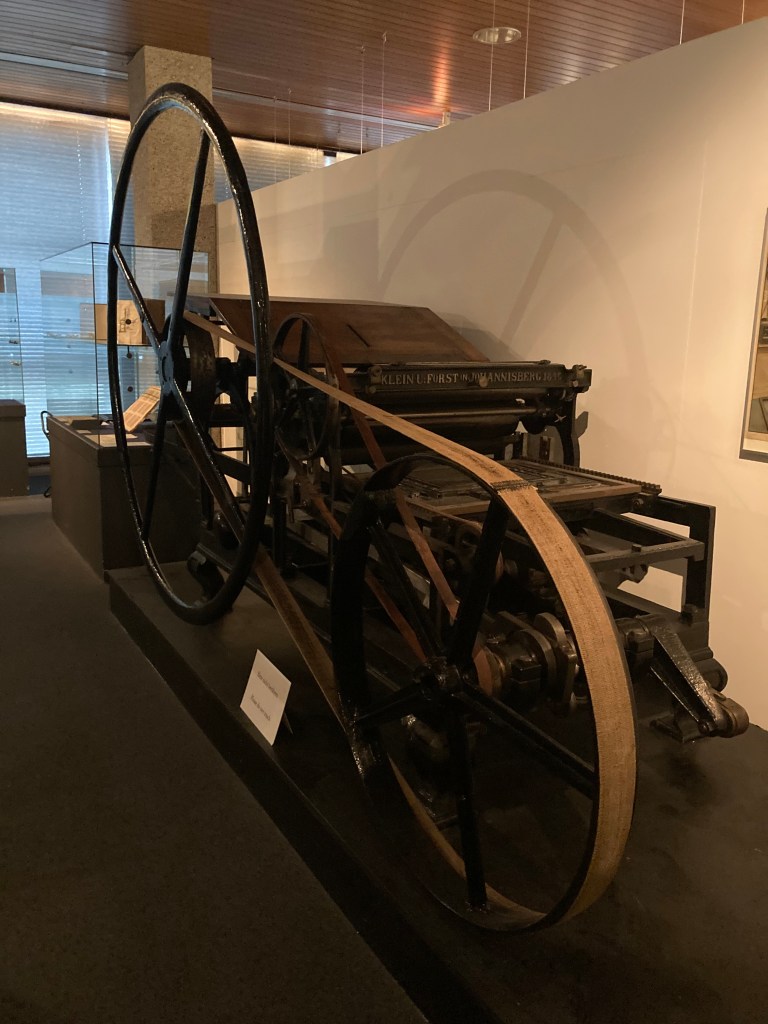

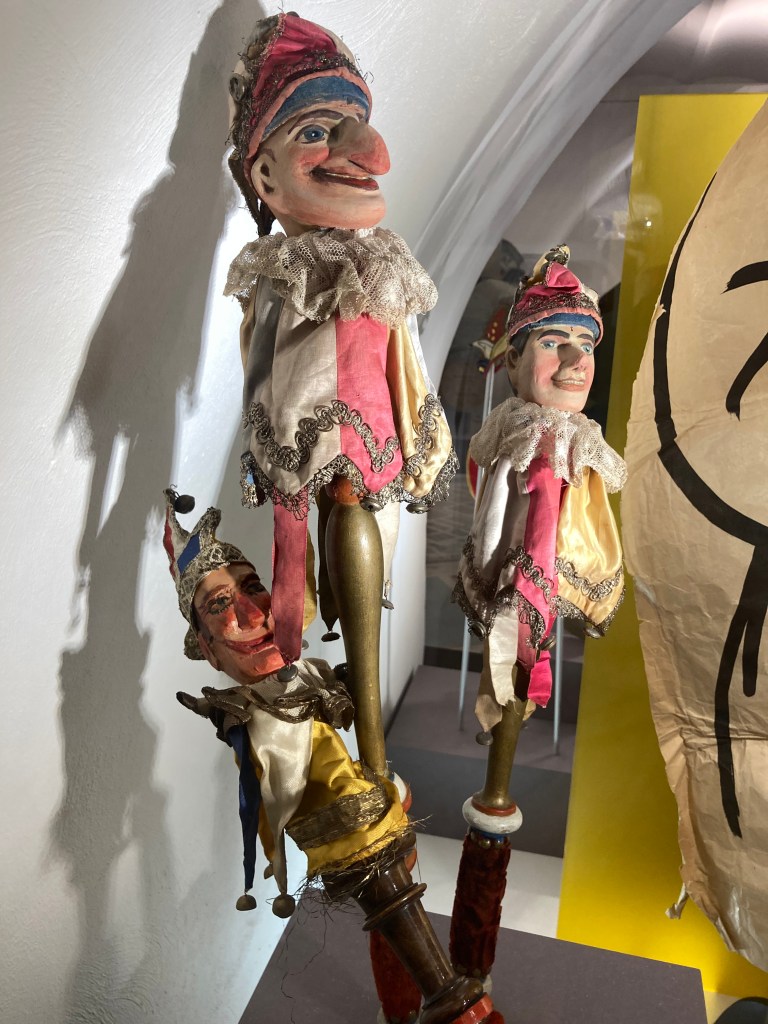
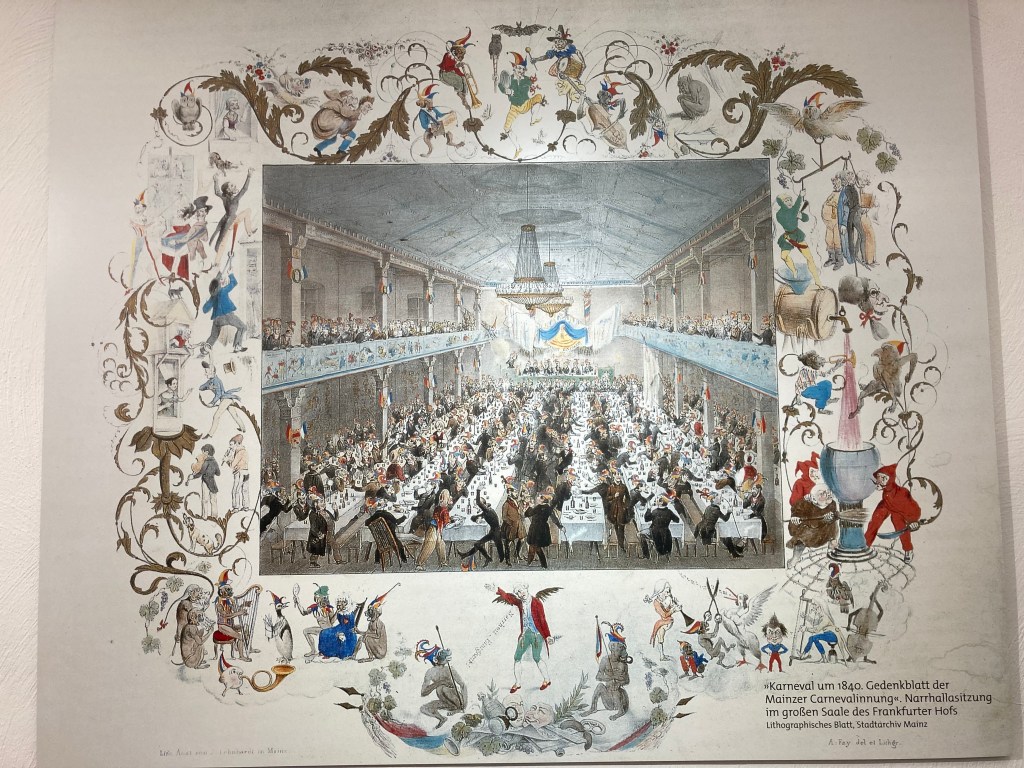
Later, I popped into Fastnachtsmuseum, which documents carnival from its beginnings in 1837 to the present day. I was particularly interested in learning about the political and literary tradition that dated back to the Vormärz period, when there was no freedom of the press. Carnival allowed people to criticize the authorities without fear of reprisal. Documents, photos and films from private and club collections provide a chronological overview up to the present day.

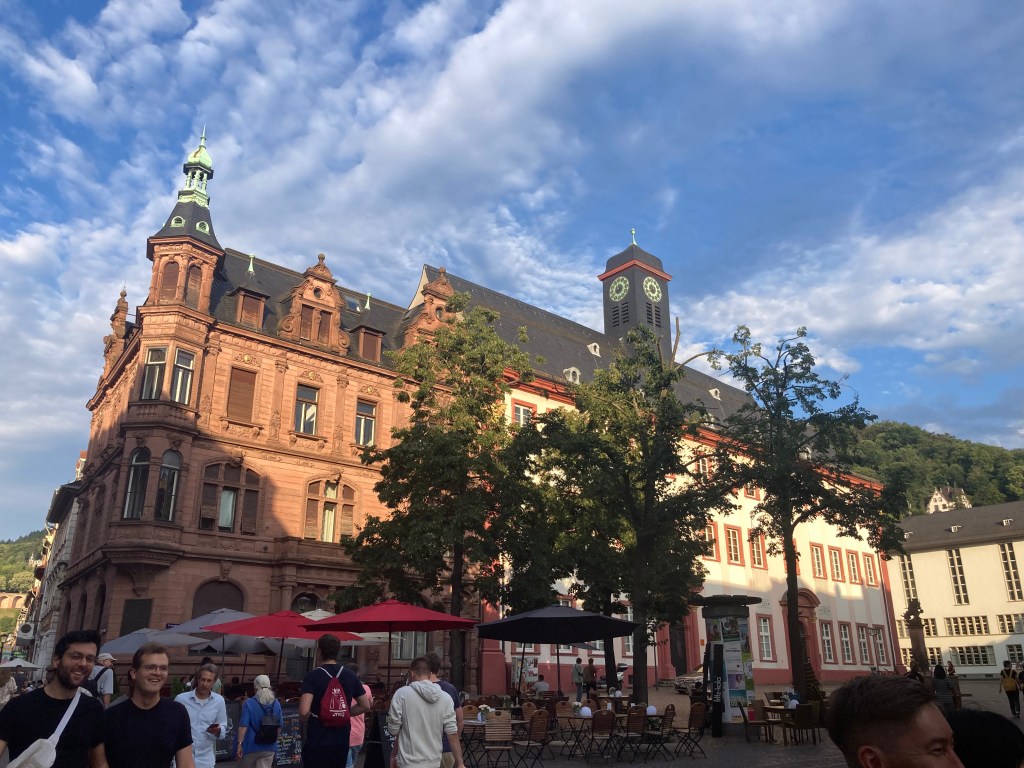
After that, I walked by the citadel, where a music festival was happening, and made my way up to the Roman amphitheater. It was getting late, so I decided to head to Heidelberg, arriving around 6 PM. I parked and walked into the old town, though I was so tired that I didn’t enjoy it as much as I would have liked. I did, however, stumble upon a beautiful Italian violin performance in a church, which was incredibly moving. It reminded me of a similar experience I had at Oxford College when Shawn and I heard Beethoven’s Ninth. Music has that magical way of making a moment feel timeless. I remembered talking Brian von Herzen (my first love) about his uncle who was a chemist, knew Einstein, and worked in Heidelberg. I wondered what that must have been like.

After the performance, I headed above the castle and found a place to put my tent perched where people were cutting firewood. I was too tired to do much else and decided to get some rest before a full day of exploring tomorrow.

July 15. The noise of machines in the forest started early—at 5am—but I was exhausted and went back to sleep. I woke up around 7, and after grabbing some groceries, I drove to Neckargemünd. I’d seen signs for it and was curious, so I parked and explored the ruins of an old castle. Afterward, I wandered down to the town center and found the most amazing coffee place—Deen Coffee Roastery. It was easily the best latte I’ve had on this entire trip. I chatted with Andrea, the Italian barista, who told me he was only in Germany because of his girlfriend. Apparently, he finds the people here a little cold, and he mentioned that lots of wealthy soccer pros live in Baden-Württemberg. The coffee was worth the visit alone, but the chocolate ganache cake—a mouthwatering delicacy.

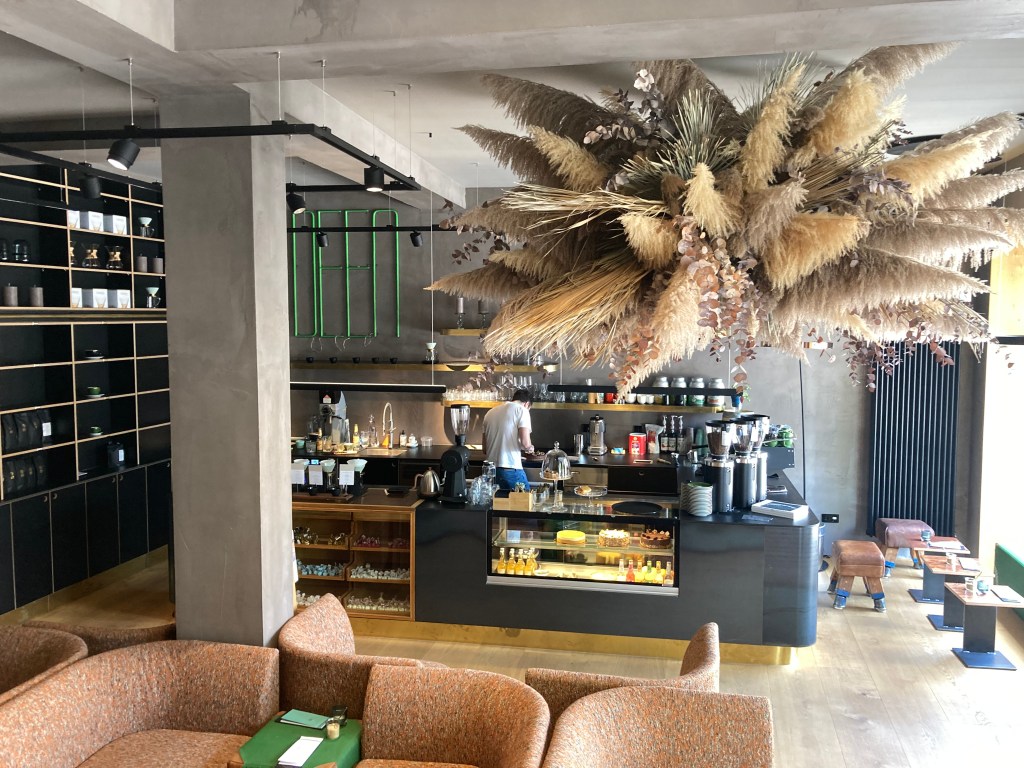
Walking around town, I found another bakery, this time with hazelnut meringue tort! I headed to the tourist information office and got maps of historic castle towns in the Neckar Valley. I would make my way up the river. Ironically, when my family and I first visited Heidelberg in 1968, I had slid on the slimy banks of the Neckar and almost drowned. My mom jumped in after me, and barely made it out because of the slippery bank.

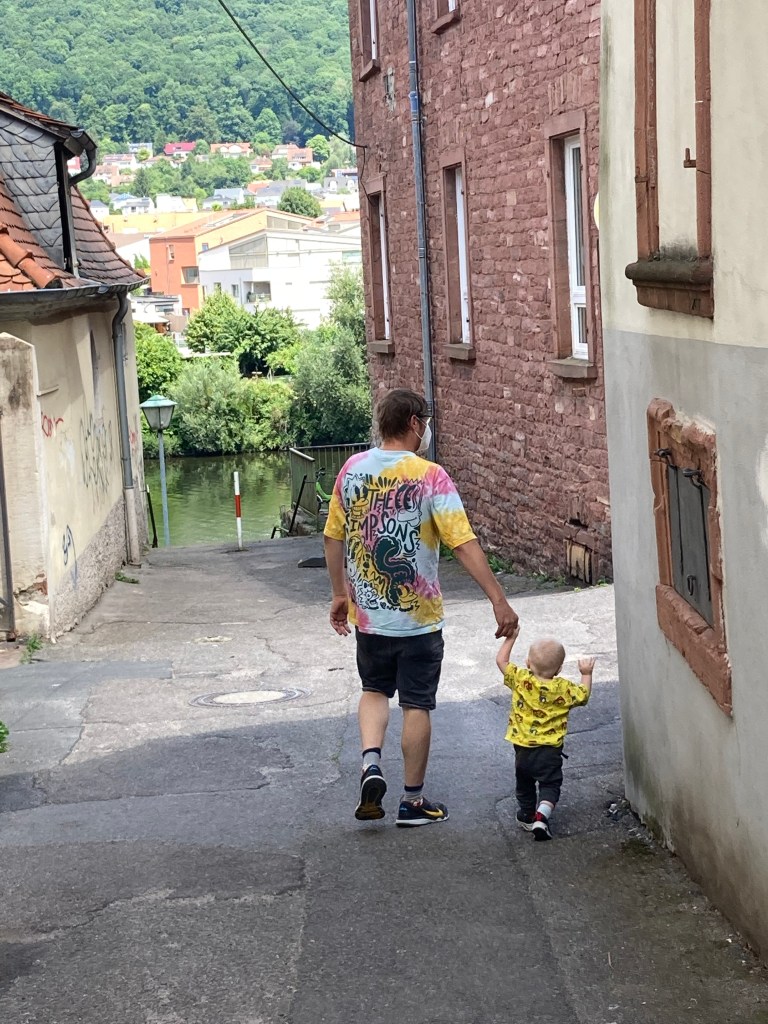
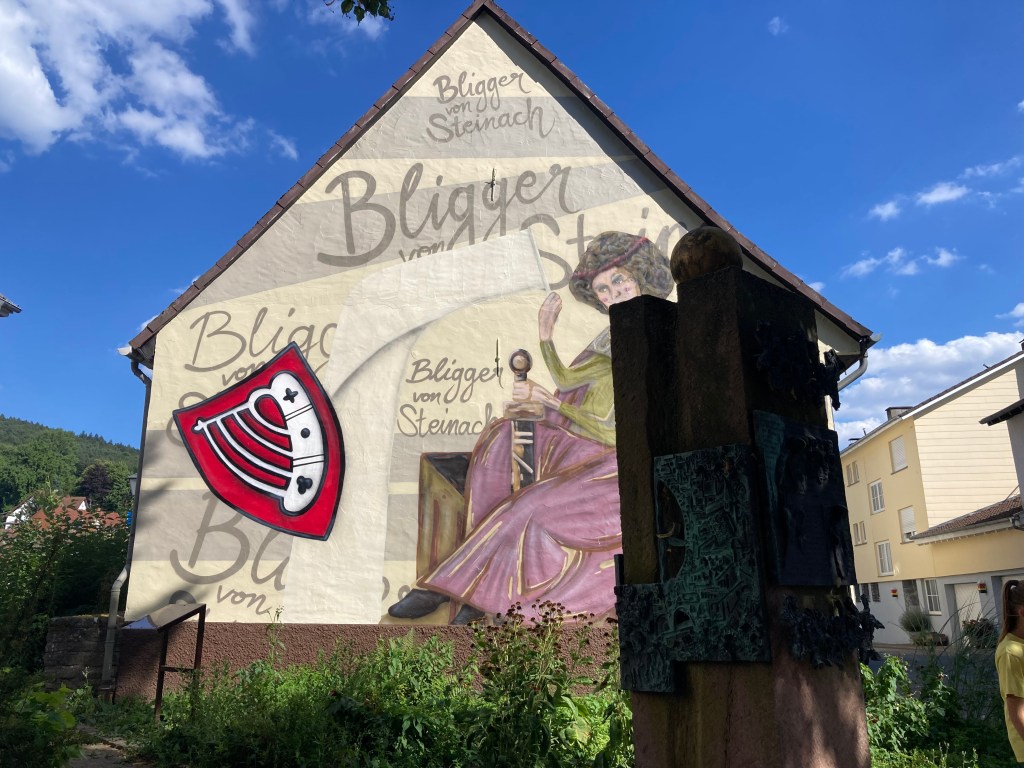
I first visited the castles of Dilsberg, then Neckarsteinach. The views were beautiful, though the light wasn’t ideal for photos. In Neckarsteinach, I visited a café with a museum upstairs that had information about the Odenwald Geo Park and the region’s castles. The staff kicked me out at 5 PM, so I bought a piece of cake to go and headed up the hill to the two privately-owned castles. On the way back I walked around the old town and found an old Jewish synagogue.


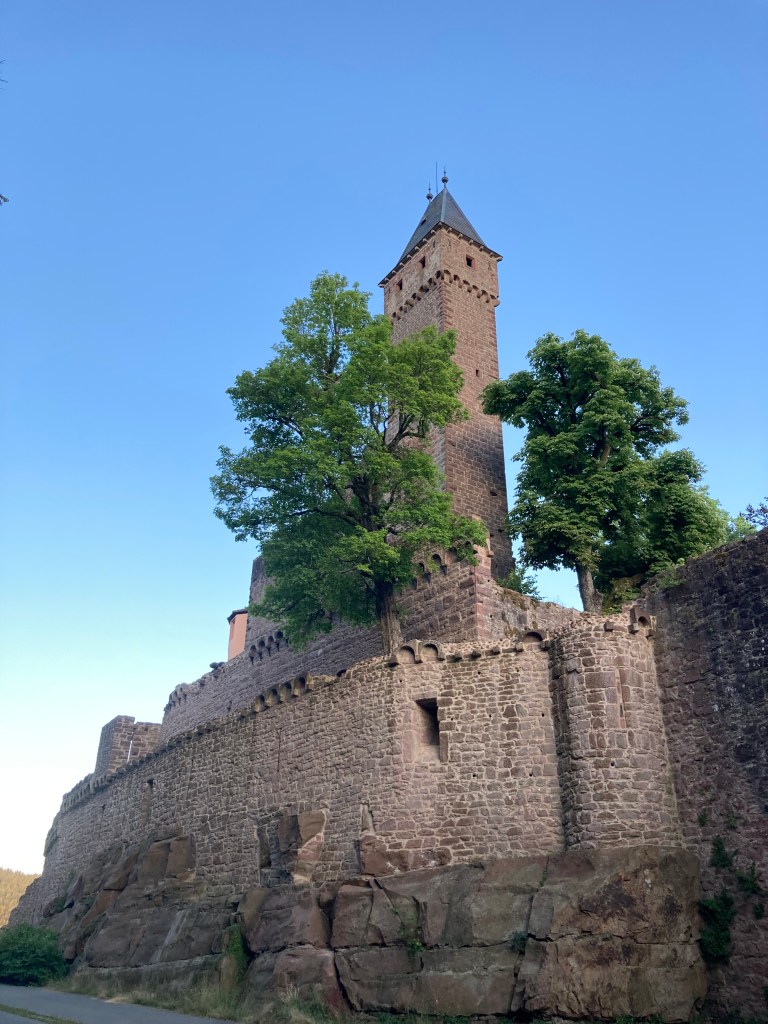
I ended my day in Hirschhorn, where I hiked up to the castle just as dusk was falling. I felt a little uneasy when a man drove up to the castle, so I decided to head back down and find a quieter spot to camp. I eventually found a place near the Odenwald Geo Park at a trail parking lot. I didn’t realize that there was an spring there, and woke up very wet. At least I didn’t have to worry about loggers nearby.

 Lisa Karpinski