
July 4, 2022. Today was a slow start—I woke at 10 and headed to breakfast, where Coosje and I talked for a few minutes. I thanked her for her kindness, then headed to pack. I hate cramming everything back in the car. Feels like I am suddenly living in a very messy room. I made a quick stop at LIDL, my favorite cheap (but good quality) supermarket, and wandered around the small town of Eibergen. Roel had suggested an itinerary for the day, and I followed it, heading along the Berkel River to visit Vreden, Stadtlohn, Gescher, Coesfeld, and Billerbeck. Roel had co-written a booklet of walks through these villages and I used it as a guide. It was fun to know a bit about where I was going. The villages were lovely and historic, and I wandered in my usual way, finding remnants of medieval walls and soaking up the architecture. Billerbeck really stood out—I considered staying the night, and wish I had, because my night didn’t go as planned.

I meant to head to Reken and camp in Hohe Mark, per Roel’s advice, but somehow ended up in Hoh instead—deep in an industrial zone. I found a little forest to crash in, but the truck noise went on all night. The one bright spot? Fireflies. My low-key July 4 fireworks.



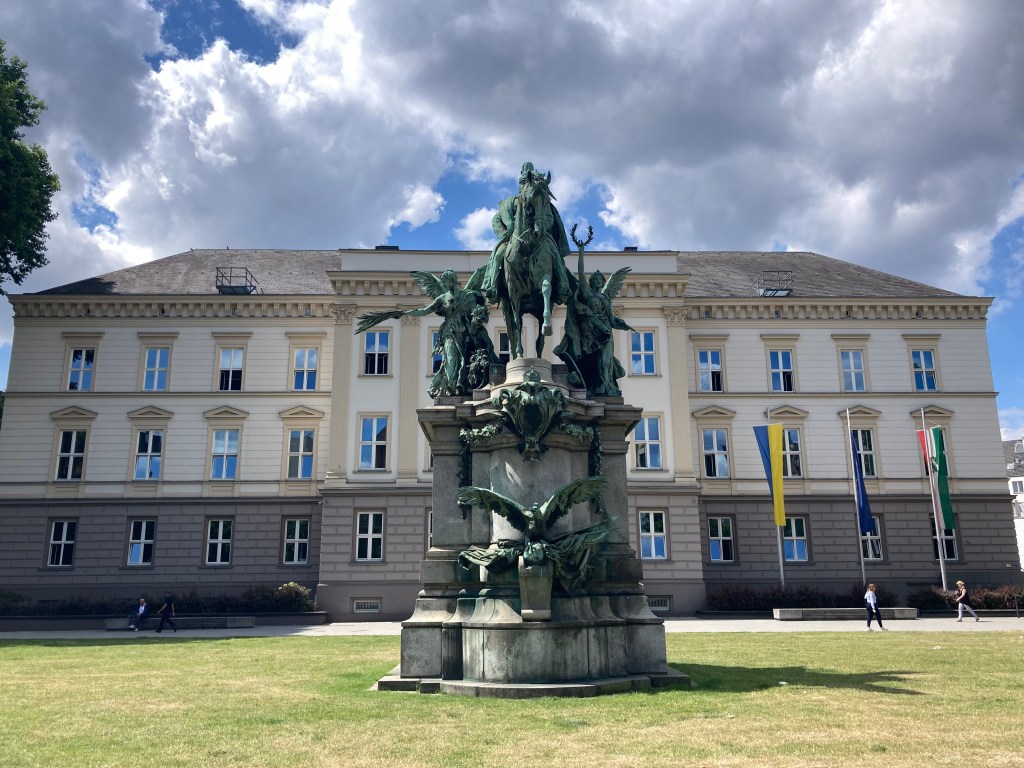
July 5. I woke in a groggy haze and got on the road around 9:30, hitting Münster by 11. Happily I found a great café—Copenhagen Coffee Lab—before heading to the market square Spiekerhof where the Send Fair, a wonderous occasion, happens three times a year. On the square stood Schloss Münster, the former residence of the prince-bishop built in 1767 with amazing figural ornamentation on the facades. Like so many stunning buildings in Germany, it had been bombed and heavily damaged in WWII. Thankfully the German people live up to their reputation as industrious workers and have reconstructed it and so many others.

The palace grounds were peaceful, and had been dedicated to Maria de Medici. I made a mental note to learn more about her as I have been fascinated with the Medici family since high school. The museum was packed with history, especially about local royalty, though I don’t remember much. What stuck with me was learning about Joseph Beuys—an artist, teacher, performance artist, and art theorist whose work reflected concepts of humanism and sociology. He had been early voice in the German green movement, influenced in part by Rudolf Steiner.
After the museum, I wandered Münster’s old town, visiting a few churches and monuments. I grabbed some fast food, chicken shawarma, for dinner, then drove to a nature area I spotted on the map. It said “no cars,” but I ignored that and went in anyway, already expecting a run-in. Sure enough, a couple walked by with their dog, and I pulled the fly over my tent hoping I wouldn’t be forcibly removed. Surprisingly I slept like a babe.


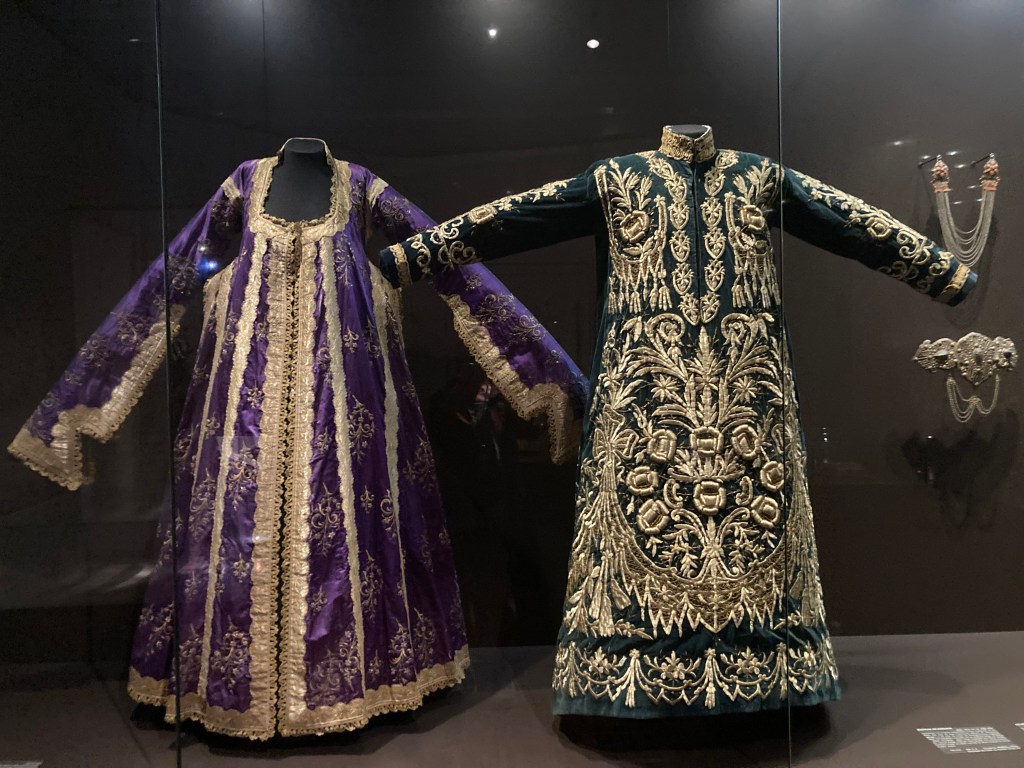
July 6. My luck didn’t last. I was woken at 7:30 by loud voices. A group of people were walking nearby, and a vehicle drove past that looked official. I packed up quickly and moved my car outside the park. An older guy came over and gave me a stern lecture in German. I didn’t understand and tried to communicate that, but he continued, undeterred. I thanked him and and left, as I didn’t want to incite more trouble. I headed to Cologne and after battling some confusing traffic detours, I parked and sat down for a nice latte at The Coffee Guy. From there I walked toward the old town, stopping at an ethnographic museum built around the collection of a German explorer named Oppenheim—stuff he brought back from the Middle East and “the Orient” in the late 1800s. It was fascinating, and I was surprised how aware he had been of the ills of colonialism. I stayed till 3:45.


From there I headed to the famous Cologne cathedral. Good thing I got there when I did because the back section closed shortly after I arrived. It’s an awe-inspiring building, towering and grand, a rare piece of neo-Gothic beauty in a city full of postwar concrete. A renowned monument of German Catholicism and Gothic architecture, it is Germany’s most visited landmark, apparently attracting up to 6 million people a year. It towers over the city at 515 feet, the tallest twin-spired church in the world.
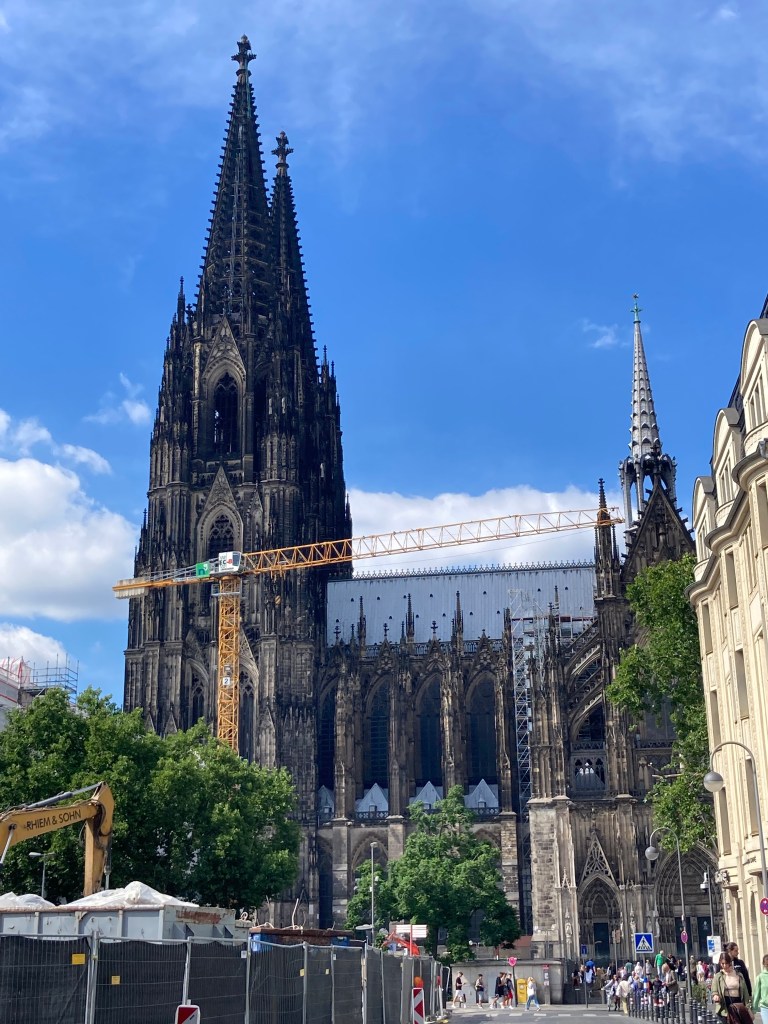
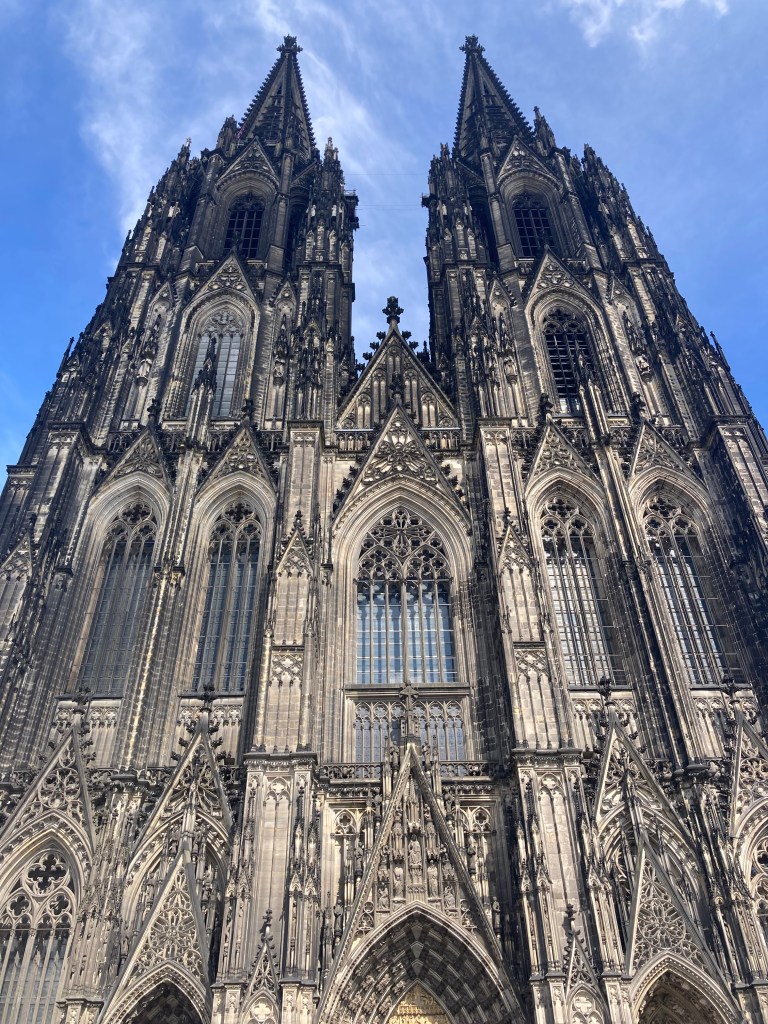
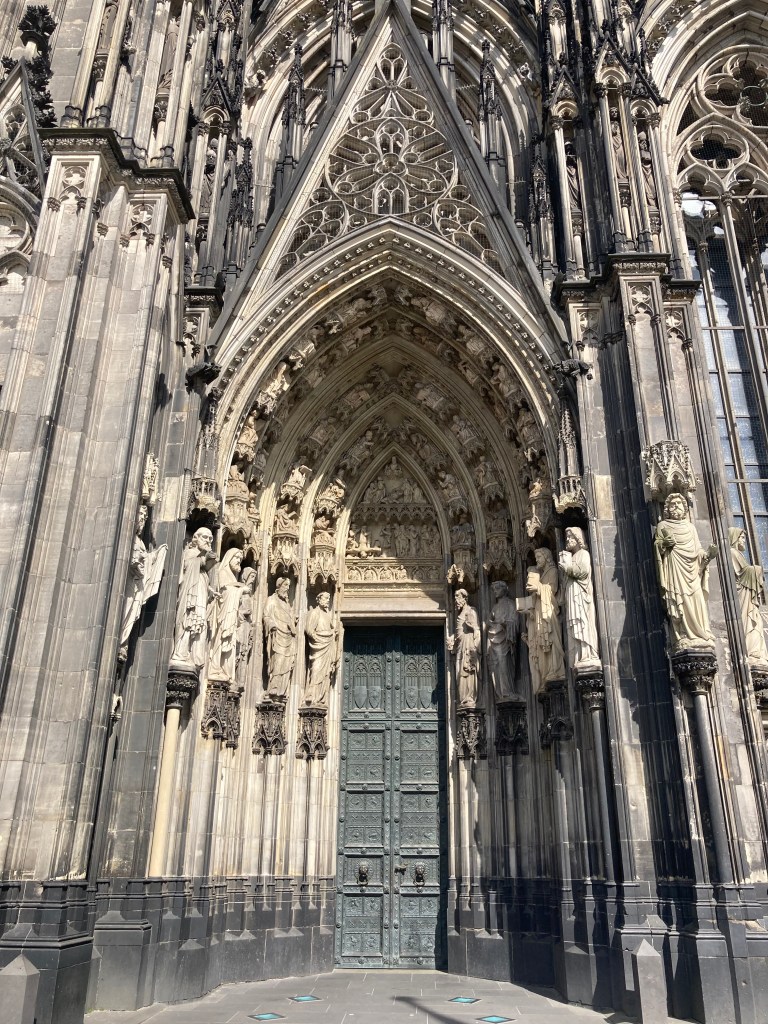
Construction began in 1248, was halted in the years around 1560, and the edifice was completed according to the original medieval plan in 1880. Cologne’s medieval builders had planned a grand structure to house the reliquary of the Three Kings and fit for its role as a place of worship for the Holy Roman Emperor. Despite having been left incomplete during the medieval period, Cologne Cathedral eventually became unified as “a masterpiece of exceptional intrinsic value” and “a powerful testimony to the strength and persistence of Christian belief in medieval and modern Europe”.

The rest of Cologne? Honestly rather bleak. I finally found the old town along the Rhine, but it felt more reconstructed than authentic. My phone died, so no photos of that stretch. I did find the plaque marking the Roman Mars Gate, a nod to the city’s ancient past, though the actual ruins are gone.
What really unsettled me, though, was the vibe. I saw people shooting up in the streets—even behind a church. A man in a wheelchair was sitting by my car shooting up heroine, and the whole scene felt heavy and dark. I didn’t want to stay, and headed to Bonn.

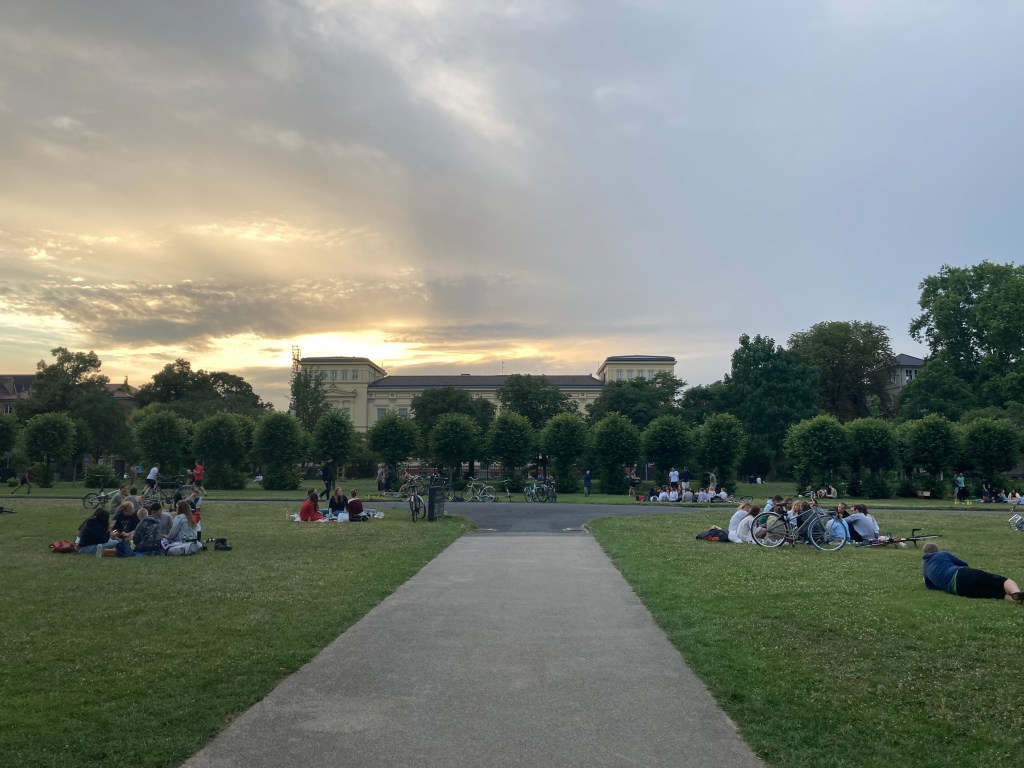
I got to Bonn at 7, and consolidated some cake that was going bad—bad idea keeping cream cake without refrigeration, by the way. I parked near the university, walking across the massive lawn behind the university field past students relaxing in the sun and found a gelato spot run by Italians. I told them I didn’t speak German, and they replied, “Neither do we!”—that cracked me up. We chatted in a mix of English and Italian while I enjoyed three scoops. I learned that Bonn had 39 museums, and actually had a road called the museum mile. I had come to the right place.

I left the city to find a nearby spot to sleep. I had seen Kottenforst on the map, but when I arrived the road was so narrow it felt like I was threading a needle. Finally found a place by the freeway—not ideal because of the noise, but I saw fireflies again, which gave me some peace. The ground was packed hard though, which I’d understand better the next morning.
July 7. Welcome to one of the most surreal mornings thus far. I woke up to the sound of a tree being dragged across the forest floor. Felt like I was in Avatar. I stuck my head out of the tent and saw logging equipment lumbering down the narrow forest track, barely one lane wide. I panicked, tore my tent down in 30 seconds and threw everything in the car. I wondered whether I would find my way out, and drove through the maze of dirt roads. It felt like a scene out of Mad Max, with a harvester bearing down on me. Somehow I made it out in one piece. I thought about how everywhere I went, the woods seemed to be disappearing. If more people slept in them, maybe they would protest what’s being lost.
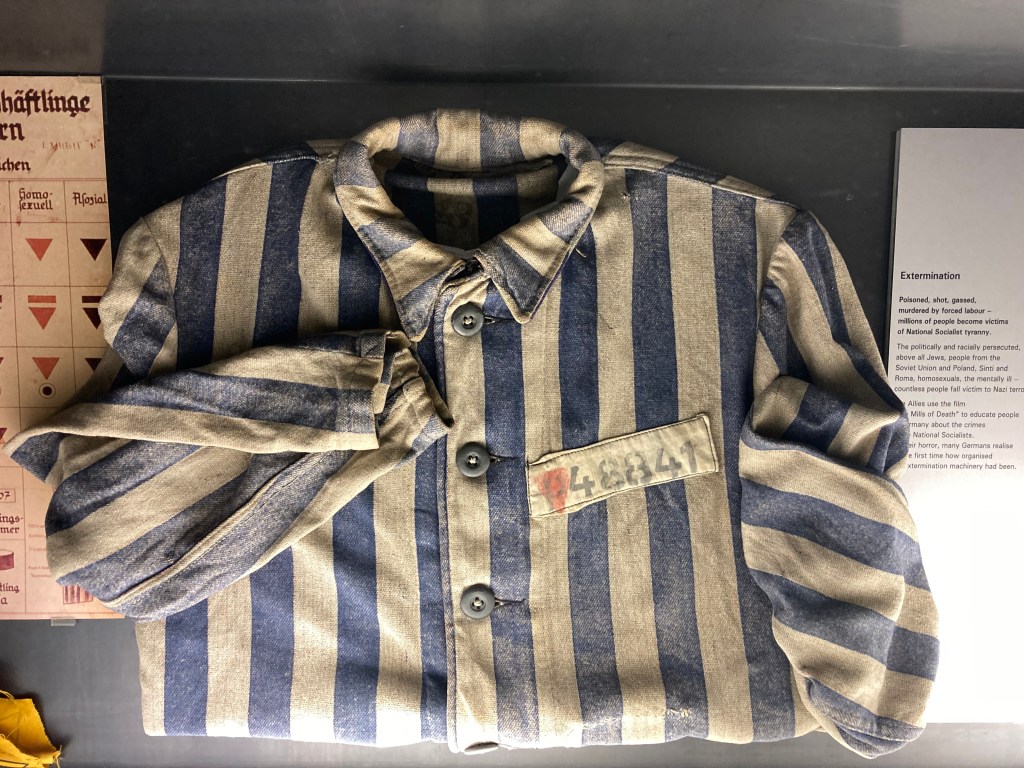
After all the excitement, I needed to relax, and headed to a cafe near the museum I planned to visit that day. The macchiato was weak, but the pastries were good. I am always sad to leave Germany and France because they have the best pastries IMHO. Having satisfied a desire for caffeine and sweets, I headed to the Haus der Geschichte. I spent the entire day reading the detailed history from the rise of the Third Reich till today. It was very well presented, and I admired the German’s dedication to teaching its youth about the crimes of the past. Case in point: hundreds of school kids descended upon the place while I was there. I wished the US would go through a similar process, teaching all US citizens our brutal history toward native Americans and blacks.


When I left, I rushed to the botanical garden, expecting it to be closed. It was, but I managed to enter via a trail and slipped onto a tour led by a professor. He led a second tour, and I was elated when he pointed out California redwoods. He warned not to plant them in the front yard. I wondered why. For some reason the botanic gardens were open late that night. Must have been some university event. Satisfied at having spent a few hours there, I left and walked around the historic city before swinging the gelato place and calling Aziz, my Airbnb host.


It turned out I had to pay for the room—Shawn had only reserved it. The house shook every time a train passed, and the tracks were 50 feet away. I definitely did not want to stay more than one night. Aziz offered to show me a few places in town, including a park and tower where he had camped when he was homeless. He had come from Sudan and I found him fascinating. He had been angry that no one would offer him accommodation, and now owned ten places. When I told him I’d been camping in the woods, he grinned and called me crazy. We bonded instantly. He had to let some guests into another of his places, and I went along, admiring what he had created out of nothing.
I was wiped from the early morning wake-up call, and hoped to have a good sleep. I felt at home in the charming, rambling house, but barely slept because of the noisy train, which ran all night.
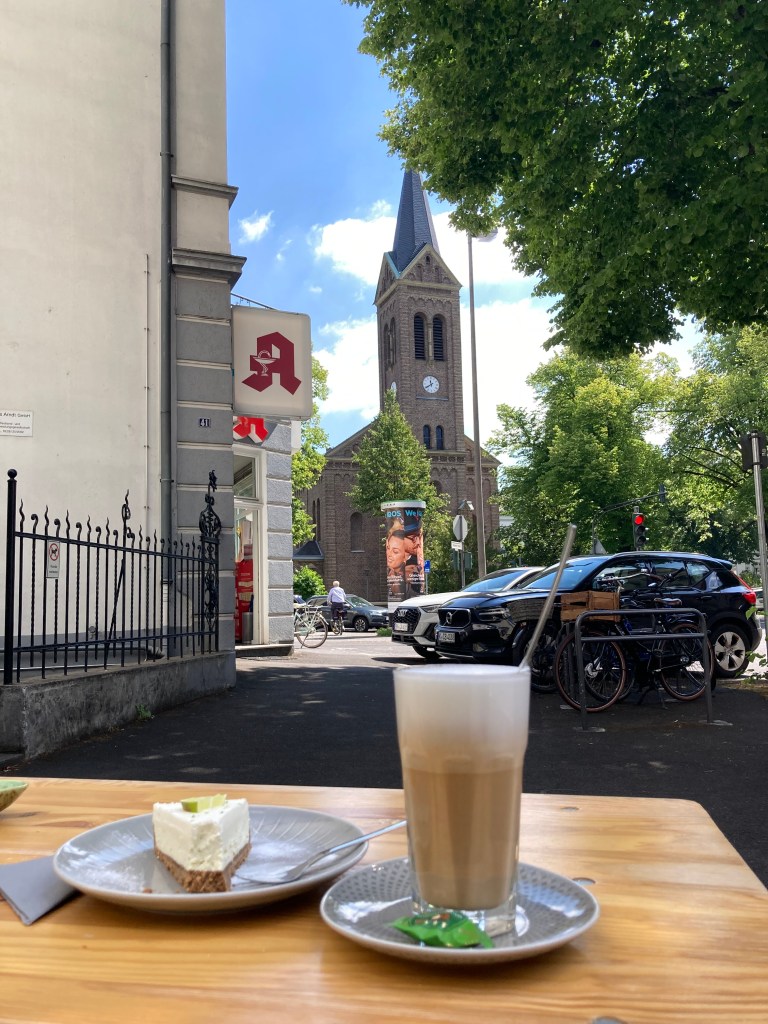
July 8. My day started around 10. I’d finally fallen asleep in the early morning. I guess you can adjust to any noise. Aziz had agreed to let me cancel the second night since I couldn’t sleep, and I thanked him and headed out. I found a cozy café called Lindenbaum, and had an excellent key lime pie and a double-shot macchiato. The staff were friendly and recommended some places to check out, including recommending that I get a €9 ticket that would let me ride regional trains all across Germany for a month. It was an incentive being offered during Covid. I thought, why not? So I headed to the nearest train station and bought one.

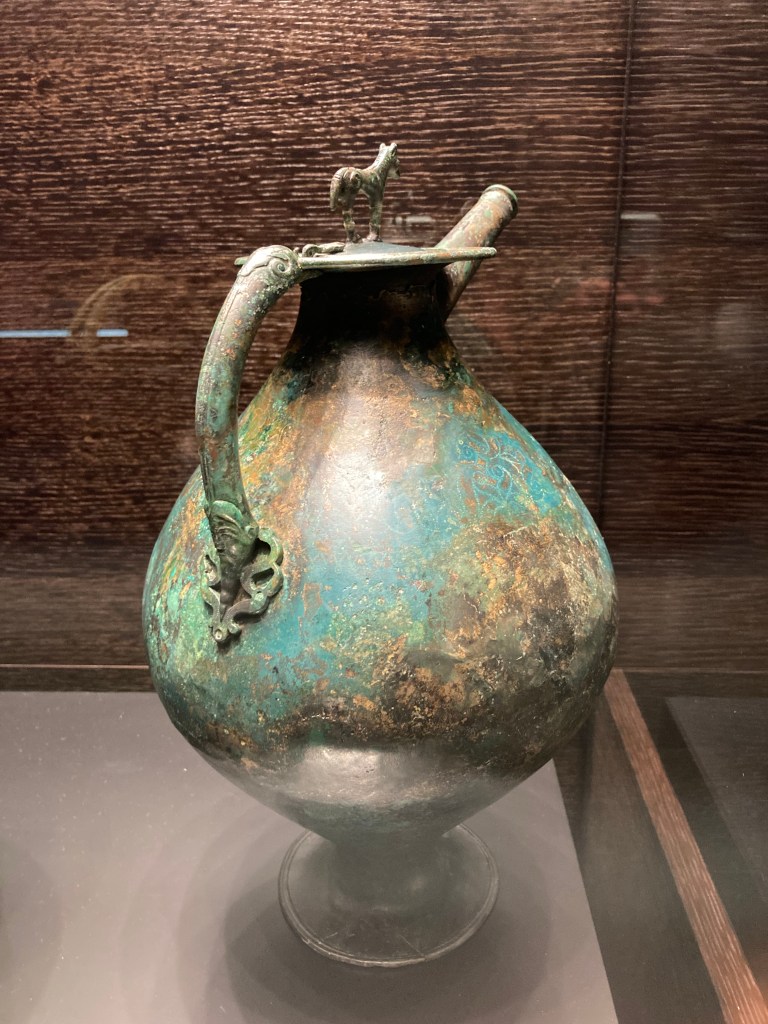
Next stop was the Rheinisches Landesmuseum. I was a little disappointed to find most of the exhibits were being changed, but what was there—Neanderthal finds and a ton of early Stone Age through Celtic era artifacts—was still fascinating. Lots of information to take in.


By 4pm I left and walked toward the August Macke House, dedicated to the impressionist painter who had lived there. On the way I stumbled onto an old cemetery where Beethoven’s mother, Clara and Robert Schumann, and some of Beethoven’s friends were buried. I took my time finding their graves and tried to exit the other side of the cemetery—no luck. I had to double back and finally made it to the museum with just 10 minutes to spare. I asked if I could enter for free and sprinted upstairs, snapping photos of every room and QR codes for the audio guide. A Japanese woman followed me in and said I wasn’t supposed to do that, but I promised I’d be quick. I was out by 4:59, and even managed a brief bathroom stop.


After that whirlwind, I saw a kebab place—City Express 2—and ordered half a chicken to go. But of course, I didn’t have cash. So I ended up walking nearly a mile round-trip to an ATM in the old town and brought my hard-earned chicken back to eat near the Sterntor. That’s when I learned about the Elephant Restaurant, which dates back to the 1600s and is still in operation. I told Shawn about it. He loves food related details.
I wandered through town, saw the old city hall, grabbed some gelato, and eventually walked along the Rhine promenade after checking out the exterior of the chapel where a young Beethoven played organ at 14—and violin ten years later as part of the court orchestra, which was one of the finest in Germany at the time. The Rhine walk was beautiful and relaxing. I strolled for about 20 minutes before heading off to stay with my couchsurfing hosts in nearby St Augustin.

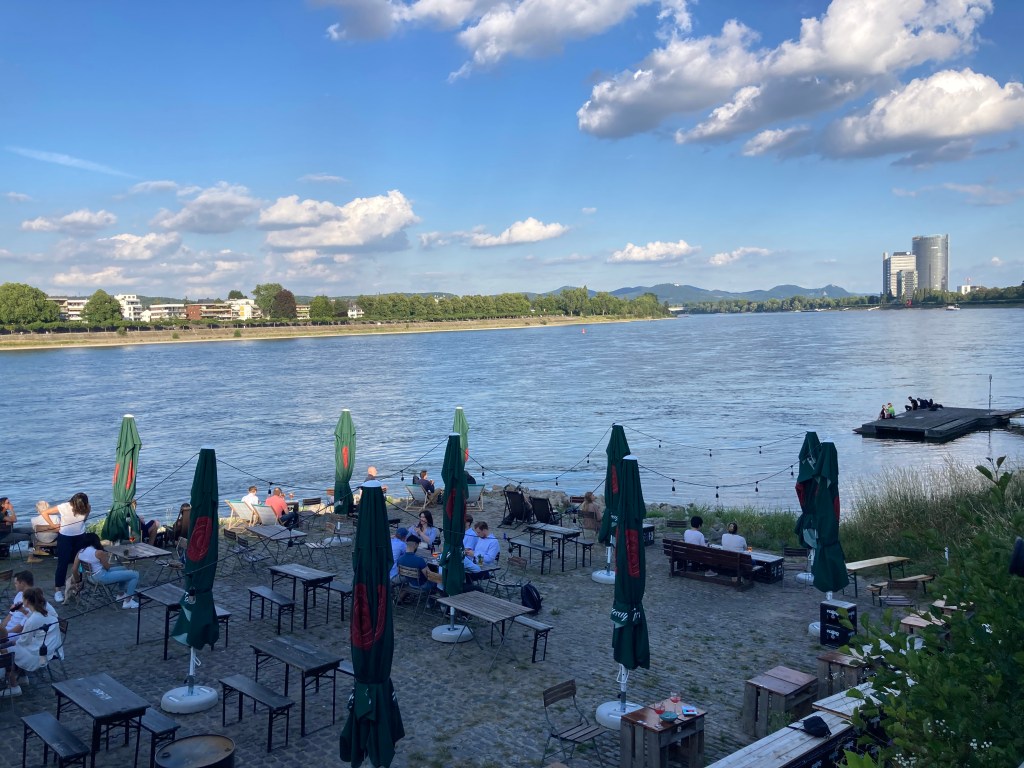
I parked outside Andy and Verena’s apartment. They told me I needed to move my car a few blocks because neighbors didn’t allow parking on the street. Verena was lovely—she recommended the Siebengebirgsmuseum (Seven Mountains Museum) and told me about hikes in the area. We had a long conversation about ecology, climate change, and caring for one’s inner child. I joked about the guest room being full of stuffed animals and toys, and then laughed, saying, “Oh, it’s for your inner children.” They cracked up.

I moved my car and happened upon a violent fight—two guys, one clearly attacking the other. I froze at first, then walked away, but circled back yelling “Stop! Stop!” One of them looked like he might come after me, shouting. I panicked and knocked on a neighbor’s door to explain, and the guy who answered walked out to break up the fight. I was afraid he might get hurt and upon returning, said “Polizei?” and I said “Yes!” The attackers eventually sped off on a motorcycle, but the scooter was still there the next morning. I couldn’t stop thinking about it. I saw an ambulance outside the window later that night and couldn’t help but wonder—was it for him? I felt haunted. Did I do enough? I tried to sleep, but between the heat and adrenaline, it was a struggle.
July 9. A loud siren woke me at 8:30. I moved my car, pulled some food from the trunk for breakfast, and worked on my Germany itinerary and blog for a while before heading out around 11:30. First I visited the Koenig Museum, a zoological natural history museum in Bonn. The building itself is stunning—elegant and classic. I learned all about the man behind it and the museum’s biodiversity conservation work. There was a lot of fascinating info about rainforests and desert ecosystems, especially in Africa. I stayed until 5 p.m. and could have stayed longer.


Afterward, I went back to the kebab place (couldn’t resist), then wandered around the neighborhood. I treated myself to a giant ice cream sundae—regretted it immediately because it made my stomach ache. As usual my eyes were bigger than my stomach. Later I walked around Bonn’s old town, hunting for Beethoven monuments and the places tied to his life. I was out pretty late, until around 10.
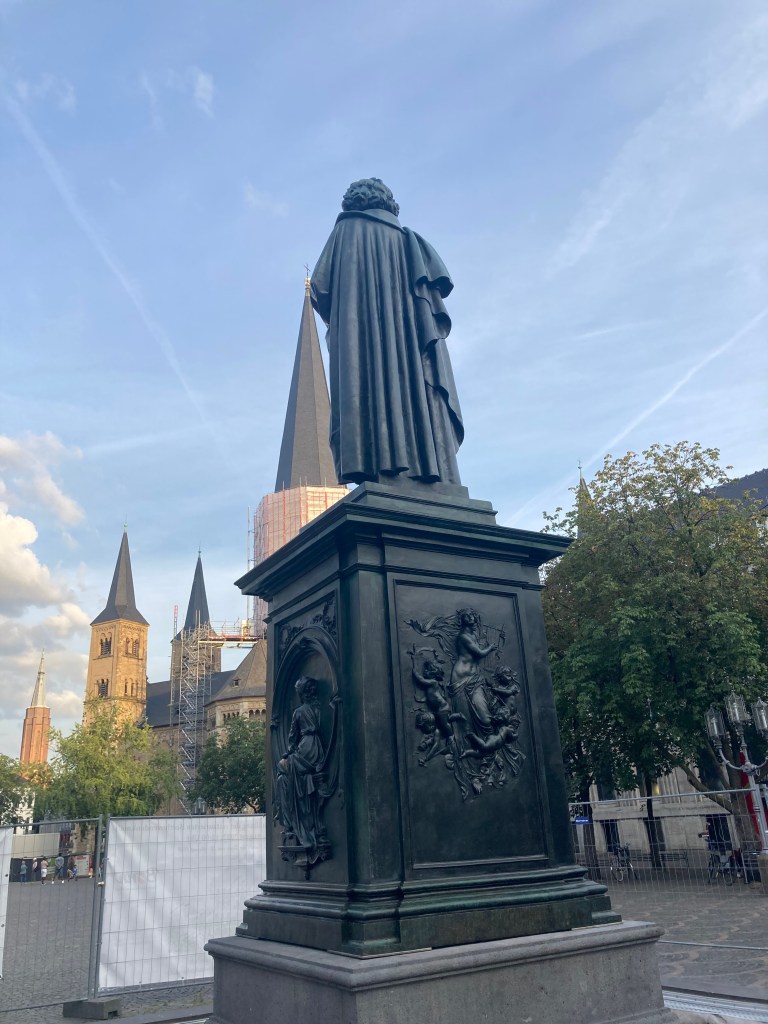

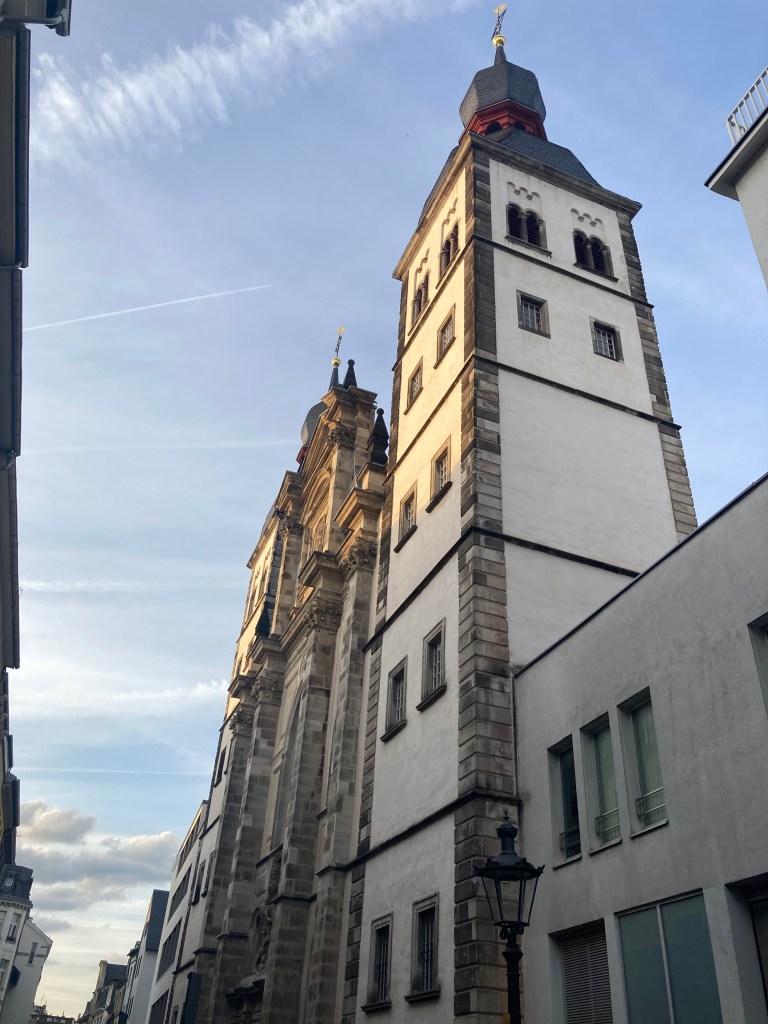
July 10. I didn’t get up until noon, completely drained from not sleeping well for so many nights. I hung out for a bit with Andy and Verena before heading off around 1:30 for the Siebengebirgsmuseum in Königswinter. Parking was a nightmare—I eventually found a spot near the Marktplatz, near an open-air antique flea market of sorts. There were crowds everywhere. I wanted to grab a slice of cake, but the queue for the cafe was moving at a snail’s pace, so I bailed and went to the museum.


They didn’t have any information in English, so I used Google Translate to make sense of the exhibits, hoping I wouldn’t exhaust my data limit for the month. It focused on the Romantic-era influence of that part of the Rhine on poets, musicians, and painters—Lord Byron apparently had a huge impact here. The museum also touched on a separatist movement that began in this region before the Third Reich. Who knew?


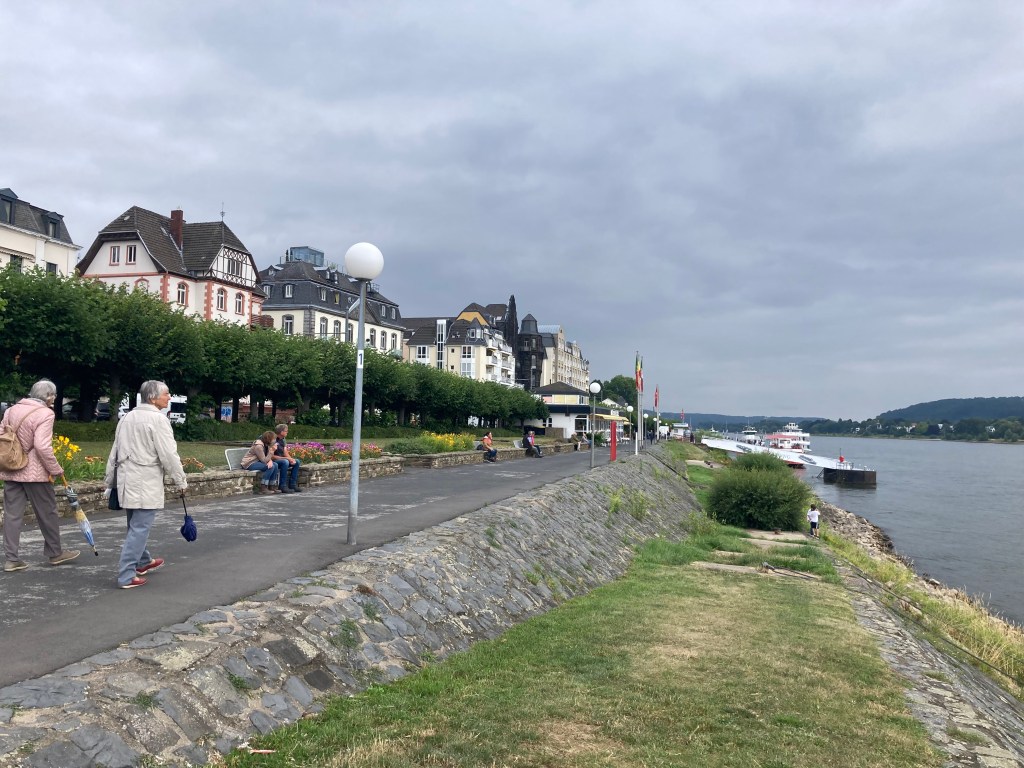
Afterwards, I wandered through town, admiring the old buildings and walking along the lovely promenade. It’s easy to see why wealthy folks built stately residences here—it’s gorgeous. Then I drove up to the grand Hotel Petersberg on the mountain and walked around a bit. There’s a chapel there, St. Peter’s, that dates back to when Cistercian monks had an abbey here. The ruins are still a big pilgrimage site.

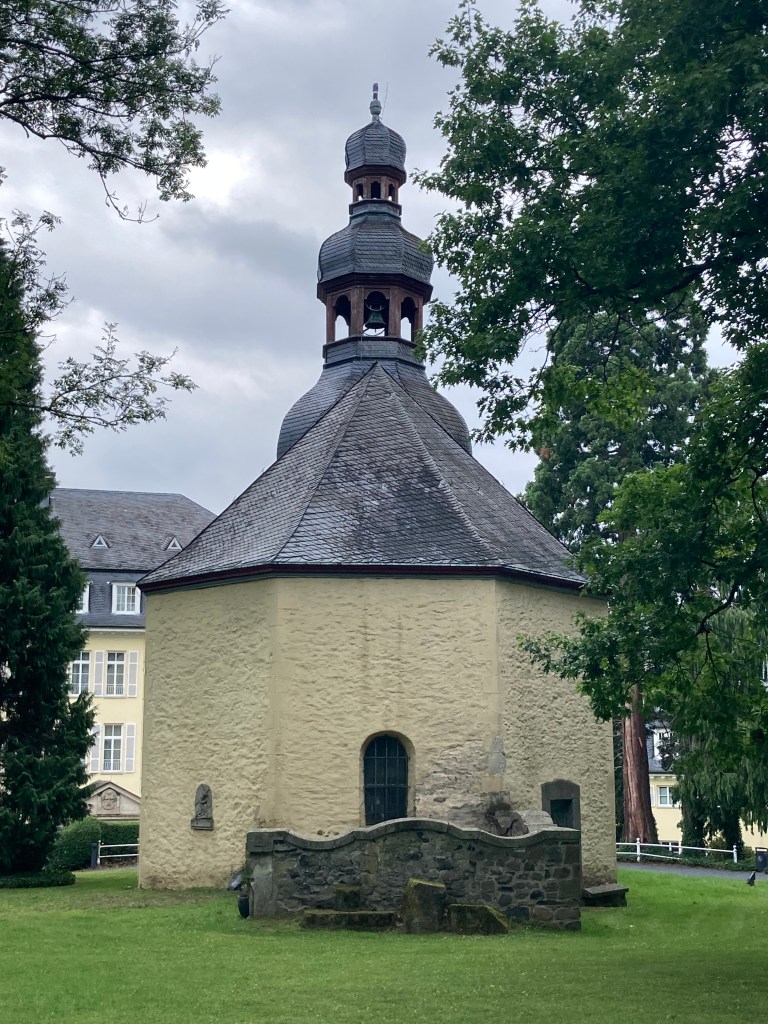

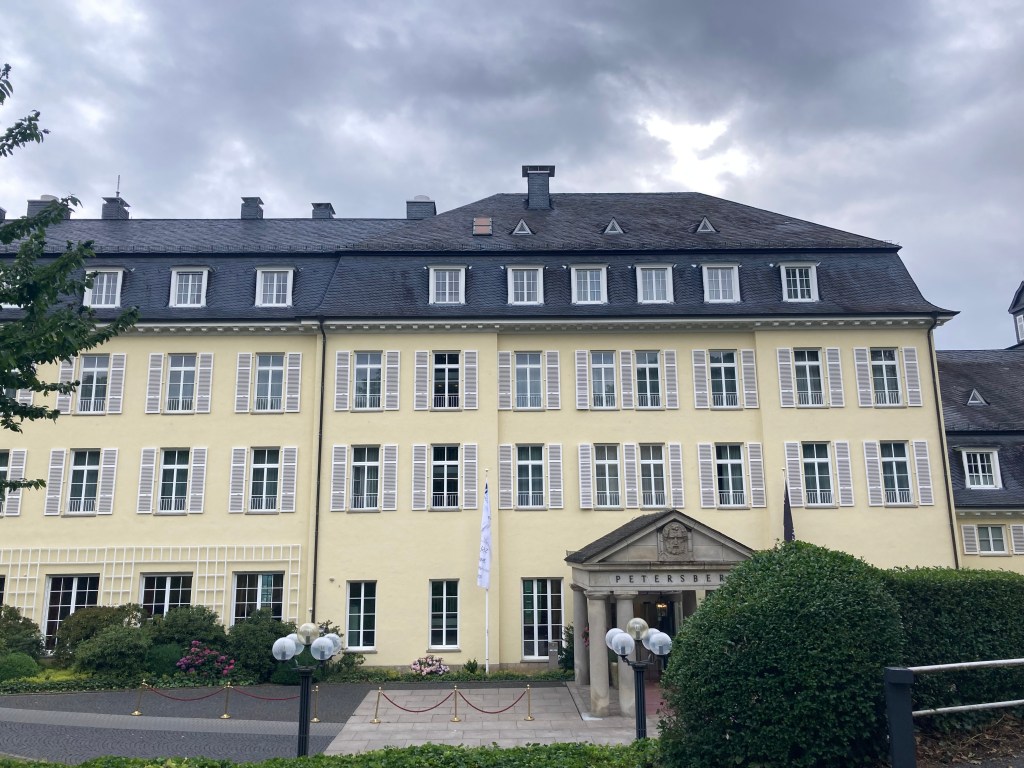

Driving back down the mountain, I got caught by a speed camera. There was a sign for 50 km/h (30 mph), and I couldn’t slow down in time. So now I would have a speeding ticket souvenir to remember it by. I thought about how I was always struggling to save money on the trip—stretching every euro, remembering those old “Europe on $10 a Day” books my parents had. I’ve met people traveling on even less, and I understand that mindset. But it’s hard to shake the feeling that I’m always in survival mode.
Later I drove through Südstadt in Bonn to see the beautiful houses and realized that’s where my favorite gelato spot is—so of course, I went back. I wandered the area until about 9 p.m., soaking in the architecture and golden-hour glow, then returned to say goodbye to Verena, who had an early morning ahead.


 Lisa Karpinski