
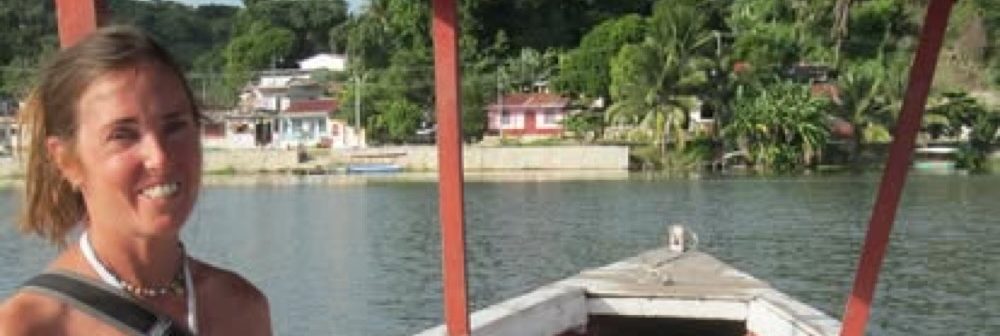
August 19, 2022. I woke to a wet, miserable mess. Everything felt damp, but miraculously my tent fly had held up and kept me dry. Thank you, trusty gear. I headed back to Klagenfurt. I’d planned just to pass through but was fascinated by its history. This place had layers I hadn’t expected.
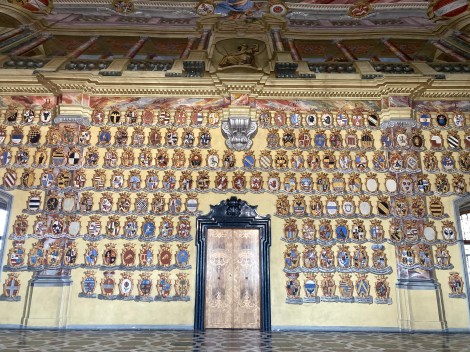
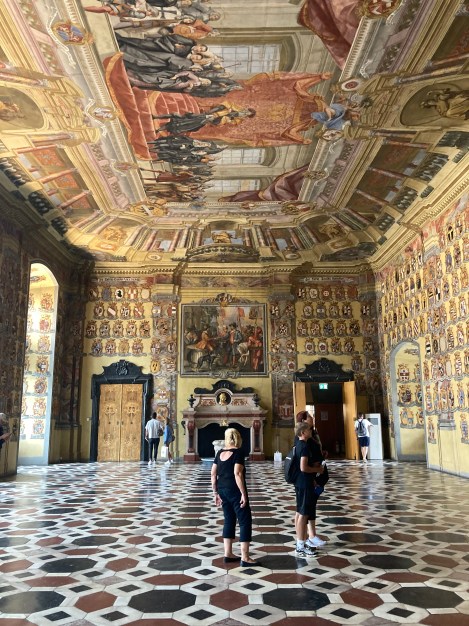
One of the highlights was the Wappensaal, or Hall of Heraldry. It’s this massive chamber with over 700 coats of arms painted on the walls. Just standing there, surrounded by all that history, was humbling. This is where the Carinthian legislature used to meet, and I learned more about the region of Carinthia, which I honestly didn’t know much about before. Turns out it once stretched all the way down into what’s now Slovenia. So many shifting borders, tangled up in centuries of politics and war.
I wandered the streets and started noticing all these gorgeous Art Deco and Baroque buildings. Klagenfurt is a bit unusual in that a group of noblemen actually petitioned the emperor to grant them an independent city, so a lot of the architecture is noble-built rather than bourgeois or royal. It gives the city a very particular, stately feel.
Eventually, I peeled myself away from Klagenfurt and began heading toward the Slovenian Alps. I still didn’t have my van at this point, so I had to be careful to avoid freeways. The drive was beautiful, but I ran into a serious accident. The road was blocked, and a large glass truck in front of me couldn’t take the corners, so we were stuck for what felt like forever. Frustrating, but unavoidable.
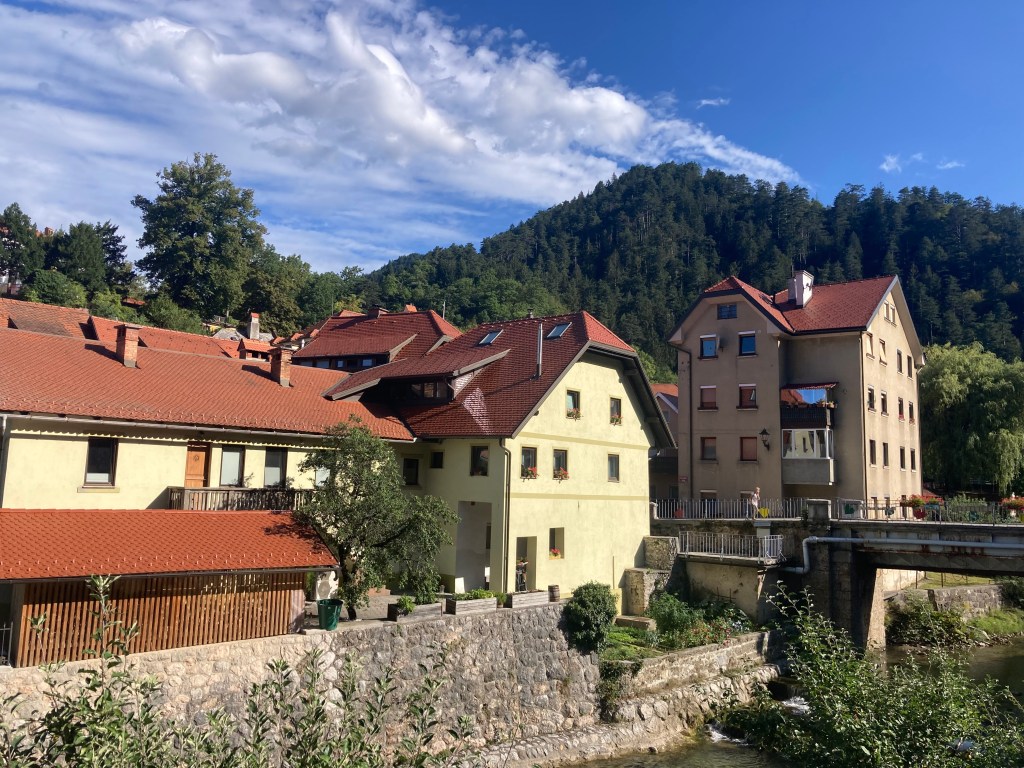
Crossing into Slovenia, I exited pretty quickly to try and get a vignette, but the process was confusing—they asked for my VIN number, which I had to go back to get. Classic. But then I spotted a sign for the historic town of Tržič and figured… why not? I’m so glad I did.

There was an info booth near a trailhead, and the guy there told me it was beautiful, so I went for it. The trail turned out to be more of a climb—steep, narrow, borderline rock climbing in places—and I tweaked my knee pretty badly. But the views and the feeling of solitude were worth it. After finishing the loop, I wandered through the old town and stumbled onto an art exhibition about water. It was the opening night, so people were gathered, mingling, chatting. I felt awkward not speaking the language, so I kept wandering, eventually slipping back to snag a couple of snacks. I listened to a guy showing off his alpine hiking photos and quietly slipped away after a bit, camping near the gorge I’d hiked earlier. I thought I’d found a peaceful turnout—until the local teens decided to use the road for late-night drag racing. They zoomed by all night, just feet from my tent. Terrifying.

August 20. I got up early and drove into the mountains above Tržič to a spot called Dolina. There’s this once-glorious villa up there that a Berlin man built in the early 1900s—he’s the one who electrified the village and even blasted a tunnel through the mountain to build the road. Sadly, the villa was bombed during WWII, but the ambition of it all stuck with me.
Back in Tržič, I visited a café I’d seen the day before. The cakes were divine—made by the mother of the guy who runs both the café and the museum upstairs. There were like 20 different kinds. Mine was incredible, and the prices? Unbelievably fair. €3.70 for cake, €1.50 for a latte. I was in heaven. I loved that the café felt so well-kept and loved, while the surrounding buildings were crumbling. It made me wonder why some places are preserved and others left to rot.
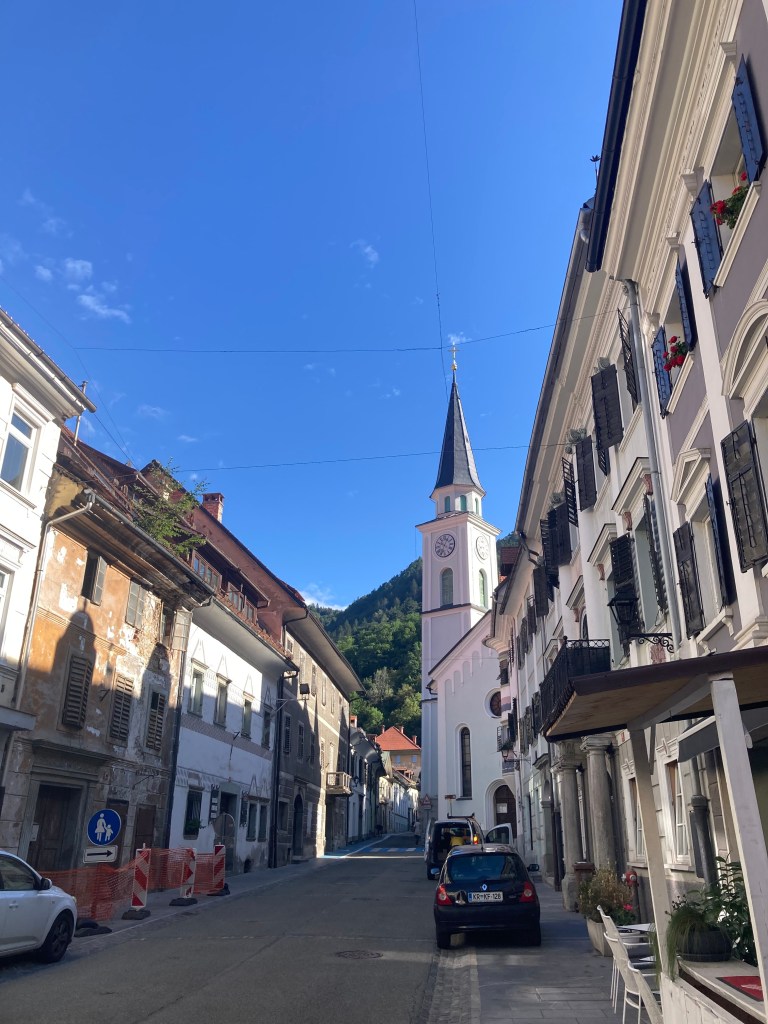
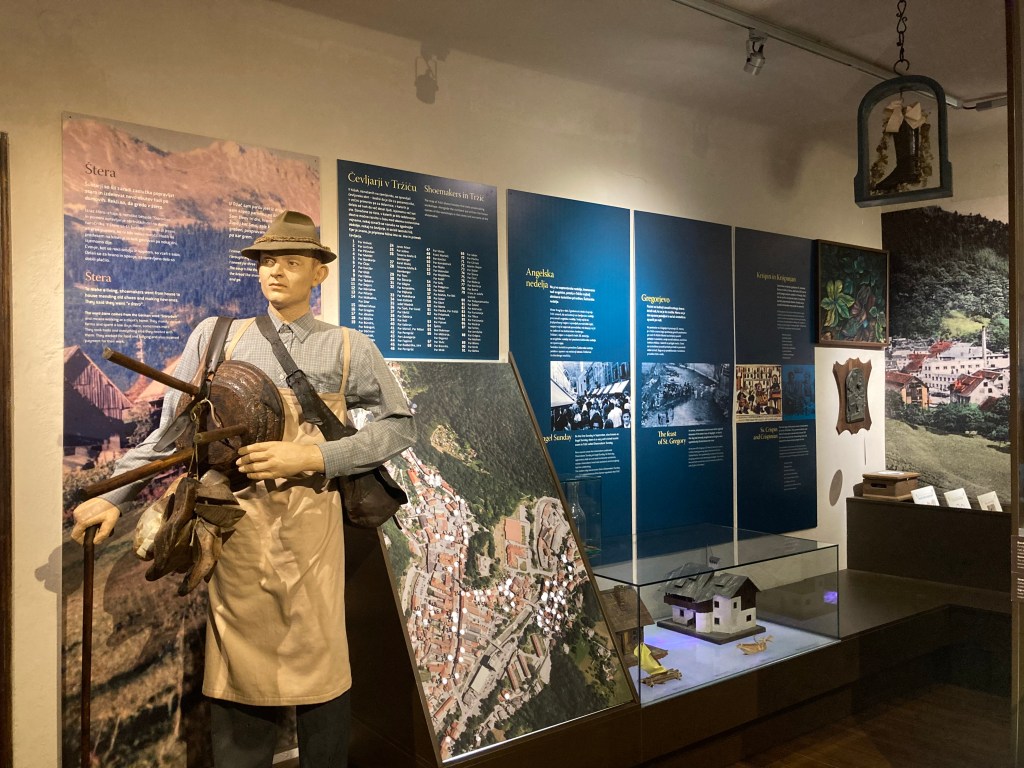
The museum itself was unexpectedly fascinating. The woman who worked there gave me a deep dive into the town’s shoemaking history, its indigo factory, and even the local ski legends—several of whom ended up in the Olympics. Her passion and kindness really moved me. I left around 2pm, totally glad I’d stayed longer than planned.
Ljubljana was next. I parked near the Saturday market but eventually moved to a lot near the castle. I explored the castle’s free areas (wasn’t in the mood to pay for yet another tour), then wandered down into the old town. It was a hot day, packed with people. I grabbed a pita falafel from a friendly vendor who stuffed it with veggies—bless him—and I walked both sides of the river all the way to the end of town.

I tried to visit what I thought was a castle but turned out to be a church with a tragic past—it had been a place of torture and killing during WWII. Rain came in the night, and I slept in the car park like usual.
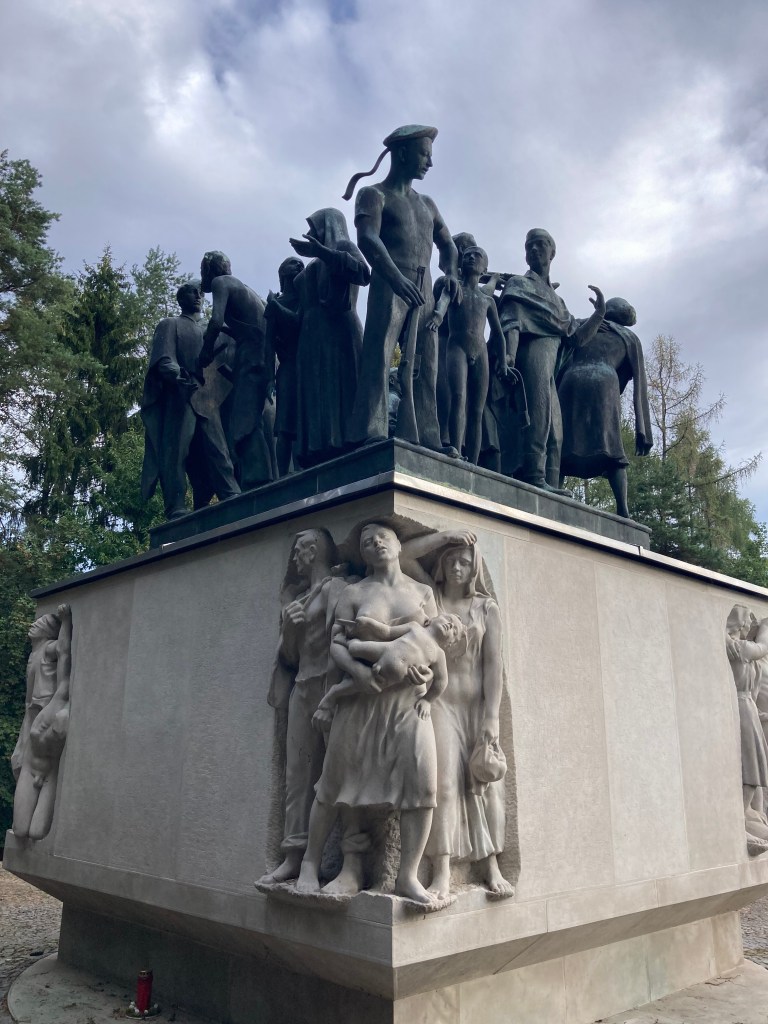
August 21. I woke early to the voices of hikers, and hiked up to the memorial monument near the church. I was struck by the warmth and kindness of the Slovenians. There’s a gentleness and openness that I really appreciated.
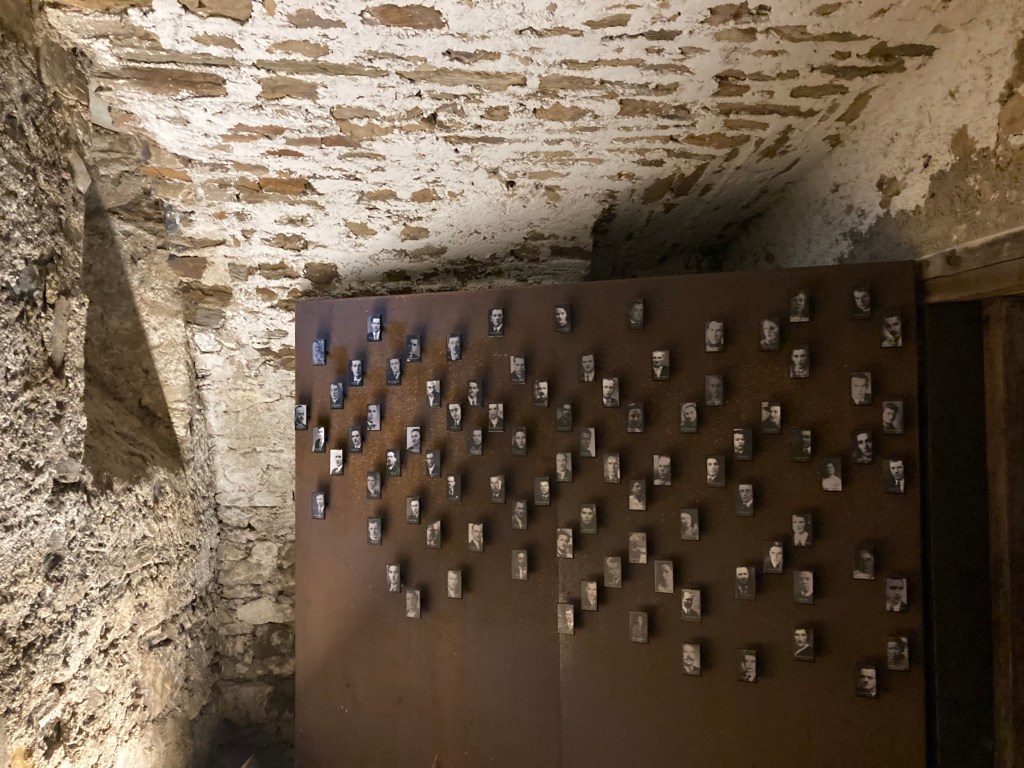
I saw an old building near the church and went in—it turned out to be the torture site itself. Heavy stuff. The panels described in vivid, painful detail what happened there. I felt that lingering energy in the cells. It stuck with me.
After that, I headed to an old castle that had been converted into an architecture museum, but the grounds were a letdown, so I moved on to Tivoli Park. There, I had a weird run-in with a woman over a parking space (her tone was intense, but fair—I moved). I found a plaque honoring a writer who grew up in one of the local housing blocks and described his working-class childhood there. It reminded me of post-Soviet Bratislava, gritty and grim.

Tivoli Park didn’t match the rosy memory I had from before—maybe because I was in a different part, or maybe because I wasn’t seeing it through travel-newbie eyes this time. A young man approached me—maybe of Arabic descent—and asked if he could walk with me. I agreed for a bit but eventually asked to go on alone. I felt bad—he seemed lonely, maybe misunderstood—but I wasn’t comfortable, and that’s something I’m learning to listen to.
After the park, I wandered back toward town, stumbled on a coffee roasting place, and got a lackluster latte from a sweet guy covering for a friend. I found my way into City Hall and another courtyard museum, admiring the Renaissance architecture. The old town center is still stunning, but the rest of Ljubljana? Not so much. Away from the core, it felt postmodern, gritty, and not very pedestrian-friendly. When you arrive by train, you miss all that—driving shows you everything.
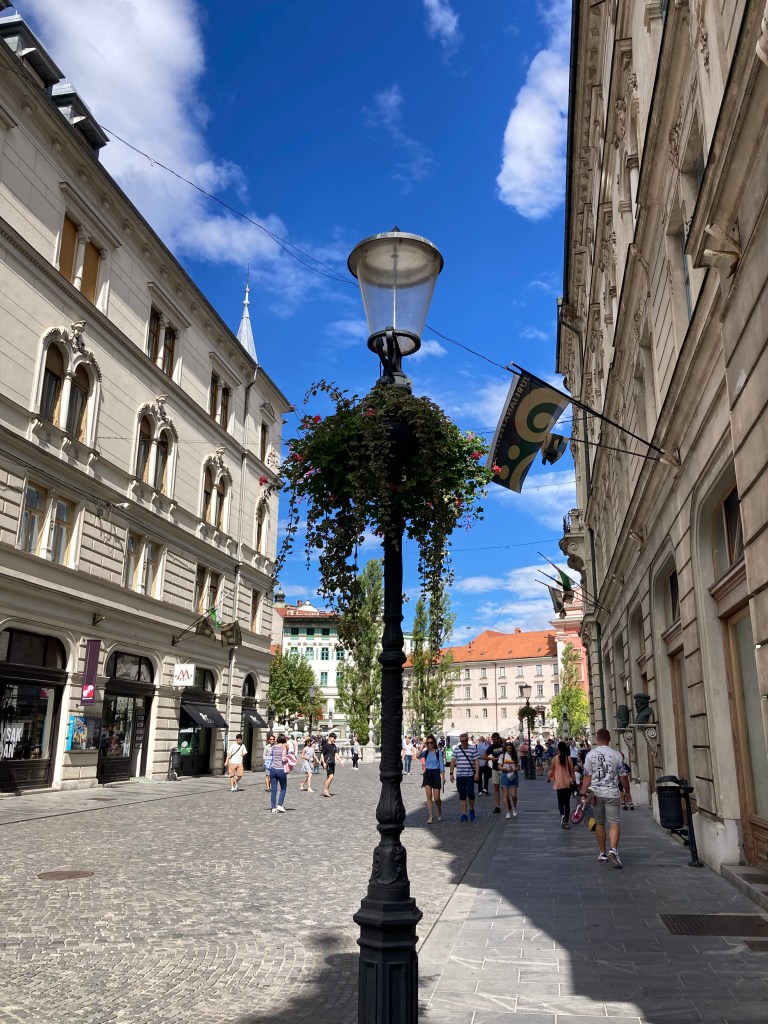
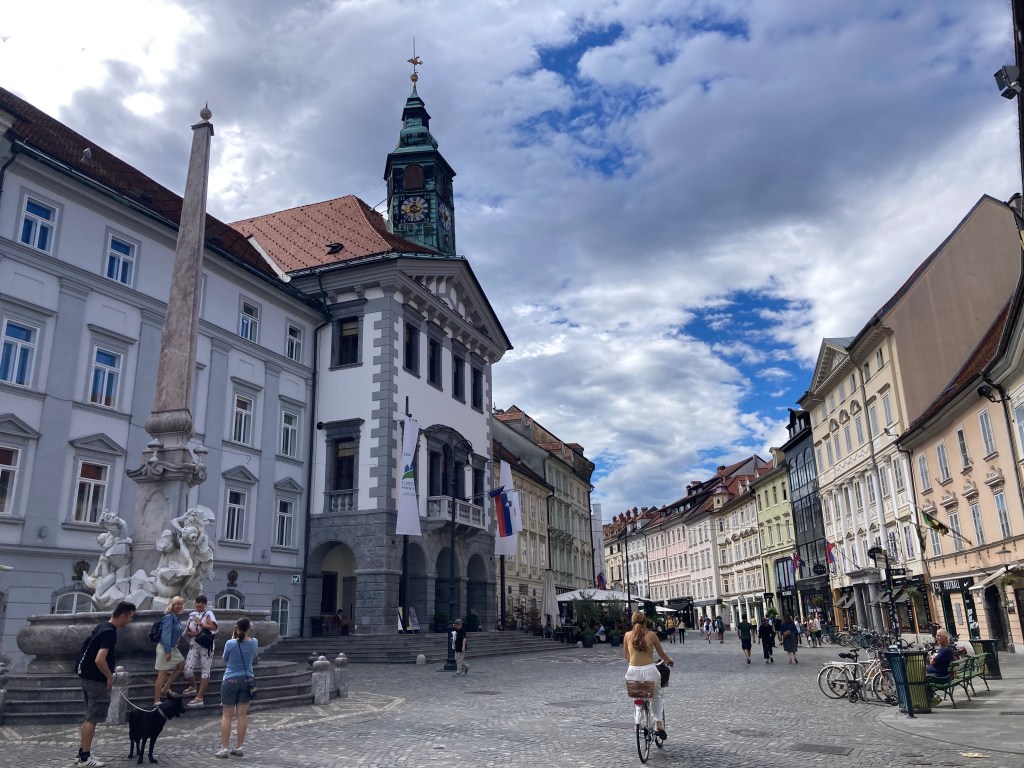
I had big plans to find the “Swiss House,” where bohemians and a local poet used to hang out in the park, but I never managed to find it. I did overhear a tour guide who had moved back after years abroad—she called Ljubljana a tranquil capital, but it felt too crowded and touristy for me this time around. I tried to find a nice fish meal but ended up blowing too much money on ice cream. Go figure.
Then I headed south. I considered the famous caves, but instead I just kept driving—straight into Croatia. The border crossing was painfully slow even though both countries are in Schengen. It took over an hour. Same thing happened later heading into Italy, so I guess that’s just how it is.
I got to Pula around 3:30pm, parked by the harbor, and then found a shady spot near a park. The first thing I saw? That magnificent Roman amphitheater. I walked around but didn’t go in, then checked out a nearby archaeological exhibit on caves, which was actually really cool.
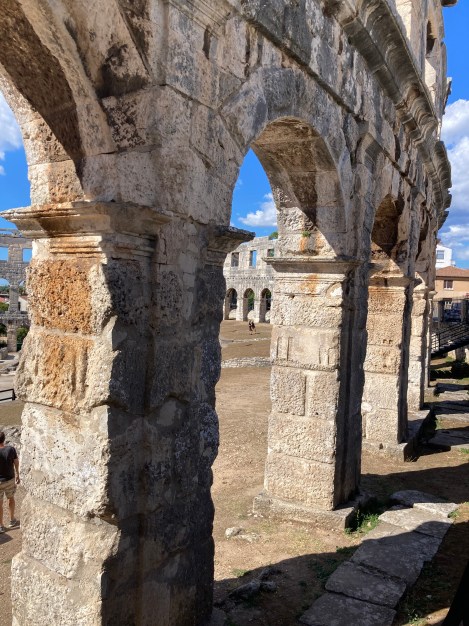
I needed Croatian money but balked at every ATM trying to charge me €5 fees. I wandered farther and finally found a bakery willing to accept euros and give me exact change in kuna. The woman working there was so kind—I walked away thinking, yeah, Croatians might just be some of the kindest people I’ve met on this trip.
I explored Pula’s old town and learned about the extensive Austro-Hungarian fortifications—the place was once the most fortified city in the empire. There were tunnels, bunkers, even a tram that ran from the forest to the beach. It felt so sophisticated, once. I couldn’t help but wonder what happened—war, modernization, bad architecture?
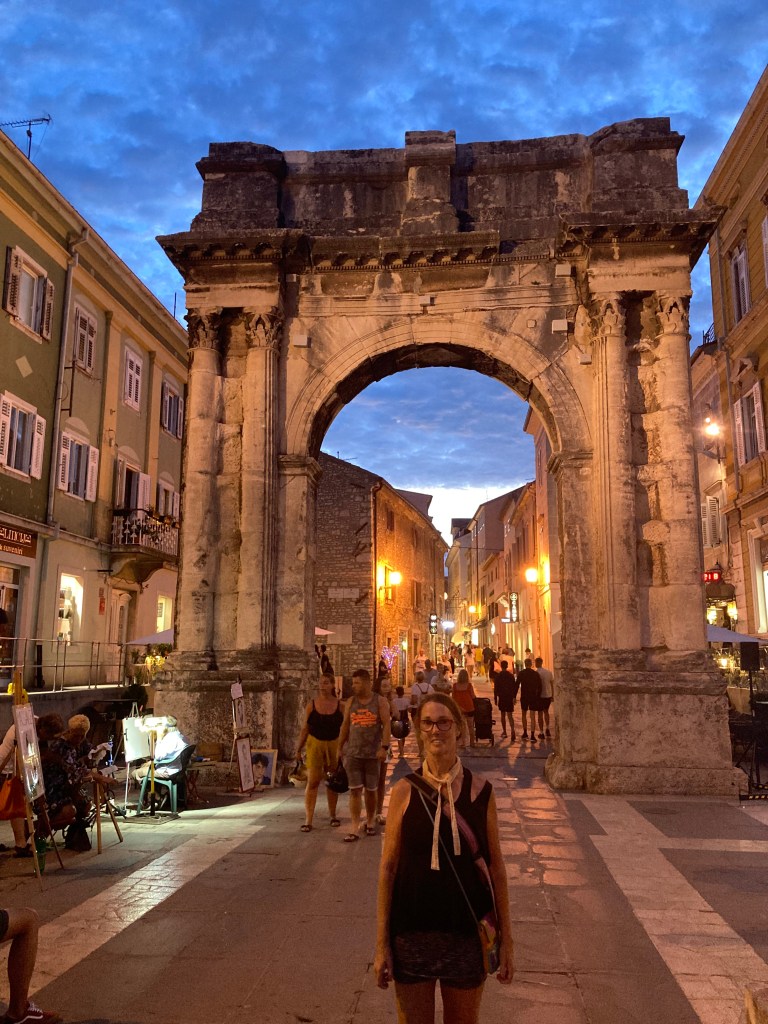
I climbed a hill and found a gathering spot full of bohemian types and a few Romani kids. I stayed as long as I was able, avoiding the garish, over-lit tourist areas, and eventually drove out to a desolate patch of coast where I could camp. I ended up setting up just 20 feet from the sea without realizing it. Waves lapping up. Dogs barking nearby, which always freaks me out. It was quiet, but not entirely peaceful—camping near dogs never is.
 Lisa Karpinski