
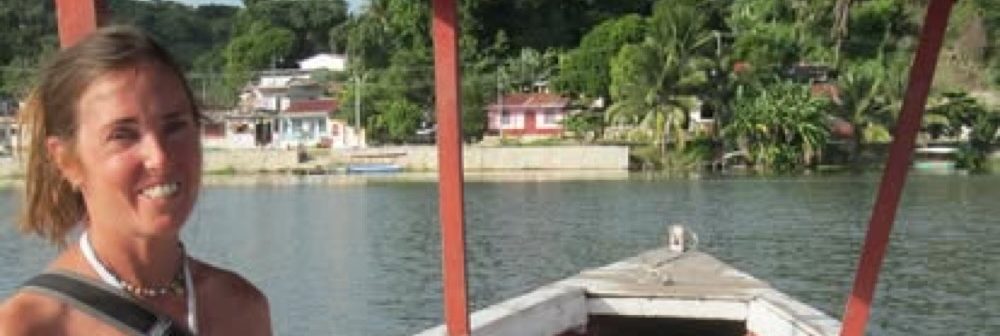
May 7, 2015, Georgia. I arrived at Tbilisi airport around 5 pm. Max, a Nigerian student at the Technical University, greeted me. He’s been working with the Georgian consulate to relax immigration policies for Nigerians, encouraging more students to attend Georgian universities. I stayed two days with he and his cousin.
As usual, it was culture shock: no lights in the apartment hallway, broken concrete outside (careful where you walk), and loud pounding from the floor above. Within an hour of arriving, I lost my ATM card in a Bank of Georgia machine. I had to call daily, and it took a week to retrieve the card. I never saw the machine swallow it, but it was the only explanation. From my perspective, this was a big deal — I might have to get a new card shipped, which would take 7 to 10 business days. Still, I tried to set aside my anxiety and wandered the chaotic streets near the apartment. I exchanged some USD and walked to the hippodrome, a bike racing track that has seen better days. It’s now overgrown with weeds, though there’s an unattended nursery in the center.
I quickly learned how dangerous it was to cross streets in Georgia — I even pulled a calf muscle dashing across a busy intersection. I found a used clothing store and, in a moment of impulse, bought more clothes. Later, I put them near a trash bin, which seems to be the local way to donate things to the poor. There’s no Goodwill here. My Nigerian hosts told me how uncomfortable they feel walking the streets or taking public transit because of the constant staring. I understood—though I’m white and obviously a tourist, people stare at me relentlessly too. I’ve gotten used to avoiding their gaze and pretending to be interested in something else, but it still bothers me. The Nigerians always take taxis to avoid the stares. After a day, I understood why.
On Saturday, I packed and made my way to Didube metro station, where marshrutkas — small minibuses — dash off to various parts of Georgia. I was headed to Mtskheta, the old Georgian capital until the 6th century AD, just 10 km from Tbilisi. It felt like stepping into another world. The old town, at the confluence of two rivers, was peaceful. Luka, my couchsurfing host for the next three days, met me on foot. We were staying in his recently deceased father’s house—he had died suddenly of a heart attack at 48. Luka told me his father was a very good man and devout Christian, and Luka himself is the most devout Orthodox Christian I have met. He was busy attending three-hour mass on Saturday and Sunday, walking half an hour each way, studying at university, and practicing guitar.
I went with Luka to the basilica, one of the oldest churches in Georgia. I was struck by its immense beauty and the polyphonic singing: alternating male and female choirs chanting prayers. I loved not knowing the words, simply listening to the sounds. Georgian is a beautiful language. I’ve learned enough for basic communication and keep a cheat sheet for common phrases.
I explored Mtskheta on foot for four days. One day, I visited the small church where St. Nino is buried. She was a woman saint from Cappadocia (Turkey), sent by St. George in the 4th century to convert the pagan people of Iberia (eastern Georgia). Legend says she caused lightning to strike their idols—statues of the sun, moon, and other gods—scaring them into submission. She is associated with the Georgian cross made of two grapevines tied with her hair, now a symbol of the Georgian Orthodox Church. The church where she was buried was built in the 10th century.
Up the hill past the church, I found a beautiful cemetery overlooking the town—a common feature of cemeteries in Georgia and Abkhazia. On my way back to Luka’s home, I passed many old houses and the remains of a 6th-century fortress overlooking the rivers, built by a nobleman.
Despite the constant rain since I arrived, Luka planted vegetables and tended fruit trees and grapevines in his yard. This tradition of growing grapes and making homemade wine goes back centuries in Georgia and Abkhazia. The best wine is said to come from Kakheti, east of Tbilisi.
That evening, Luka and I discussed politics—both Georgian and American—Georgian Orthodox religion, and traditional song and dance. Alongside studying physics at university, Luka busks with his guitar, playing covers and his own songs, including some by Coldplay.
The next day, on a walk through the village, I met a very friendly Georgian man who was thrilled I was American. He invited me for food, wine, and chacha (a strong distilled spirit often called Georgian moonshine). We had a mini supra (table feast) with chicken from their yard, eggs, homemade cheese (seer), and bread. I couldn’t keep up with his endless toasts—“gamarjoba” means cheers in Kartuli—but he downed shot after shot with ease. Eventually, he waved me off with a teasing look as if to say, “This American isn’t worth his salt.” They gave me a bag of eggs to take with me. In the past, guests were considered sent by God and treated with great honor.
Later, I walked into Mtskheta town and met a man whose father had been a renowned artist and horticulturist. Though we couldn’t communicate verbally, I gathered that his father designed the wild, beautiful yard and built greenhouses where he nurtured seedlings for the garden.
Reluctantly, I left Mtskheta for Tbilisi, where I met Elvin, another couchsurfing host. He put me up in his spacious one-bedroom studio. Elvin was born in Azerbaijan, later moved to Georgia and Turkey, and speaks at least four languages. Despite running his own medical equipment business, he welcomed many guests. I joined him and some friends for an intelligent, progressive conversation over a delicious meal at a doctor friend’s home. They were well-versed in American politics and offered sophisticated analyses of Obama’s presidency. We enjoyed a nice breakfast near his workplace, eating matsoni (traditional yogurt), sweet breads, and tea.
Two days later, I left Tbilisi for Borjomi and Bakuriani. The couchsurfer I planned to visit had only two days to spare. I liked the village of Likani, about 3 km from Georgia’s largest national park. I tried hiking twice but was defeated by extremely muddy trails. I couldn’t take more than a few steps without being covered in mud, so I gave up. The forest felt magical, full of the “little people,” as my Irish grandmother called them.
I walked along the Mtkvari (Kura) River from Likani to Borjomi and spotted a beautiful large dacha once used by Russian nobility from the early 1800s. The Russian aristocracy built many dachas in Georgia and Abkhazia—in Borjomi, Sokhum, Pitsunda, Gagra, and Lake Ritza, to name a few.
The ethnographic museum in Borjomi housed a fascinating collection of fine china, statues, lamps, clocks, and furniture from when the Romanovs used the dacha as a summer retreat. The museum also showcased typical Georgian clothing, cookware, and traditional household items.
After the museum, I stopped for a bite at Borjomi Central Park’s fanciest cafe—the nicest I’d seen so far, comparable to any cafe on University Avenue in Palo Alto. The bathroom was clean and modern, a rare find here. I chatted with Roman, a Slovakian hiker who shared travel tips and invited me to visit Bratislava. I left feeling optimistic about the world and travelers.
I then wandered into Borjomi mineral water park, reading the legendary stories about the healing properties of Borjomi water, supposedly discovered by Russian soldiers. I’m sure it’s Soviet propaganda—locals surely knew about the water long before. Most Europeans adore mineral water and believe its waters cure all ailments. I took a big gulp from the fountain and nearly gagged at the high sulfur content. The park was dotted with cartoonish Soviet-era characters made from colorful mosaic tiles. I walked along the river, admiring the trees and vegetation, until the muddy track stopped me.
The next day, I took a marshrutka to Bakuriani, a ski resort 30 km from Borjomi. The town was mostly deserted. Accommodations were surprisingly cheap: 15 Lari (about $6 USD) for a nice small hotel. Bakuriani used to be a traditional village, but recent development added over 40 hotels—mostly incomplete, with large pillars of cement and rebar scattered around the beautiful alpine valley.
I walked toward the forest and met a kind older gentleman who took me on a walking tour of a forest he had planted himself. Though we had no common language, his love for the land was clear. It contrasted sharply with the general attitude toward litter and pollution I’d seen in Georgia. For example, I’d noticed a huge garbage dump right on the bank of a beautiful river—a common sight here, as most garbage ends up by rivers or thrown down cliffs.
I vowed to return to Bakuriani and headed back to Tbilisi, this time staying with Kevin, a couchsurfer from the US who lives with his Georgian partner in a central part of town. I spent three fascinating weeks with Kevin and Beka, meeting wonderful travelers from Canada, Germany, France, and the US.
While there, I practiced my counseling skills by helping them draft a relationship agreement. I trekked up and down Rustaveli Avenue, the posh main boulevard lined with neoclassical buildings including the Turkish-influenced opera house, parliament, noble mansions, and national museums of art and history. I visited the national gallery, home to Colchis gold—the famed gold of western Georgia and Abkhazia, praised by ancient Greeks and Romans. I admired works by Pirosmani, a famous Georgian painter from a poor family in Kakheti who was self-taught.
I also attended the 26th annual Independence Day celebrations on May 26, commemorating Georgia’s 1918 constitution and independence from Russian occupation.
Sadly, Georgia’s independence was short-lived. In 1921, Russia invaded again, claiming that ongoing guerrilla fighting necessitated their control over the country. It wasn’t until perestroika in 1992 that Georgia finally regained independence, though some argue that even then, the president, Shevardnadze, remained under significant Russian influence. In 2008, Russia invaded South Ossetia—previously part of Georgia—resulting in Georgia losing that territory along with an area near Gori. Adjara also attempted to secede but was unsuccessful.
On the 26th anniversary of Georgian independence, Tblisi’s main boulevard, Rustavelli Avenue, was closed to vehicles and thronged with people enjoying the sunshine and ice cream. Government agencies and NGOs lined the street with booths handing out information and freebies. Georgian military jets flew overhead, painting the sky with colors, while tanks and armored vehicles were displayed in Freedom Square for photo opportunities.
I took the chance to speak with staff from the Ministry of the Interior and the department for Specially-Designated Protected Places about environmental concerns, especially litter and the critical need for proper landfills. They explained that funding was minimal but slowly increasing, though it still wasn’t enough to tackle the landfill issue effectively. I also met a professor from San Diego State University who is scheduled to teach physics in Tblisi this fall as part of an exchange program initiated under President Bush in 2004.
Later that evening, I met four lovely Iraqi women studying at the University of Georgia. Tearfully, I expressed my sorrow over the U.S. war in Iraq, especially the destruction of Falluja—one woman’s hometown, where her parents still live. We strolled down the now pedestrian-only Rustavelli Avenue, and they treated me to ice cream at Luka Polare. On the way back, a few Georgian men harassed NamRiq and her friend, but I stood up to them, and they backed off. The girls thanked me, and I felt a bit like a superhero that night.
However, later I witnessed two street kids trying to extort money from an Asian and African man by wrapping their arms around his legs—a trick I had seen before with street urchins, many of whom are Roma (gypsies) who have come to Georgia. The kids were furious when I pulled them off, and I walked away, uneasy about my safety.
One place I truly fell in love with was the Georgian Open Air Museum of Ethnography, founded in 1966 by ethnographer Giorgi Chitaia. It’s essentially a historic village with over 70 buildings relocated from all major territorial subdivisions of Georgia, spread across 52 hectares and arranged in eleven zones. The museum showcases traditional dwellings—from darbazi-type stone houses of eastern Georgia to openwork wooden houses with gable roofs from western Georgia—as well as watchtowers from mountainous regions like Khevsureti, Pshavi, and Svaneti. There are also maize storages, wineries, water mills, and a vast collection of household items such as distaffs, knitting frames, clothes, carpets, pottery, and furniture.
Chitaia enlisted other ethnographers to help relocate buildings and artifacts from all over Georgia. While guides explain the daily life and customs of old Georgia, most don’t speak English. On my third visit—during a special exhibition celebrating Abkhazia—I met a German girl named Lucy who kindly translated the German guide’s commentary and invited me to join their tour. Afterwards, her family treated me to Luka Polare gelato on Aghmashenebeli Avenue, a posh boulevard renovated under former president Saakashvili. Walking just this five-block stretch, you might think you’re in London—but it’s a thin veneer; for example, buildings on street corners often have painted facades only on the main street side, while the side street remains unpainted.
Luka Polare seems to have a monopoly on gourmet gelato in Tblisi. Georgians love gelato, perhaps reflecting the city’s diverse demographics—from Silk Road days, the population includes Armenians, Greeks, Turks, Azeris, Persians, Jews, and more. I’ve tried multiple flavors, including sea buckthorn, lavender, and red currant. Luka personally supervises each of his six or more stores—I once saw him chiding a street kid for hassling customers. At 2.50 Lari (about $1.20 USD) per scoop, it’s pricey but worth every penny (from the mouth of a professional taster!).
Lucy, the German girl I met, is volunteering this summer as a German language teacher with a German NGO in a small town south of Tblisi. She confided that she doesn’t feel she’s made much difference in the lives of the young Georgians she teaches.
We met at Linnville Cafe in Old Tblisi, a funky, artsy spot with a crooked staircase, antiquated lamps, and cozy furnishings. They serve good homemade limonada (traditional Georgian compote). Like much of Old Town, the area is crumbling—many residents live in buildings battered by earthquakes and neglect. Walking through the streets, I saw countless hallways missing stairs, a haunting sight.
Exploring Old Tblisi further, I wandered down narrow cobblestone lanes and found unexpected treasures like the old synagogue—Georgia has long been known for its acceptance of Jewish immigrants, reportedly without significant antisemitism. Nearby is a 4th-century Georgian Orthodox church by the river, and the botanical gardens, founded as royal gardens in 1625. Though pillaged during the Persian invasion of 1795, they were revived in the early 19th century. The gardens now include the territory around a former Muslim cemetery, with several graves still visible, including that of the Azerbaijani writer Mirza Fatali Akhundov (1812–1878). The garden’s central entrance sits at the foothills of the Narikala Fortress.
On the opposite side of the Mtkvari River, which runs through Tblisi’s canyon-like center, I walked along Aghmashenebeli Avenue and beyond. It was startling how quickly the elegant classical and neoclassical buildings gave way to decaying homes and pothole-ridden roads.
In Old Tblisi’s tourist area—a narrow lane one block from the river—cafes, galleries, and a very old church line the street, along with a quirky Swiss-style clock that features dancing puppets rotating every hour. Unfortunately, I missed the show by a minute but bought a ticket to see the Gabriadze Puppet Theater nearby.
The theater’s story is fascinating: Cheerful red-trousered Khecho, a puppet from the 1978 experimental film Dreams in Kodjorsky Forest, helped persuade local officials to create the theater. On the eve of Tbilisoba, city authorities granted half of a building—still under reconstruction—for the theater, sharing it with a restaurant owner who kept the key to the door between their premises, expecting the theater to be temporary. The tiny hall seats only 45, with a 15-square-meter stage. The team hand-made marionettes and scenery, procuring velvet for curtains and cement for construction themselves.
Their first play, Alfred and Violetta, combined Alexandre Dumas’ The Lady of the Camellias with Verdi’s La Traviata, set in 1970s Tblisi. Distinguished actors like Ramaz Chkhikvadze and Erosi Mandjgaladze voiced characters. The 1981 premiere was a full house attended by Eduard Shevardnadze, then Secretary of the Communist Party of Georgia, along with diplomats and guests. It was a resounding success, praised in foreign newspapers. The restaurant door was soon boarded up for good.
I also visited the huge cathedral built under Saakashvili in the early 2000s. Its size rivals St. Peter’s Basilica in Rome. The priests seemed quite wealthy—I saw several arrive in luxury cars. Inside, the church gleamed with precious stones, gems, and jewelry displayed in icon cases, reflecting Georgia’s long tradition of donating valuable items to the church.
At the ethnographic museum in Mestia, Svaneti, I’d seen a silver pitcher donated by Queen Tamar herself. Many “casual finds” —artifacts locals discovered—have also been donated, including Neolithic arrowheads, bronze animal figures, and household items.
Speaking of Tamar the Great, she was born in 1160 and ruled Georgia from 1184 until her death in 1213, overseeing the Georgian Golden Age. As the first woman to rule Georgia in her own right, she held the title mep’e (“king”). Though initially opposed by the aristocracy, she consolidated power and expanded the empire with a powerful military elite. Tamar was married twice: first to the Rus’ prince Yuri (whom she later expelled) and then to Alan prince David Soslan, with whom she had two children, George and Rusudan.
Tamar’s reign is idealized in Georgian culture, and she was canonized by the Georgian Orthodox Church as the Holy Righteous King Tamar, with her feast day on May 14.
One Sunday, my couchsurfing hosts Beka and Kevin took me and two other travelers (from Canada and Germany) to an affordable Soviet-style restaurant serving traditional Georgian dishes. My favorite was eggplant and chicken cooked with spices and topped with walnut sauce. We feasted, spending only 8 Lari (about $3) each. I wish there was a place like that near my home!
Afterwards, we visited the bazaar—more of an open-air market—filled with honey, spices, and churchkhela (a traditional Georgian snack made by dipping a string into grape juice batter, usually filled with walnuts or pistachios), as well as nuts, dried fruit, and fresh meat. Impressed by the blond Canadian woman, the Georgians gifted the couple some honey, while Kevin bought spices from an Armenian woman who affectionately called him “my beautiful boy.”
We brought home fruits and vegetables, then headed to a park by the river where hipsters, hippies, and skateboarders gather on Sundays for a flea market selling homemade treats, crafts, and unique gifts—definitely the hangout for Tblisi’s hip crowd.
From there, we crossed the river into Old Town, heading toward the hamams (Turkish baths) along the river near the botanical gardens. We climbed to Narikala Fortress and admired the huge statue of the Mother of Georgia looming over the city. She holds a cup in one hand (symbolizing hospitality) and a sword in the other (symbolizing defense). I couldn’t help but think she resembled Angelina Jolie in Tomb Raider!
Nearby is the home of Georgia’s recent prime minister, reportedly worth over $6 billion (made in Russia), an ultra-modern building that contrasts oddly with the statue.
We climbed over 100 steps through a small pine forest to reach Mtatsminda Park, 800 meters above the city. Known as Bombora, the park was built during Soviet times in the 1930s and covers over one square kilometer. Attractions include a flume ride, a giant ferris wheel (similar to London’s Eye), children’s rides—including a haunted house even I could handle—and a roller coaster with loops and corkscrews.
The Tiflis Funicular railway was constructed in 1905 to develop the uninhabited Mtatsminda plateau. Initially, people feared riding it, thinking the rope might break, but eventually it became very popular—so much so that long lines for tickets formed. During Soviet times, Mtatsminda Park was the USSR’s third most visited public park after Gorky Park in Moscow and one other.
We ate the best khinkali (traditional Georgian dumplings filled with meat and spices) I’ve ever had at a restaurant in the park, surprisingly inexpensive despite the beautiful view. After a walk and a ride on the haunted house, we took the funicular down and walked back to their apartment.
Other interesting walks in Tblisi included visits to Lisi Lake—a peaceful area with a pine forest—and to the zoo, which flooded less than a month after my visit. I also explored Tblisi Sea, a large reservoir on the city’s edge, home to a massive monument called History of Georgia by sculptor Zurab Tsereteli. The 30-meter-tall columns feature kings, queens, and heroes on top, with scenes from the life of Christ depicted below.
I love museums and didn’t miss the chance to visit the Georgian National Museum, which features a long-term display of Georgian art from the early 20th century—a fantastic introduction to the fascinating art history of this former Soviet republic. The exhibit isn’t vast, but it certainly boasts quality over quantity. It begins with Niko Pirosmani, whose primitivist style and naïve charm inspired modern art master Pablo Picasso. Pirosmani was a self-taught artist, drawing influences not only from Georgian folk life but also from the classic frescoes of Georgia’s artistic golden age in the 13th century. His work is difficult to curate since the chronology of his paintings is unknown, but his iconic naïve images of animals and village life have become emblematic throughout Georgia. The Georgian Dadaist Ilia Zdanevich collected Pirosmani’s works, which were exhibited alongside the avant-garde in Moscow. Pirosmani developed his own technique, painting with oil on cloth instead of traditional canvas. Most of his themes celebrate Georgian culture, and his primitivist style influenced neo-primitivist Russian artists during the era known as the “Great Experiment.”
There was also an exhibit of sculptor Zurab Tsereteli’s monumental works. A grand-scale artist beloved by the Soviets for their affinity for huge statues, his work is found all over Russia and Georgia.
I also spent time at the Museum of Georgia, which houses an exhibition of historical Georgian weaponry, a stunning gold collection from the Colchis people, and archaeological displays spanning from Neolithic times to the recent past. I was amazed by the intricate gold and silver objects—often zoomorphic and ritualistic in use. The Colchis and other tribes created fascinating ritual rings resembling spirals, fibula (cloak pins), and geometric designs featuring linked spirals and sun wheel patterns.
Afterward, I visited a charming café/bookstore with a good selection of English books and bought a small blank travel journal to replace the one I’d accidentally washed. While walking near Lisi Lake, I met a lovely woman and her husband, and we communicated in French—even though neither of us had spoken it in years. She’s a local high school teacher and invited me to her home for tea and cake. We looked through photo albums of her children and shared stories before they kindly gave me a ride to the metro station. The Tblisi metro reminded me of Yerevan’s—deep underground with dizzyingly long, fast escalators. I swear, the Russian Soviets must have been dwarfs in a past life! I had to sit on the descent just to avoid vertigo.
At this point, I thought I might never leave Tblisi. Originally, I planned to stay about a week in Georgia, but I ended up spending three weeks in Tblisi alone. The push to move on came when my application for an Abkhazian visa was accepted by the Ministry of Foreign Affairs on July 1. I decided to first head to Stepantsminda in the Kazbegi Mountains—a stunning village in the North Caucasus, about 100 miles north of Tblisi.
On the marshutka ride up, I was lucky to meet a friendly Polish guy who works in international relations between Poland and other EU countries. Fluent in Russian, he easily communicated with locals running guesthouses in Kazbegi. After some drama (we were aggressively pursued by one hostel owner who practically abducted us, but after seeing the place, we decided to find another), we settled at Maya’s Guest House. Maya caters mostly to Polish guests and was very kind, cooking a wonderful supper. I loved the view of the mountain from my room. The house was old and furnished in classic Soviet style—high ceilings, decorative molding, and a large armoire filled with delicate china. It felt like being on the set of Anna Karenina, though not quite as wealthy.
The next day, David and I set off to hike up to the church perched about 1,000 meters (3,000 feet) above the guest house. We were greeted by gray skies, rain, and sleet/snow as we climbed. We made it to the very old church—probably built in the 4th century—in time for mass, but decided not to continue further toward the glacier. It was fascinating to observe the ancient stone church during the service, with some of us as pilgrims and others as devout Orthodox Christians. The haunting polyphonic singing filled the air, and at the end, we received a blessing—a sprinkle of water over our heads from the priest.
I did get some dirty looks from the staff, perhaps for daring to wrap a skirt around my hiking pants and wearing flashy purple Asics with a flowered kerchief over my hair—a sore sight for the fashion police! Earlier near Old Tblisi, I’d been yelled at by a woman for entering a church wearing pants, which is a no-no for women. Here, you must wear a full-length skirt, cover your hair with a scarf, and preferably have long sleeves.
After a long descent, we enjoyed a wonderful Georgian meal—complete with aubergine (eggplant roasted with walnut sauce), one of my favorite dishes—and wandered the small village. The next day, David left, and I explored on my own. I visited a fancy hotel overlooking the valley and church called “The Rooms,” where I had a latte on the terrace. Then I hiked to another church behind the hotel. Later, I guided a Russian family up to that church—they’d gotten lost but wanted to see the view. The chapel was open, surrounded by small wooden sheds. I loved the birch and pine forest buffering the area and sat there imagining I was in the Swiss Alps.
I also visited the Stepantsminda Historic Museum, located in the memorial house of Georgian writer Alexander Kazbegi (1848–1890). Alongside his library and personal belongings, the museum holds ethnographic artifacts typical of the region, archaeological exhibits, religious relics, and works by local artists and Kazbegi himself.
After another good meal, I went to sleep happy, with the mountain view from my bedroom window. While there, I learned some Kartuli (Georgian language) from Maya and started a small dictionary of basic phrases. But I wouldn’t be using Georgian for some time—my next destination was Abkhazia.
 Lisa Karpinski