
June 24, 2014, Mexico. The friend who had invited me to travel had a change of heart. Unfortunately, he waited till I arrived to tell me. He’d been pestering me for two years to visit, and I’d spent the year leading up to the visit doing massive PT to recover from a car accident that left my ankle shattered and my rib and lower leg bones broken. It was hard recovering from zero weight bearing for 3 months to walking. I lost much of my quad, calf, and hamstring, and never got it fully back.
During the first few days he was copacetic. Then, out of the blue, he asked why I was had come and what my plans were. I told him I’d thought he wanted to travel around Mexico together. He said not anymore. And I wasn’t welcome to stay at his mom’s home with him, even for a few days.
I was devastated. I felt like I’d been lured to Mexico City. I had rushed my physical therapy and rehabilitation because I felt guilty that I’d kept him waiting, and now this. I’m pretty resilient and am usually able to get back on the horse, but this was too much. I called my counselor sobbing, unsure of what to do. I was heartbroken as well, since he had expressed interest in me. The best laid plans of affairs of mice and men…
I left with no idea of where to go. Le had introduced me to Jaime, a man he respected who’d created a temescal, on the corner of a city block near the Zócalo. I went there and asked if I could stay for a couple of nights. Jaime welcomed me, and I slept behind a cardboard wall about 10 feet from the road, listening to a continuous drone of cars passing through the night.
I stayed for several nights. Nearby was the National Palace in the Zócalo to see Diego Rivera’s murals. He had originally intended to cover all the walls with his work, but due to failing health, he completed only one full wall and part of another. The centerpiece—a towering mural above the stairwell—depicts the broad sweep of Mexican history and serves as an introduction to the more detailed panels surrounding the courtyard.
Later that day, I met a new acquaintance at the Antiguo Colegio de San Ildefonso, free on Tuesdays. We explored an excellent, in-depth exhibit on Darwin. Several people had recommended the college to me, both for its colonial-era architecture and the consistently high quality of its exhibits. It didn’t disappoint.
June 25. This was the last Wednesday of the month—“museum night” in Mexico City. On these special nights, museums stayed open late and offered free admission from 6 to 10 p.m. I happened to be in Coyoacán, where I took a walk through Viveros, a beautiful, sprawling park near Frida Kahlo’s childhood home.
That morning I had left early from Bosque de Aragón, where I was staying with a local family. On the combi ride, I ended up talking with two women about the daily realities of life in the city. They told me how hard it is to survive here. The minimum wage is around $2.50 USD per day—lower than even Haiti, which I had thought held the record for the lowest wages in the Americas.
I don’t know how these people do it. I’m amazed there isn’t more crime, given the tough living conditions. It feels like a testament to the moral strength of the Mexican people—their sense of integrity and resilience. I’ve always had enormous admiration for them, ever since I first visited Mexico for a month and a half when I was 10. Their goodness and sense of humor made a big impression on me.
An average day involved a four hour commute packed like sardines in combis or metro cars, then racing through transfer stations and strategizing how to get near the subway door so you can exit at your stop. You have to move with the flow of bodies or get trampled. After only a week and a half, I’m exhausted—feeling like a wrung-out dishrag. I can’t imagine living like this for years.
After a similar commute, I arrived at Viveros, a metro station near Coyoacán—the part of Mexico City (formerly a separate town) where Frida Kahlo’s father made his home. It’s a beautiful area. I disembarked and walked through Viveros Park, 96 acres of densely wooded forest. It was the first such place I’d found, and I felt deeply peaceful. I discovered that it was a tree nursery founded by Miguel Angel de Quevedo in the early 20th century to provide seedlings for reforesting badly damaged forests, especially around Mexico City. The first lands had been donated by Quevedo which enabled the planting of 140,000 trees between 1913 and 1914 alone. Today, the nursery produces one million seedlings annually for projects around the city.
In Coyoacán, I rented a bike (free for three hours) to explore the surrounding area. I visited the Plaza de la Conchita and its small church, Parque Frida Kahlo, a beautiful bookstore-café dedicated to an important Mexican female writer, and the former house of one of Hernán Cortés’s advisors (now an elegant restaurant). I also stopped by the Museo de Arte Popular, which showcases artisan crafts from all over Mexico. When it started raining, I took a taxi to the Diego Rivera and Frida Kahlo Studio Museum. After their second marriage, they lived and worked in separate buildings connected by a bridge—it was fascinating. I spent the rest of the afternoon there, then wandered the cobblestone streets of San Ángel and Altavista, a very upscale (and old) neighborhood full of narrow lanes and large gates hiding gorgeous haciendas. I eventually reached the church in San Ángel, explored the flower market, and caught a bus—soaked from the downpour—back to Viveros.
On Friday, I visited Chapultepec to explore the Museum of Modern Art and the Castillo, which holds an enormous amount of Mexican history, including furnishings and décor from the time of Maximilian (before he was executed by firing squad) and Porfirio Díaz. I decided to return to Chapultepec on Sunday to visit the zoo and the Museum of Anthropology—though I learned that non-residents still have to pay entry on Sundays, so I postponed it. The castle also holds a sad piece of history: in 1847 (not 1849), the U.S. invaded Mexico, and many Mexicans died defending the castle. As a result, Mexico lost a vast portion of its territory—Arizona, Colorado, New Mexico, Utah, Nevada, California, and parts of Oregon. One of many painful invasions Mexico has endured.
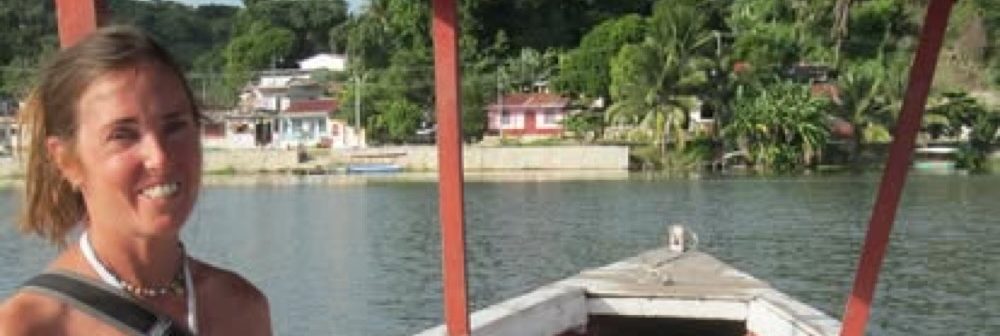
Saturday, I went to Xochimilco, a historically significant area known for its canals and chinampas—small, fertile plots once used by farmers to grow corn, beans, squash, and vegetables. It was something to see: Mexicans from the city out on colorful boats, eating, drinking, singing along to live mariachi music. I took a collectivo boat, which was much cheaper than the typical fare (350 pesos/hour, around $30 USD). I wish I’d had more time—there’s a beautiful forest at the far end of the canal (Bosque de Nativitas) that I’d love to return to and explore.
I had forgotten about Museo Dolores Olmedo, instead rushing in hopes of seeing Anahuacalli, Diego Rivera’s other museum. I arrived just as it closed, but managed to take some photos of the massive pyramidal structure and its surrounding plaza.
Sunday evening, after returning from Chapultepec, I strolled through Roma Norte—a leafy, elegant neighborhood full of foreigners and expats—before making my way, burdened with a 35-pound backpack and daypack, to the Zócalo. I went in search of cheap clothing at Mercado Merced, and eventually waited at a fancy hotel for a friend to meet me.
 Lisa Karpinski