
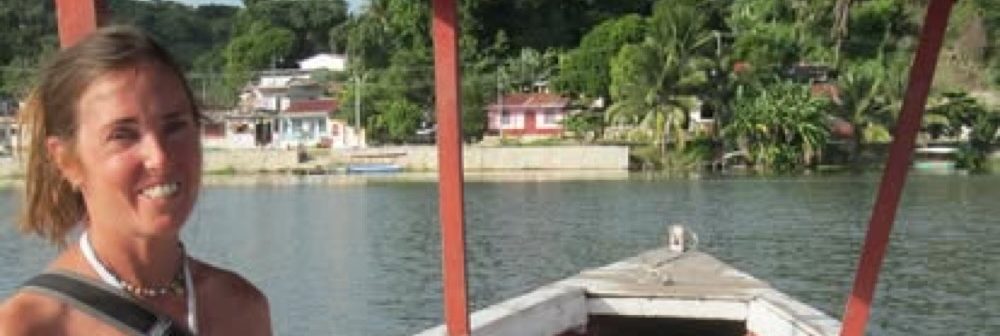
September 21, 2023, Costa Rica. Given how much I’d done the day before, I was surprised to wake up easily at 7 a.m. I had offered to take Machita to DOTA Café for a latte—her first ever. We also planned to drive around Los Santos. She seemed excited to have a free day; apparently, she hasn’t had one in years.
I suggested we start with a walk, heading down to the raspberry farm at the end of the road. We arrived just as her husband, Eli, was planting chayote. No sooner had we reached the farm when a bee stung me—three times on the leg and once on the finger. I yelped and shouted a few obscenities, then hurried back up the hill.
Eli offered to drive us back, and I was glad—climbing back up would have been a slog. My body had an allergic reaction, and the stings kept bothering me, especially at night. Ma and Eli applied a camphor-based cream that helped a bit. A few days later, while scratching like mad, I remembered “The Bug Bite Thing”—a suction tool I’d bought on this trip. Though it’s meant to be used immediately, it still helped tremendously.
As a result, we didn’t get on the road until 11. Santa María is about 25 minutes away, and I drove carefully—Ma seemed anxious. I don’t think she’s used to being a passenger. She liked the café, though I wasn’t impressed by the latte. We split a slice of apple cake and took an “usie.”
Afterward, we drove to the other side of town and followed a road that turned into dirt. I didn’t want to alarm her, so we stopped shortly after, took in the views, and snapped some photos. From where we stood, we could see a river valley below and steep hillsides covered in coffee plants.
On the way back, we stopped at a place I’d spotted earlier: Frutos Santos. It turned out to be a sweet little café nestled in a garden by a river. I skipped more coffee, but we chatted with the kind young woman working there. She rents a room nearby and works daily. Next to the café, a big school bus served as a mobile classroom for art classes. What a great idea.
I also wanted to show Ma the quirky bar I’d discovered previously. We parked and peeked at its collection—shells, dolls, old currency, and other museum-worthy oddities. Then we strolled up the road behind the bar and found three cabins called Villa de Roble, apparently owned by the bar’s proprietor. The road beyond wound past corn and coffee fields and eventually led toward Copey.
Not wanting to wear Ma out, I suggested we continue driving—this time north. After passing San Pablo, we climbed a hill and came upon a line of stopped cars. At first, I considered turning back. Then I saw what I thought was an injured dog. It turned out to be a sloth with a baby on its belly. A man had stopped traffic because the sloth was trying to climb an electric pole. He somehow coaxed it down. We watched, spellbound, as the mother climbed into a tree, baby still clinging to her. It was one of those rare moments of quiet awe.
By then, I was hungry but unsure where to stop. Five minutes later, I pulled over to take photos of a valley and discovered La Casa de Café—a charming wood-built restaurant serving food on banana-leaf-covered boards. I ordered trout, Ma got tilapia, and the meal included salad, potatoes, rice, beans, and fish. I also had a raspberry-papaya smoothie. I didn’t realize she expected me to treat, but the food was excellent.
After lunch, we followed a steep road and paused to admire the views. A cyclist joked about how treacherous the drop-offs were. We stood on a narrow ridge flanked by plunging coffee-covered slopes. Wanting to be back before dark, we returned via La Lucha. By 4:45, the sun was already low.
We got home tired and had some soup. I worked on my blog and went to bed around 8:30. Eli had been planting all day and had gone to bed earlier. They both rise at 6 a.m.
September 22. I decided to head back to DOTA Café for a latte, but they were closed until 1 p.m. I tried driving up a dirt road, but fog rolled in quickly, and I didn’t want to get stuck. I turned around and went back into town for a cappuccino—this time it was delicious. I asked them to heat the two chocolate chip cookies I’d bought the day before, which had hardened to the point of potential dental injury. I spent an hour or so blogging.
I couldn’t stop thinking about the road to Copey. The day before, a woman had mentioned that the dirt road behind El Roble Bar led there. I decided to find out. The drive was gorgeous—rolling farmland and wooden cabins reminded me of Switzerland. Cows dotted the valley. But as I climbed, thunder cracked and lightning flashed. The rain began to pour as the road steepened and the forest grew wild.
A river ran alongside the road, and I stopped a few times to take photos, shielding my phone in a plastic sleeve. I passed a small farm with cows being led into a barn. A sign advertised cheese-making demonstrations, though it warned that reservations were required. It felt impossibly remote. Maybe in high season they get visitors.
Eventually, the road became too steep and slick, and I turned back. I was shocked at how quickly I returned to Santa María—it had felt like another world. I waved at the young woman working at Frutos Santos again. I couldn’t imagine how they stayed in business. Both times I’d been there, I was the only customer.
Back at El Empalme, I stopped by the pulpería to see Esmerelda. She eagerly shared information about her mushroom cultivation work and clarified that she didn’t expect payment for hosting me. It was an exchange of friendship and sharing. I was relieved and told her I’d be happy to stay again on my way to Corcovado.
By 7:30 I was starving—cookies and cappuccino were all I’d had. Machita made us eggs, beans, and rice. She had gone to Cartago earlier for supplies, hoping to sell bread and meals to weekend visitors. After dinner, she stayed up prepping casados and cookies to bake over the wood stove. She was up late.
September 23. Neither of us had slept well. I’d had two cappuccinos the day before—something I don’t do often and always regret. Machita was wiped after cooking all morning.
Later, I decided to visit San Gerardo de Dota, a place I’d heard was beautiful but touristy. It’s the go-to destination to see quetzals. I wasn’t optimistic—I wasn’t going early enough. A concierge later told me he leads 5:30 a.m. hikes to see them and they’d spotted six that morning. Go figure. I’d been told they’d already left the area, following fruit to lower elevations. Apparently, some fruit trees were still producing.
I drove toward Cerro de la Muerte, then descended seven miles down a steep gravel road—not for the faint of heart. I’d gotten up at 9 a.m. (my latest yet), and left around 10:15. On the way out, I passed Marve, digging a ditch. He explained he was trying to prevent the road from flooding. He’s one of the most tireless and capable people I’ve met.
The drive into the valley was harrowing. At one curve, a car coming uphill veered into my lane. Good thing I have fast reflexes. The valley was lined with charming cabins and coffee farms. I looked for a café, but the first one didn’t open until noon. It was only 11. I continued to Savegre Hotel Natural Reserve and Spa, a well-known ecotourism pioneer celebrating 50 years.
The cappuccino was unimpressive, but the terrace overlooking the river made up for it. I saw a trail map and asked a young man about hiking. Their trails cost $10, but he recommended the waterfall trail at Parque Los Quetzales. I wandered through their gardens and past a checkpoint—two people waved me through without question.
I followed a steep road and came upon a trail marked with caution tape. Curious, I went in anyway. The forest was stunning. A creek ran through a dappled ravine, and I felt at peace. A huge fallen tree eventually blocked the path, and I scrambled over it. Much easier than the hike I’d done in Ojochal.
Back on the main road, I considered visiting a lookout but chose instead to drive further into the valley. I passed avocado and apple orchards—clear signs of dropping elevation—and found a fantastic spot: Lauraceas Restaurante Cafeteria Lodge. I had another cappuccino and an incredible slice of German-style apple pie. Miraculously, I slept that night.
The server recommended Lauraceas Garden, a nearby botanical garden. I walked the garden’s trail and saw more hummingbirds than I’d seen anywhere in Costa Rica. I continued to the Río Savegre waterfall trail. Thunder rumbled and the sky darkened. At the entrance, I met another couple also hesitant about the rain.
About five minutes in, I hit a fork and chose the wrong trail, heading up a mountain. A fisherman told me the path was “arriba,” which I understood to mean uphill. I hiked up for 20 minutes before turning back. On my return, I saw a sign I’d missed earlier—there was the real trail.
Little did I know it was closed for maintenance. The bridges were crumbling, steps missing, and then the skies opened. I had only a thin jacket and got completely soaked.
September 24. I’d been waking at 7 every day, which meant I got to share breakfast with Machita and Eli. Over the past four days, Eli and I had some rich conversations—on Costa Rican politics, socialist roots, the role of the University of Costa Rica’s biology department in bird surveys on their finca, Monsanto and seed sovereignty, and ecological farming.
Like Marve, Eli knows a lot about quetzals. The small farmers I’ve met here are deeply attuned to the natural world. He got teary when I mentioned my father’s European roots. I told him I often feel like an outsider in the U.S.—an iconoclast of sorts.
Later, I returned to Santa María, had a cappuccino at DOTA Café, and wandered around Los Santos. I don’t remember where exactly (I’m writing this a week later), but I came back in the evening and spent some time talking with Ma.
 Lisa Karpinski