
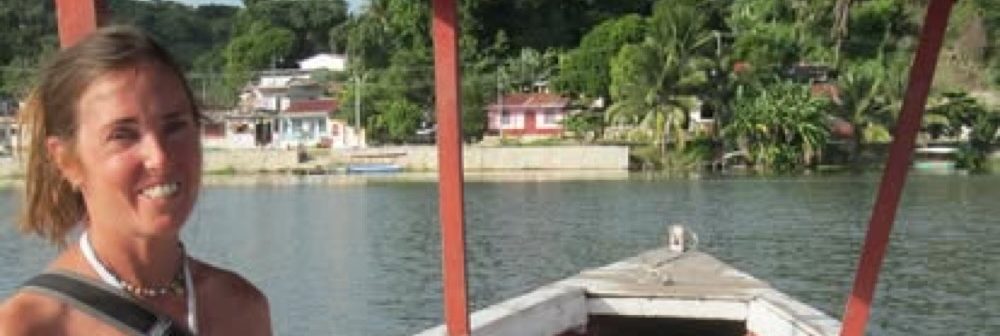
August 24, 2023, Panama. I woke at 6:30 to catch the 7 a.m. shuttle to Santa Catalina, to check out the charming beach town on the Pacific. I had a gut feeling the shuttle wouldn’t arrive—and I was right. They had detoured to Bambuda Castle and were waiting for a no-show passenger. Good thing I walked to Hello Travel fully loaded, wearing flip-flops. I’d had nightmares about missing the bus—probably tied to past trauma. My dad was always casual about missed connections, and on more than one occasion we were stranded as a result.
The bus finally arrived 30 minutes late, and loaded at lightning speed. One guy climbed on the roof and caught luggage tossed by the driver below. It was an impressive system. We rode down to David, and 20 minutes north on the Pan American highway before turning off toward the Pacific Ocean. The road was bumpy and slow. Still, I loved seeing the scattered villages. That’s half the adventure for me. We arrived in Santa Catalina around 1 p.m., and I checked in at Hostal Rolo. Imir, Rolo’s son, welcomed me with a beautiful smile and told me the room wasn’t ready. I asked about upgrading to a cabana, but they were $110. I left my stuff and walked to Café Panachocolat for a latte and a pricey ($3.25) but delicious lemon cake.
I chatted with the young guy working there. He helps his grandfather with corn farming near Playa Venao and told me they’re struggling with drought. The government is supposedly working on irrigation, but I’m skeptical—especially after what happened with the Israeli-sponsored project in Boquete.
I headed to the beach in my flip-flops (mistake) and walked for hours toward Playa Estero along the slippery volcanic shore. I passed an abandoned housing tract, then connected with the main road. I checked out cabanas run by a German couple—$40 a night. Tempting. Across the river at Playa Estero, I found Oasis Hostal, a beachfront spot with traditional palapa-style dwellings for $40 as well. It was pizza night. I overheard an intense argument in Italian as I headed back.
I’d left my water bottle and some shells at the Hotel Catalina sign earlier and picked them up before checking it out. It’s more of a gringo resort—cabana rates start at $105. The on-site restaurant, Pescau, looked amazing. I ordered corvina and was pleasantly surprised—delicious fish, perfect potatoes, and a lovely salad. Way better than the greasy fried fish I’d had elsewhere. The setting was stunning—sunset views over the infinity pool and ocean.
Afterward, I wandered back toward town and stopped at the Urbano Jungle Hostel. I met some lovely French-Canadian women and had a great chat about Quebec. One of them was anxious about the Coiba trip—especially whales and sharks. I reassured her she’d be fine. They invited me on their tour, but I wasn’t sure which company I’d booked. Pablo, the hostel manager, was lovely. He plays violin and guitar and even invited me to play. He gave me a great deal—$12 per night in the dorms, breakfast included! I reserved for Saturday and Sunday and contacted María at Hello Travel to change my shuttle reservation for Monday.
Back at Rolo, I had tea, fed the inn cat milk, and sat on the veranda overlooking the sea and a giant mango tree. I went to bed around 9:30, hoping I’d sleep. It was still warm, and the fan was iffy. I only had two nights’ worth of sleep meds, so I had to ration them.
August 25. I got up at 7:30 to get ready for the Coiba trip. It was a bit of a clusterfuck. The tour company changed boats on me and didn’t have my change ready. I walked to the café to break a $20. My new friend Javier wasn’t sure about my group’s tour and recommended a better operator through Bodhi Hostel. He showed me his GoPro footage from Coiba—absolutely stunning. Unfortunately, the water was murky from all the recent rain. Visibility was terrible. Our guide, Manuel, was incredibly young.
There was a German man and his daughter on the trip who live on Starnbergersee. He had managed a branch of a company in Panamá City near Parque Omar. After three years, he moved the branch to Mexico and then returned to Germany. Also on the tour were a Lebanese couple living in North Carolina, a Polish woman and her French boyfriend from Toulouse, and a couple from Madrid—nine of us in total.
The hour-long boat ride was noisy and fairly uneventful. We briefly spotted some dolphins and a humpback whale before it dove. This area is a calving ground for humpbacks, and divers sometimes see whale sharks. Two or three times I saw a shorebird perched on a floating plastic bottle—at least they were good for something.
Our first snorkel was off Isla Cocos, one of several islands near Coiba. I’ve never seen such low visibility. I think Manuel, our guide, felt bad, because he made a big deal about offering a fourth snorkel that day—usually there are only three. I was worried about my ears, since I’d had an infection for months, but the silicone earplugs I brought for the noisy boat ride doubled as swim plugs and worked well. Honestly, I had seen much better fish near Cayo Zapatilla in Bocas del Toro. This was disappointing, especially since this trip cost $85—nearly triple what I paid in Bocas.
The second snorkel spot was better. I saw one or two schools of fish. At one point, Manuel told the driver to be careful not to run the motor over the coral. I was horrified. Was that a common risk here? Manuel explained that some nearby islands are closed to visitors to help protect them. I could see that tourism is taking a toll.
We headed to Coiba Island next, where we were told not to walk beyond the ranger station. That was incredibly frustrating. It was a sunny day, and I had hoped to walk a trail or at least explore a bit—especially since the snorkeling had been underwhelming. I was particularly interested in terrestrial plants and animals. But the guide was strict. I skipped lunch and sneaked up to the lookout, then squeezed in a short hike before we had to leave.
It was such a shame. Still, I did see some capuchin monkeys performing their usual antics in the palms near the station. One even jumped from a palm to the wide leaves of a mango tree—it was quite the leap!
We only had half an hour on Coiba before getting back on the boat for a third snorkel. It was fine, but again, nothing spectacular.
Afterward, we went to a beach on another island (I forget the name) and had an hour to lounge. But sunbathing wasn’t why I came to Coiba. Manuel pointed out two crocodiles in the murky water a few meters inland. He claimed one was five meters long, which I seriously doubt.
While exploring a bit, I heard some Panamanians call out, “Hola, profesora!” I turned and asked if they were biologists. They said yes. I told them I was here as a tourist but had a background in biology. We chatted about my past research on killer whale behavior in Vancouver Island, peregrine falcon reintroduction, and habitat protection work with Audubon.
I worried I’d overstepped—after all, I’m not currently working in biology—but they kept the conversation going, so I joined them on the stairs to a cliff overlook. One of them, Gasper, specializes in leaf-cutter ants. He explained that this trip was to encourage a visiting Colombian researcher to collaborate. That made me feel better about tagging along.
Gasper told me about bacteria used by leaf-cutter ants to protect their colonies from fungal infections—something biologists are now studying in bats, too. The ants apply this antifungal bacteria to their newborns within hours of hatching. Some other ant species achieve similar immunity without the bacteria, which raises more questions about their biology. I told him I had attended UC Santa Cruz, and that one of their recent interns had worked with Dr. Edgar Díaz, the program director here. I offered to reach out to UCSC professors when I got home. Coiba desperately needs more biologists, and UCSC would be a good fit—unlike some American institutions that have taken over projects here (no names, Smithsonian).
Meeting the director of the Coiba research project was definitely the highlight of the trip. Even though the snorkeling was disappointing and our guide less than inspiring, connecting with the scientists made the day worthwhile.
Our final snorkel was the best of the day—we saw six turtles. But I was annoyed by the other tourists, who kept diving down to get photos, harassing the animals. The guide never explained that this wasn’t okay. I prefer to move gently in the water and just be with the fish rather than chase them down. Unfortunately, the rest of the group didn’t seem to share that ethic.
We finally returned to Santa Catalina and spotted a humpback surfacing again briefly. When we docked, Manuel offered to show me around town. I had a feeling he’d expect payment, but I thanked him and took his number anyway.
It was only 5:30 and sunset wouldn’t be until about 6:45, but I was hungry and headed to Pescao, where I’d had a delicious dinner the night before. This time I ordered the sea bass with garlic sauce, rosemary potatoes, and salad. It took them forever to bring it out—probably because a group arrived after me and they cooked all the meals at once—but it was worth the wait. I saw the French couple from the tour at a table near the infinity pool. Pescao is a stunning place to watch the sunset, and after my meal, I walked along the rocky shore as the light shifted over the sea.
I chose not to get the brownie this time and instead struck up a conversation with a table of older American women next to me. Turns out they were all life coaches—two had written books—and they were in town for a yoga and surf retreat. One of them had always been afraid of the ocean and organized the retreat to overcome her fear. She teared up telling me about a turtle that swam up to her. It clearly moved her, and I think that kind of moment is what inspires people to care. I gave her the Coiba biologist’s contact info and said I’d love to collaborate on a project.
After 45 minutes or so, we hugged goodbye. I walked back to Hostal Rolo, sat at the table overlooking the sea, and watched the moon peek through the trees. I wrote for a while, soaking up the view. I would miss this place. Maybe I’d sneak back sometime, under cover of darkness. It was my last night at Rolo. The next day I’d move to Urbano Jungle Hostel for two nights. I hoped the guests there would be quiet—thankfully, they were.
August 26. I woke at 7:30. It’s impossible to sleep in here with the roosters and the heat. Rolo didn’t have AC—just louvered windows with screens that didn’t close—so it was noisy and warm all night. I headed to my favorite spot, Café Panachocolat, and had a large latte. Javier, who I’d chatted with the day before, was there again, and we talked more about his grandfather, a farmer who’d had to delay planting his corn until there was enough rain. The crop needs a bit of rainfall each day to thrive.
Javier is originally from Santiago and spent a year in El Valle de Antón working for “the orchid lady” as a gardener and tour guide. That’s where he learned English and heard about the position at the café in Santa Catalina, where he’s lived for the past eight months. The café owners are German and also run the Bodhi Hostel nearby. Javier had stayed in their dorms for many months but now lives in one of their cabanas—a nice upgrade, especially since he can sleep in and cook his meals at Bodhi’s kitchen.
I worked on my blog at the café until 11:30, then walked back to Rolo’s to pack. I made some oatmeal and spent one last half hour perched at my favorite spot—overlooking the ocean. Then I hauled my things over to Urbano Jungle Hostel, said hi to Pablo, and chose a bed in the loft after checking if it stayed cool enough up there. I passed on the downstairs room since there was a guy hanging out there all day, and I like having occasional time alone in a shared room. Besides, I love lofts and attics. They remind me of Misa Lawson’s attic bedroom from my childhood. I hoped it would rain, just so I could hear it on the roof.
I made a tuna sandwich with vegetables I’d bought back in Cerro Punta. A skinny black cat sidled up to me—she could smell the tuna. Within 30 seconds, the neighbor kids showed up too, with big eyes and swollen bellies. I felt torn, tempted to give them all my food and skip lunch. Then I heard someone—maybe their older brother—calling to them, clearly annoyed they were begging. He asked if they’d finished their homework, and eventually they scattered, leaving me and the kitty alone again. She gently placed her paws on my leg when she wanted more. She was so tiny and light I barely felt it. Only later did I notice she was nursing kittens. The woman cleaning the hostel smiled approvingly when she saw me feeding her. The cat wore a makeshift jeweled collar—a repurposed hippie bracelet—but it suited her sleek black fur. Any place that has a cat like that must be a good place.
Later, I headed toward Playa Estero. It was hot and humid, and I was already sweating when I decided to stop at the homemade gelato stand. The Italian man who started it in 2014 was there, and we had a great conversation. He knows the owner of La Ghiotta in Boquete and lives across the river, walking to work each day with his one-eyed dog. Apparently the dog got in a fight with a cat when he was young—and lost. We spoke Spanish, which was nice since it’s a second language for both of us. His Italian accent softened the pace, making it easier to follow than many native speakers.
He told me that during Martinelli’s presidency in 2014—he had Italian roots—a lot of Italian and Spanish workers came to Panama for the canal expansion project. A few stayed behind, which is when gelato shops and Italian restaurants began to gain traction. Still, he said most Panamanians don’t like gelato; his clientele is almost entirely tourists. I got a cup of amaretto, chocolate, and walnut—small but satisfying. A nice combination of flavors.
I continued walking and remembered Rancho Estero, an “eco-village” of cabanas built from natural materials like palm frond roofs, overlooking Playa Estero. It’s run by a German woman and a Spanish man. The Hebrew writing on the wall suggested the owner might be Jewish. I recalled their sign advertising smoothies and stopped in, parched again. I asked if they had passionfruit. She said there wasn’t enough, so I asked about papaya. She said it wouldn’t be sweet enough unless she added banana and recommended using milk instead of water. The combination was perfect. She and her partner tasted the leftovers and declared it a new favorite.
A few guests lounged in hammocks on the wooden deck. The place was growing on me. Over the last few days, I’d decided I want to return to Santa Catalina during rainy season. There are fewer tourists, and the vibe feels more authentic.
When I got to the river, I took off my shoes. My feet were still healing from nasty cuts I got walking in flip-flops on wet volcanic rock. Today I wore my running shoes to protect them. The Spanish guy at Rancho Estero—apparently an excellent surf instructor according to Javier—told me I could walk all the way to Playa Punta, past Estero. The tidal shift here is dramatic; the beach is incredibly flat, and low tide leaves it wide and nearly empty. I walked along the coast, which eventually turned rocky and volcanic. I considered heading inland toward the greenery but was wary of snakes. The French couple from the snorkel tour had seen a six-foot snake in the bushes the day before, and I didn’t want a repeat.
I had plans to meet Javier at 5:30 near Hotel Catalina’s driveway. He wanted to show me a sunset viewpoint, but didn’t realize sunset wasn’t until 6:45. I chafed at the schedule—I’d been enjoying moving at my own pace—but it ended up fine. I turned back at 5:15 to make it on time. We walked through the abandoned cabanas I’d explored my first day. Javier said a foreigner had bought the land, but the government forced them to abandon it due to cliff erosion, likely from sea level rise or storm damage.
We talked more about his time in El Valle and Santa Catalina. He’s a kind soul, and I was surprised by how genuinely he wanted to make friends. I was glad we’d met. I was starving by then, and he headed back to Bodhi to make dinner while I decided to swing by the beach below Rolo to catch the sunset.
It seemed like the whole town was there. Everyone was staring at the river. I followed their gaze and noticed a truck stuck in the riverbed. Slowly, a tractor approached, hooked up a chain, and over the next five minutes, pulled the vehicle free. I wasn’t surprised—Panama’s wet sand can be like quicksand. I’d experienced that in Candovebora on the Caribbean side of Panama. The slushy consistency was treacherous.
As I walked away from the beach, I noticed a shiny new Smithsonian truck parked nearby. I wondered whether they were involved with the Coiba research project. That would definitely change my willingness to help. The Smithsonian has significant resources, and if they’re already supporting the project, I’d feel less compelled to help the Director find interns. I need to do some digging.
I headed to Pescao and ordered what I thought I’d had the night before—snapper—but it turned out I’d actually been served sea bass then. Today they were out of snapper, so sea bass it was. Fine by me.
The night was growing dark and stormy. It was incredibly humid, and I watched lightning flash across the distant ocean. At a nearby table, a Parisian woman (I overheard) was dining with her boyfriend. When she spoke Spanish, her voice got shrill and piercing. It was so annoying I finally moved—first to a picnic table near the pool, then to a lounge chair beneath it, where the dripping water muffled her voice. The joys of travel.
I had a pleasant chat with my server, Lynette, who had moved from Panama City. She’s 50 and prefers the calm here. On weekends, she stays in a dorm for staff at the hotel, as she lives two hours away on foot. There’s no public transportation on weekends, and taxis charge $5 for the 20-minute drive—probably a good portion of her wages.
I lingered at Pescao until 9:30, then headed back to the hostel, wary that it would be too hot to sleep in the loft and that my roommates wouldn’t settle down until 1 a.m. A couple did arrive at 9:45, and I wondered how many more would come in the night. Luckily, the two German couples already in the loft were quiet and respectful, and I went to bed at a reasonable hour.
Still, I had trouble sleeping—probably from not taking my usual supplements—and woke up at 3 a.m. to banging. A guest, apparently drunk, was struggling to open the door. I lay awake for hours and finally took a Sleep Thru pill. It eventually knocked me out—right as the roosters started crowing at 5 a.m. Before bed, I’d noticed Pablo rubbing his shoulder. He’d hurt it surfing, so I gave him some of my Arnica gel, telling him it was a miracle cure. Within half an hour, he said it felt much better.
August 27. I woke at 6:30 to someone talking loudly. It had been too hot to sleep in clothes, and I’d worried someone would see me naked. I kept a sheet nearby and ended up using it as a cover. I also worried about having to climb down the rickety ladder during the night to use the bathroom, but luckily I didn’t need to. Around 8:30, I finally got up. The main bathroom was occupied, so I asked to use the one in the toy room. There was no toilet paper—of course—so I tracked down the cleaning lady and then finally got some fruit and toast.
I sat at the sturdy wooden table and watched the two kittens wrestle and destroy a plant while I chatted with a German couple from Mannheim. They were in Panama for three weeks and looking forward to a surf session that day. They’re studying at different universities and couldn’t travel together last summer due to conflicting schedules. This year, he skipped some of his finals just so they could go.
The water had stopped working, so no one could wash dishes or flush toilets. I also met a lovely German family traveling with their two sons who had arrived by car the night before. They offered me some of their eggs, which I gladly accepted.
On the way to the café, I saw a baby pig running across the street. I took photos of the man who caught it and returned it to his neighbors. I also ran into Manuel, the snorkeling guide, who was out on an errand. I told him I’d gone up to the lookout the night before. He was friendly. Javier had told me about a better snorkeling company through Bodhi Hostel. I hadn’t been impressed with the one Rolo used, so next time, I’ll book with the other group. A good guide makes a huge difference.
I also got a solid lead on a kayak rental. Aguas Saladas, next to Sugar Mama Café, rents singles for $15 a day. Two girls at the hostel had asked about kayaking, and I hadn’t even considered going out to the island by kayak. Too bad it was my last full day.
At Panchocolat Café, I ordered my usual latte and wrote for two and a half hours. Finally caught up. Then I headed to the beach to walk and swim. Around 2:30, the tide had just started to recede. I thought I might be able to cross the river at the north end of the main beach, but it was still too high. A boat full of partiers heading to Isla Catalina gave me a lift across. I thanked them and hoped I’d find a way back later—literally crossing that bridge when I came to it.
The beach was littered with seaweed, plastic, and driftwood. I found a massive shell with a hole from where a fisherman had extracted the edible creature. It must’ve weighed five pounds, and I decided to bring it along on my travels. We’ll see how far I get with it.
I walked as far as I could, reaching a dirt road flanked by “Private Property” signs. I worried a dog might come charging out. I later learned that Alessandro, the Italian who owns the gelateria, lives in the house on the hill above. I reached his little beach and looked up at the green lawn and stairs to his home. It looked peaceful. Unfortunately, the tide was still too high to walk around the point, so I turned back and found locals who showed me where to cross the river safely.
August 28. I was sad to leave. I didn’t see Pablo in the morning, and the kayak place had no rentals left. I walked the rocky coast to Pescao, rinsed off, then went up to the restaurant. Alexander Ljubimow, my financial advisor, gave me a call about a fund investment. Sitting at an outdoor table was Scott, a surfer from San Clemente who had negotiated an $11/night private room at Sunset Hotel for a month. He brought a board and was traveling on the cheap—he’d mostly been renting hammock space while traveling in Nicaragua, Costa Rica, and El Salvador. He’d even slept in his rental car. He recommended Asia and made me laugh. He said I seemed grounded and was impressed I was traveling solo.
Eventually, I headed back, stopping at Sugar Mama Café where I saw a freshly baked strawberry cheesecake. But the server wouldn’t let me buy a slice—it still needed four hours to set. I’d befriended the Italian owner and his wife, and he thanked me profusely for coming by so often—like I was doing him a favor.
I dashed to Panchocolat Café and saw the shuttle at Sunset Hotel. Yikes! I ran back to the hostel, tossed my gear from the loft, and threw everything into my pack. The shuttle had only one seat left with a poor view, which matters to me. The Madrid family greeted me from the back. I mentioned wanting a view, and they suggested the front. The driver agreed.
I ended up talking to Jose for five and a half hours. Fascinating guy. I felt a little guilty—I had moved a couple’s packs off the front seat and hoped they wouldn’t be mad. My Gore-Tex shoes reeked, and I swapped them for flip-flops, praying no one would pass out.
Jose told me he spent every November and December since he was five helping his grandfather on a finca in Rio Sereno. No electricity. They grew beans, milked cows, walked miles every day. It was hard work, but he learned a lot. After his grandfather died, his sister convinced their grandmother to sell the land. He had hoped to inherit it. Now, like many, he’s a wage slave. In Boquete, the minimum wage is $2/hour. Jose likely earns more with Hello Travel, but his days are long—6 a.m. to 7 p.m.—driving 5 hours each way.
He told me his grandfather didn’t pay workers—he bartered. One helped the other, and vice versa. No one had much capital, but they had enough to eat and sell a little extra. It worked.
I told Jose I’d love to visit his home in Volcán one day and meet his family. He has a five-year-old son and clearly cares deeply about him. I said goodbye and got out near the Ed via Darriel, where I talked with Cesar for a while, then with Richard. At 10 p.m., I gave Cesar potatoes from Cerro Punta and ended up chatting until 11:30.
Cesar told me about being a cop in Rio Sereno—how they had to break up indigenous fights over women. Apparently, a man could challenge another for his wife and fight him using only their wrists. Barbaric, but supposedly tradition. He also told me about a Colombian who raided a cacique tomb in Comarca near Bocas del Toro. Cesar’s team didn’t catch him, but found the looted grave. I was riveted—I’d learned about caciques in Bogotá’s museum. They wore paper-thin gold masks that reflected the sun so brightly, commoners had to look away.
I like Cesar. One night I told him how sad I was that I couldn’t call Bob, my stepdad. He really understood that feeling of loneliness, that longing for connection. “Of course,” he said, “you’re an only child, and it sounds like Bob’s kids never included you.” He got it. We only get to talk Monday and Tuesday nights when he works 6 p.m. to 6 a.m.—the rest of the week he works graveyard, starting at 11. I’m rarely awake that late.
 Lisa Karpinski