
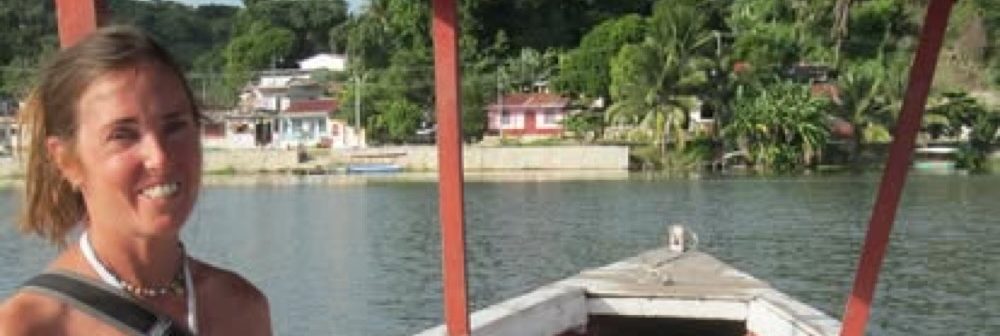
October 16, 2023, Nicaragua. I was anxious about missing the morning ferry. If I did, it could take more than a day to reach my next destination, Granada. I had tried asking around—locals, the hostel—but no one knew the transit schedule. It seems like schedules here are fluid at best. Travel reminded me of what I imagine India might be like: when you set out, you’d better be prepared to camp somewhere along the way because there’s no guarantee you’ll make it.
They wouldn’t let me into the ferry terminal without a ticket, but to buy a ticket, I needed to be inside the gate. Classic catch-22. I had hoped the other ferry to Granada was running, but it turned out the lake was too low due to drought. Climate change strikes again.
Onboard, I met a lovely Nicaraguan family from Managua—a gaggle of sisters and their spouses, posing at the front of the boat like Titanic’s Rose, arms outstretched, laughing. They were on a mini vacation and cracked jokes constantly. Humor, I noticed, seemed to be a common way of coping with hardship here.
I’d told a French couple I’d share a taxi from the ferry terminal, but changed my mind when I saw a bus to Granada already waiting. It was raining, and I didn’t want to waste time or get soaked. That decision paid off. At one point along the highway, the bus conductor’s assistant gestured for me to disembark and catch a connecting bus that was already waiting. In the shuffle, I lost both my water bottles. By the time I got to Granada, the sun was blazing. I was let off a few blocks early and had to walk ten hot minutes with my heavy pack.
I turned a corner and spotted a hand-written sign advertising chicken soup for lunch—$3 USD, served out of someone’s back door. A steal in a pricey tourist town. The bowl they handed me was huge, more like something to mix batter in. I sat down next to a couple finishing their meal and dove in, tortillas and all. Bliss.
Though my hostel, De Boca en Boca, was only ten blocks away, the heat made the walk feel endless. I’d booked a few nights there based on great reviews, but hadn’t realized it didn’t have A/C—a dealbreaker for sleep. A high ceiling fan barely stirred the hot air. I let them know I’d likely leave early and went in search of cooler digs. I found a dorm at Selina Granada for $22 a night—expensive for Nicaragua, but worth it for the A/C. Once I’d secured my new spot, I wandered around town, admiring the historic churches and architecture. I stuck my head into a few shops but didn’t linger. I always feel pressured to buy when I’m the only customer, so I usually avoid those situations entirely.
At sunset, I met Chris, a Nicaraguan Jew from Playa Blanca, Panama, sitting on the brick wall outside Iglesia de La Merced. He was warm and welcoming, recommending a street food quesadilla nearby (I passed). He and his friend made space on the wall and invited me to join them later at a bohemian hostel across the street. I wandered around, then dropped by as they were making a big pot of stew. Guitars played in the courtyard. Chris told me he was in Nicaragua to film a government-sponsored travel documentary. He admitted it was a chaotic gig—the government kept changing plans without notice. I envied his adventurous lifestyle, though maybe not the volcano glissading or jungle raves.
We hung out again a few nights later at a small farewell party for a friend of his. I was struck by his inclusive spirit.
October 17. I awoke to the smell of fried eggs—part of the free hostel breakfast—but only the toast appealed to me. I packed up and moved to Selina, located in a grand villa right on Parque Central. The A/C alone was worth the price.
After getting settled, I set out to explore. I walked down to the malecón on the edge of Lake Managua, near the Isletas de Granada. I hoped to take a boat tour, but the prices floored me—$25 to $30 USD for an hour. A local woman had told me she paid $2. Turns out, prices are per boat, not per person, and being a solo gringa meant I got quoted the full fare. Welcome to the gringo tax.
While walking, I passed a neoclassical building adorned with larger-than-life sculptures. A passerby told me it was an open-to-the-public municipal art college. Inside, I met the artist-in-residence, a sculptor and professor active since the 1950s. He trained as a social realist, a style popular in Soviet-influenced countries like Nicaragua. He was kind and generous with his time. I later learned he was the most prolific sculptor in Granada and had once run for mayor, only to drop out due to Ortega’s growing unpopularity. Communism has a complicated legacy here, especially after the brutal suppression of student protests in 2018.
October 18. I still had a few days left to explore Granada and nearby Masaya and Laguna de Apoyo. I love walking cities, though I often wished for faster transport during the heat of the day.
On one such walk, I discovered Parque de los Poetas at the edge of the old city, beside a beautiful Art Nouveau train depot now converted into a private school. The park features quotes and metal sculptures of famous Nicaraguan poets. I tried to get a closer look at the depot but was blocked by a tall fence—private school privilege.
After reading the park’s quotes (and Googling the poets), I wandered into a poorer part of town that bordered a smelly river. I started to feel uneasy—isolated, out of place. I was relieved when I passed a mom walking with her kids. From there, I headed to the ruins of Hospital San Juan de Dios, a neoclassical marvel and one of the most hauntingly beautiful buildings I’ve seen.
As usual, I sought out the best coffee and pastry spot in town. La Sultana y el Café became my go-to until I discovered an even better bakery near De Boca en Boca. One day, I passed what looked like a grand villa and found it was Casa Tres Mundos, a cultural center and art conservatory. For $1 USD, I got to wander the halls, admire the courtyard, and check out the ceramics and printmaking workshop. A few nights later, I returned for a student orchestral performance. That same night, the Centro Cultural Popular near my hostel held a colorful folkloric show. A little boy in a sombrero and mariachi outfit stole the show. I was moved by the community support and chatted with a woman nearby. The cultural center had the feel of a once-private building reclaimed by the people—likely a relic of the 1980s revolution.
I also visited the Convento de San Francisco, a must-see historical site built in 1525. Beneath it lie ancient catacombs with the remains of about 75,000 people, mostly priests and the elite. The ossuary includes a well filled with neatly arranged bones. The museum’s most striking display was a group of thousand-year-old volcanic statues from Zapatera Island. Some were human, some animal, some entirely abstract. There was also a temporary exhibit on Condorito, the famous Chilean comic character, which made me smile.
The museum holds a strong collection of Primitivista paintings, a movement born in the 1970s on the Solentiname Islands. These artists, inspired by liberation theology and the Haitian art renaissance, painted idyllic scenes of rural life. Their work stood in defiance of the Somoza regime and was brutally repressed in the 1980s. Still, the movement survives—resilient, vibrant, and still painting.
October 19. I took a day trip to Masaya, known as the “Cradle of Nicaraguan Folklore.” It’s the country’s craft capital, famous for everything from handwoven hammocks to embroidered clothing and intricate carvings.
I visited the central market and the nearby Mercado de Artesanías, located in a historic 1900s building. Every Thursday night, they hold a Noche de Verbena, with folkloric dances and music. I was bummed to learn it would take place the day after I was leaving. A woman I’d met at a cultural center in Granada offered to send me videos. I’d been warned that the parties run all night and petty theft is common, so maybe it was for the best. I’d been feeling pretty worn out.
I also tried Vaho, a traditional stew made with dried beef, yucca, green and ripe plantains, and cabbage—all slow-steamed in plantain leaves. I didn’t love it. The flavors were unusual, and it reminded me of an odd mix of Asian cuisines.
I was hot, walking along urban streets devoid of vegetation. It was the peak of the day, and locals stayed inside or lounged in shady courtyards. To ease my heat exhaustion, I bought homemade rice pudding from a house advertising it on a hand-painted placard. Many Nicaraguans supplement their income by selling food—most commonly paletas (juice frozen in plastic bags). Prices ranged from 5 to 25 cents, depending on the maker’s reputation and the quality. I especially liked the ones made with fresh fruit rather than concentrated juice. I finished the rice pudding and continued on.
I was headed to the malecón, a thin strip of parkland at the edge of town that overlooked the stunning volcanic Lake Masaya. Finding the entrance was tricky. I walked to the wrong end and couldn’t get in, but ten minutes later, I was finally looking over the edge. Teenagers loitered around, and a group of them seemed to be making fun of me. Hard to say for sure, but they were pointing and laughing. I tried not to take it personally, but sometimes it’s hard being a gringa—in any country. I said hello to a man who looked down on his luck and felt an immediate sense of empathy. From the teens’ perspective, I probably had more in common with him than anyone else around. I was an outsider. A stranger in a strange land.
Masaya is known for its handicrafts, and I’d hoped to see some firsthand. I’d heard of a nearby area where locals made hammocks. After I’d had my fill of the view, I wandered along the lake rim looking for houses displaying them. Eventually I found what I was looking for—beautiful, ornate white hammocks with price tags around $100 USD. I was tempted, but with all the luggage I was already lugging around, I couldn’t imagine how I’d manage to bring one home.
I asked around to see if anyone could show me how the hammocks were made, but even with directions to different houses, I had no luck. On my way back into town, I stumbled across an interesting church, Parroquia San Jerónimo. The surrounding park made a restful stop, and I lingered before continuing to the main square, Parque Central Masaya, where I wandered into Parroquia Nuestra Señora de la Asunción. It was a long, stately church, and I enjoyed walking its somber aisles before stepping out into the soft dusk light. Workers were setting up a stage for the folkloric dances and street performances planned for the next day, part of the annual fall fiesta of San Jerónimo. I wondered if I should stay another day. But I had already arranged a shuttle to El Salvador for the 25th through someone known to De Boca en Boca, and I was nearing the end of my trip. I still didn’t have a return ticket home—but I’d have to make that decision soon enough.
October 20. I had one more day to explore the area around Granada. It seemed like the perfect time to visit Laguna de Apoyo. It was only about five miles away, but the journey took three hours. I was thoroughly fed up with the slowness of buses, but they were still the only affordable option. Even then, the bus only took me halfway—dropping me off at the highway turnoff, leaving a 2.5-mile uphill slog on foot.
Maybe not forced to walk, but I couldn’t bring myself to pay the taxi fare. Seeing me—a gringa in the blistering heat—they demanded $10 USD for the short journey. I was angry at the gouging and refused, even if it meant walking all day. As I trudged stubbornly up the hill, I caught up to a girl of about 11. We struck up a lively conversation about life in the area, how the taxi drivers were crooks who would’ve only charged her 50 cents, and she shared stories about her friends and family. It was a wonderful, heartening conversation. I had temporarily given up on humanity after dealing with the taxi drivers, but this girl restored my faith. We laughed together for a good twenty minutes, and when she reached her destination, we waved goodbye. I walked on, passing locals working hard in the midday sun.
Eventually I reached a fork in the road. A passerby told me to take the right path. I kept trudging, sweating through my clothes and wishing I’d brought more water. I’d been walking for at least an hour and a half. Finally, I crested the hill and almost ran downhill into a much cooler tangle of jungle. The closer I got to the lake, the cooler it became. At another fork, I turned left. A few minutes later, I saw a sign for Freediving Nicaragua. Curious, I headed down the driveway and found a small café with a thatched roof and garden path leading to the lake. A few 20-somethings were sitting at tables, sipping coconut shakes and chatting about diving. One still had his wetsuit on.
It was a lovely spot. Their main gig was teaching free diving in the lake. I wished I could stay longer than a couple of hours, but the unreliable public transport made that impossible.
I’d been dreaming of jumping in the water the entire walk, and now I couldn’t wait. The café owner warned me not to leave valuables on the shore, but I was desperate to cool off. I swam out into the lake, then noticed a group of locals splashing nearby. Suddenly, I panicked—was my backpack safe? A memory flashed: years earlier in Kusadasi, on Turkey’s Aegean coast, I’d jumped in the sea and watched a man run straight for my bag. I had barely scrambled out of the water and intercepted him, sliding under a fence separating the public beach from a paid area. I ended up bruised and panting in the sun, while the thief slunk off empty-handed.
But today was my lucky day. I swam for half an hour, then returned to shore and changed. I’d seen a chocolate mousse earlier at the café and decided to treat myself. It turned out to be disappointingly small. I’d been eating so little sugar on my trip that my cravings had mostly disappeared, but every now and then, I still indulged.
I struck up a conversation with a woman working there who’d been living at the lake for a few months. She was a long-term traveler trying to make ends meet. I asked how she felt about the poverty and pollution I’d seen elsewhere in Nicaragua. She admitted that they were pretty insulated here—and I felt it too. For a couple of hours, it felt like another world. She told me there were expats living all around the lake. I wasn’t surprised. It was the Lake Tahoe of Nicaragua, and I imagine they wanted to keep it that way.
As I headed back down the road, I passed fancy villas tucked into narrow strips of land—just enough for private lake access and a small marina. There was no public beach here. You had to pay to play.
I spotted a man and woman sitting on a makeshift pile of leaves. They were waiting for the bus and advised me to wait too, even though it wasn’t due for over an hour. I was so tired of wasting half my day waiting for transport. I decided to walk instead. With the exception of Costa Rica, most of the bus drivers I’d encountered in Central America didn’t seem to care at all. I’d seen them toss trash out the window, ignore passengers trying to get on or off, leave vomit on the floors and seats, and play favorites. If I ever return to this region, I might seriously consider renting a car. That’s saying a lot, considering the risks—extortion, paramilitaries, narcos. But that’s how disillusioned I’d become with public transportation.
Just as I reached a crossroads, my new friends waved frantically. The bus was coming. I’d positioned myself across from an official stop and worried it wouldn’t pick me up. This was the last bus of the day, and I couldn’t afford to miss it—I planned to leave for Matagalpa the next morning. Hilder, a cosmopolitan Bohemian I’d met at the Ometepe farmer’s market, had insisted I visit the region. Once I got there, I learned more about its history—how foreigners had taken over coffee production in the 1980s to support locals resisting the U.S.-backed war.
 Lisa Karpinski