
October 9, 2023, Nicaragua. It was still raining hard when I reached the Alamo rental agency at the Nicaraguan border in Peñas Blancas. They told me I needed to get an exit stamp first, so I drove back toward the border—not without incident. A man startled me by hitting the roof of the car and offering to show me where to go in exchange for money. I thanked him and found my own way. The line was long, but eventually I paid the required fees and received the Costa Rican exit stamp. Most Central American countries charge entry and exit fees.
Back at Alamo, Brian assured me everything was fine. Still, the next day, I saw a $189 charge on my card. When I called to ask, he claimed it was normal for the bank to withdraw money multiple times. A few days later, $789—more than the original $777 quote—appeared on my credit card statement.
When I dropped off the car, I overheard a flustered Costa Rican man saying he had to return to Managua to recover a $500 item seized at the border. Apparently, it’s common for professional cameras to be confiscated—and rarely returned, unless accompanied by a steep fee. He said it wasn’t worth the trouble. I wondered if his experience was foreshadowing for my time in Nicaragua.
I hauled my 60 pounds of gear—two large bags, a backpack, and a daypack—through the customs area, past military personnel, and into the gleaming Nicaraguan customs building. An American tourist laughed and said I looked like a bag lady. I agreed. It was ironic: Nicaragua is the second poorest country in the Western Hemisphere after Haiti, yet had the most opulent customs building I’d seen.
After waiting in one unmoving line for 15 minutes, I switched lines—big mistake. The woman in charge appeared to be in training, interrogating each person for about 15 minutes. When she asked my profession, I said “writer,” not thinking much of it. She took my passport and disappeared. I waited nearly an hour, unsure whether I’d even get it back.
Then it hit me—they probably thought I was a journalist. Given Nicaragua’s political climate under Ortega’s authoritarian rule, foreign press isn’t exactly welcomed. Eventually, a man approached me and asked in English what kind of writer I was. I told him I’d worked in tech, writing manuals for Apple and Intel. He seemed visibly relieved, gave me a reassuring pat, and soon after someone at the window signaled that my passport was cleared.
Even though I’d already been interrogated for half an hour, the customs officer took another 15 minutes to finally stamp my passport. My relief was short-lived—I still had to pass my luggage through an X-ray machine. Luckily, the woman checking bags was glued to her phone and didn’t inspect mine too closely. I could’ve been accused of smuggling supplements. I grabbed my heavy packs and shuffled out the door.
I was told the bus stop was a long walk, but just outside the customs building, I spotted a bus headed for Managua. I asked if I could get off in Rivas, and the driver said yes. His assistant looked skeptical. I soon learned why: when I asked the fare, the driver charged me $10. The typical fare to Rivas is 35 córdobas—about $1. I was ripped off before even stepping foot in the country.
Still, I was relieved to be on the bus. If I’d been denied entry, I don’t know what I would’ve done. We arrived in Rivas about 30 minutes late, and I got off with no Nicaraguan money. A swarm of rickshaw drivers surrounded me, pressuring me to let them take me to the ferry dock at San Jorge. I told them I had no local currency; they all offered to take me to an ATM.
I was angry—the bus driver had essentially robbed me. He worked for Nica Bus, Nicaragua’s best-known bus company, so I felt especially betrayed. I refused the rickshaw offers and hobbled to the ATM. Unfortunately, it didn’t accept my card. A woman in line told me to try a different machine, and a couple of guys directed me to the Pali supermarket.
One rickshaw driver had followed me, persistent and friendly. He offered to take me to San Jorge, four miles away, for 200 córdobas ($7). Exhausted, hot, and hauling 60 pounds of gear, I gave in. The good news: the second ATM worked. The bad news: I didn’t realize I was being charged $4–5 per withdrawal. I only took out 500 córdobas—about $13—so the fee was steep.
After paying the rickshaw driver, he passed me off to a taxi driver, claiming my bags were too heavy. He paid the taxi $1 and pocketed the remaining $6. I assumed that’s how people survive here—by conning tourists. The silver lining: I made the 4 p.m. ferry, the last of the day. It gets dark around 5:30, and the ferry ride lasts an hour. I arrived with just enough daylight to get my bearings. I hadn’t reserved a place to stay and had no idea where I’d land.
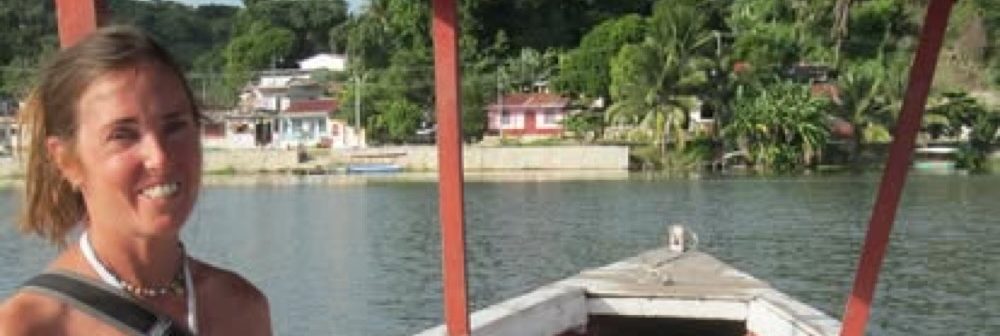
The ferry ride was the first moment of peace since arriving. It rained hard and my backpack got soaked after someone had pushed it out into the open. On arrival at the island, hawkers swarmed, trying to rent me a scooter. I ended up in the hands of some fast talkers who charged more than the fanciest hotel on the island. I paid a few bucks for a ride and we searched for accommodations. I landed at Hospedaje Soma and took a dorm bed with just a fan—no A/C. A mistake. The heat never let up, and I slept with windows and doors open. I woke up throughout the night—bitten by mosquitoes, suffocated by burning plastic from neighbors burning garbage, and jolted by roosters crowing at 2 a.m.
October 10. By 6 a.m., sleepless and frustrated, I asked to move to a dorm with A/C. Even with roommates, it was the lesser of two evils. They offered prepared meals as an alternative to preparing your own. I decided instead to walk into town to try the Cornerhouse Café, which had the only espresso machine in town. I felt I deserved a good meal after my sleepless night, and ordered poached eggs and a cappuccino. I chatted with a woman headed by ferry to Granada. She ran a vegetarian restaurant in the middle of Ometepe Island. Ironically, I ended up running into her a few days later while walking on the beach near her restaurant.
I also needed adequate Wi-Fi for our couples counseling session. I’d been continuing to talk with Shawn and Leia while on this trip, which had been a very helpful source of support. At least most of the time. Today was bad. Both in content and connection. Our counselor asked how I felt when Shawn said he’d do everything he could to help me. He’d told me before that he felt helpless—so this sudden shift felt performative, like he was trying to score points. When I said it didn’t feel , she called me harsh.
I was angry that Shawn was being charming to Leia, and saving his defensive and passive-aggressive nature for me. It reminded me of my childhood, when people thought I had “nice” parents. I’d have traded that image for parents who actually saw and appreciated me, instead of yelling or treating me like a spouse. I felt extremely alienated after the call.
Despite my mood and the heat, I decided to walk five miles to a museum called El Ceibo, recommended by a man I’d met the night before named Elmer. I didn’t make it. Instead, I explored town, scoping out alternative places to stay—simple guesthouses with shared outdoor kitchens, about $20 a night.
As I walked away from Moyogalpa, I felt immersed in nature. There were few cars—most people traveled by foot, scooter, or motorcycle. Forty minutes in, I met an older man sitting outside a crumbling building. We chatted, and he told me about a nearby village.
I wandered in. The streets were empty—probably because people were staying cool indoors. I was clearly the crazy tourist walking around in peak heat. I spotted a sign for “pipa”—fresh coconut. Thirsty, I asked the woman outside if they had any. She said no, but another woman emerged from the back and waved me in.
Her name was Yamile. She’d moved here from Costa Rica to support her husband’s dream of farming his family land. She asked him to pick a coconut. The first was rotten. The second was ripe but tasted fermented. We sat in her yard and talked about her journey from Costa Rica to Nicaragua.
We chatted until 5 p.m., when I realized I had to head back. I ended up walking the last 30 minutes in darkness. Yamile invited me back to try her honey-baked squash, cooking over a wood fire. The smoke in her kitchen was overwhelming. I asked how she could stand it. She shrugged—there were holes in the wall, after all. I suppose it’s all about what you get used to.
On the long walk back, I fantasized about grilled chicken and ended up finding a small pollo asado place. They served a delicious plate with homemade tortillas and slaw. A skinny dog lay nearby, trying not to look at my food but clearly hoping for a bite. I often share leftovers with animals—once even fed a crowd of iguanas while eating fruit on a beach in Costa Rica. As I walked away, I heard the dog happily crunching.
Back at the hostel, I turned in early, only to discover the woman in the next bed was coughing nonstop. I worried she had COVID. She said it was a respiratory infection and that she was on antibiotics, but I wasn’t reassured. Getting sick here was the last thing I wanted.
October 11. I woke to the sound of rain and wondered if it would last all day. I had delayed my scooter rental until today—my first time ever riding one—and wasn’t thrilled about learning in wet conditions. I walked into town, where the rental agent gave me a stern lecture about the costs if I damaged the vehicle. They took my passport as collateral, which made me nervous. Later, I found out the owner of the company was allegedly a local drug dealer. Lovely.
The agent insisted I practice at the soccer field. I’m glad we did, though I’m not sure how much it helped. It’s kind of like riding a bike, but much heavier. Because of my scleroderma, my shortened fingers make it hard to brake without accidentally twisting the throttle. Twice I almost lost control while just holding the scooter and trying to steady it. Scary.
Still, I hit the road by 9:30 a.m. First stop: El Ceibo, the museum I hadn’t reached the day before. Entry was $9—expensive for Nicaragua. The owner is reportedly a millionaire, which might explain the price. I was hoping to explore at my own pace, but the guide insisted on leading me through. He barely gave me time to take photos and delivered the entire tour in Spanish, using lots of technical terms. My Spanish was pretty solid by then, but archaeological vocabulary threw me.
There were few written signs, and he kept rushing me, claiming there was a group waiting behind us. There wasn’t. He sighed often and seemed visibly irritated. Still, the collection was impressive. The owner supposedly found all the artifacts—ceramics, stone tools, and funeral urns—on his land. I wondered if he had connections to looters on Isla Zapatera, where similar items have been found. It’s good to be the king.
The funeral urns (called zapatas) were shaped like shoes. Fascinating. There were three distinct types, and I wondered if the type used depended on the person’s status—perhaps shamans or chiefs got special treatment. Some urns held cremated ashes, others full bodies curled into fetal position, often facing different directions. Was there a system? Who knows.
There was also a numismatic collection with old coins and bills. Apparently, a 19th-century American president of Nicaragua introduced the first national currency. Before that, they used foreign money. Interesting bit of trivia.
After leaving the museum, I continued along the paved road. Only half the island’s loop road is paved; the rest is dirt and full of rocks. I tried the dirt road briefly and nearly wiped out—no thanks.
I reached Balgüe and crossed the river, but within a minute, I knew I was out of my depth and turned around. I parked and walked to the shore of Lake Nicaragua. The water was actually warm—thanks to relentless sun and little rain. The lake’s water level was so low, ferries to Granada weren’t running.
On the way back, I stopped at a lovely bakery near a fork in the road. It felt unexpectedly upscale. I chatted with the owner and returned several times during my stay.
I had wanted to visit El Pital—a chocolate factory, café, and hotel—but didn’t want to risk the steep, mile-long dirt road leading to it. Instead, I kept to the paved road past Playa Mango, where the pavement ends. I really wished I’d had the nerve to explore the full loop around the island—it felt wild and remote in that direction.
I’d also hoped to stop at a freshwater spring near Hotel Agua, but again, the dirt road intimidated me. So I turned back and rode to Altagracia, the island’s second-largest town. The scooter slipped out from under me again, but I managed to park safely and explore.
The town square was lively. People were gathered outside city hall, listening to pro-labor speeches. I found a quirky little museum with pre-Columbian petroglyphs and stone statues. The power was out, so it was hard to see inside. When I asked if they could turn on the lights, I was told the outage was widespread—which was strange, because everywhere else had power.
I wandered into the courtyard, photographing tributes to the museum founders. Then I strolled around the main square, admiring the Disney-like statues and watching locals relax on benches. The plaza clearly served as a gathering spot for the community.
I headed back to Moyogalpa, enjoying the ride as dusk fell and jungle scenery zipped past. I stopped by Yamile’s place again, but only stayed 20 minutes. She was hosting her sister from Costa Rica, and another sister lived nearby. She showed me her fruit trees and picked yellow starfruit for me. I asked the hostel cooks to use it in a smoothie, but it turned out mouth-puckeringly sour.
She also introduced me to her pet pig, so scrawny it looked more like a dog. I wanted to stay longer, but didn’t want to risk a late fee from the rental company. I was beginning to suspect they were less than honest. Elmer—whom I’d met my first night—told me the owner might be tied up in the cocaine trade. That would explain the hard sell.
I said goodbye to Yamile, hoping I’d get to visit her again. I filled the gas tank and returned the scooter. Sure enough, the owner was waiting outside my hostel to extract another fee—this time for cleaning.
Later, I met up with Elmer. We went to a local bar and drank fresh fruit juice. I wanted to help him out, so I wrote an English-language review for his scooter rental company on Google and TripAdvisor. He told me he’s barely scraping by—trying to keep his small finca going while supporting his child. A tough road.
 Lisa Karpinski