
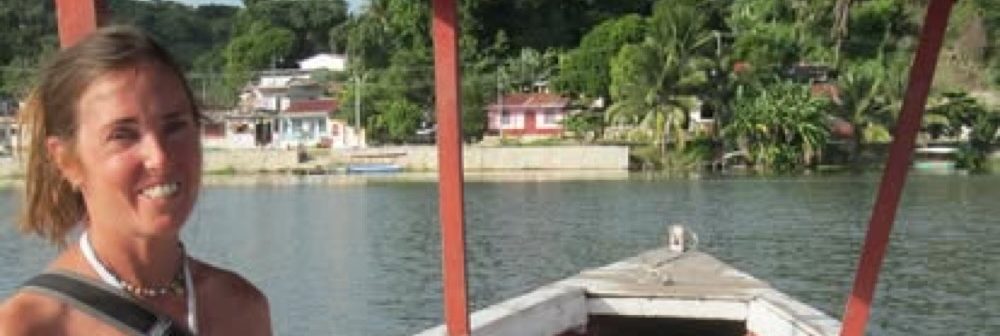
March 1, 2012, Chile. I had planned to fly to Buenos Aires on April 3. Already in early March, I was knee-deep in frantic packing. I’d been looking forward to Carnival in Uruguay during Pascua—Semana Santa, Easter week—an event I’d long wanted to experience in a catholic country.
Then the news came. My second cousin, Chris Karpinski, died in a car crash on March 23. He was driving home from a concert, just minutes from his house, when he hit an icy patch of road. The car went off, and that was it.
In the aftermath—grief, the weight of uncertainty, a lingering back injury—I postponed my trip. But more than anything, it was my mom. Her depression had deepened again. She’d checked herself into the psychiatric ward at Stanford. The timing didn’t feel right to leave. Amid everything, spring came. The flowers bloomed, and the green crept in. My garden began to grow again. Small, steady joys.
Eventually, I settled on a new plan. I booked a one-way flight to Santiago, Chile for May 17. Wasn’t sure when or from where I would return.
The preparations had wiped out. Every day, some new detail needs handling. Today I double-checked the irrigation system at home and discovered a few plants had been missing water. Glad I caught it—summer could’ve undone everything I’d just planted.
This trip, I had decided not to bring a computer but rely on internet cafés and the generosity of strangers to stay connected. I had hoped to post updates weekly—or more often, depending on what kind of access I find—and will link to photos, likely through my old Flickr account.
Saying goodbye has been hard. I cried hugging Ciocia Marylka, my beloved aunt. She’s been a steady presence in my life, and I felt the parting deeply.
Despite my love for travel, anxiety lingered. I didn’t feel prepared and my Spanish is rusty, my mind, tired. The idea of crossing into a new world both excites and unnerves me. What I want more than anything is rest. What I need is sleep.
May 18. I arrived after a longer than average flight. The plane had to refuel after being forced to circle Santiago for over an hour. We’d been forced to head over the Andes to Mendoza Argentina to refuel. When we landed in Mendoza, the pilot announced that we had some kind of mechanical problem and needed to stay grounded until it was fixed. When we finally landed in Santiago de Chile, a collective cheer went up. I guess everyone had been as anxious as I.
Santiago, a sprawling city of 6.4 million, pulsed with life and a kind of constant forward motion. Chileans navigated its chaos with remarkable resilience. The rapid-fire rhythm of their Spanish—so fast, so packed with idiom—left me disoriented at times, even homesick.
I forgot my special dental floss—the only kind that fits through my bridge—and haven’t been able to find a replacement anywhere. The cold hasn’t helped my mood: daytime temperatures sometimes dip to 43°F, with nights dropping below freezing.
Everywhere in Santiago, street dogs—perros del calle—roam. People feed them, build them little houses, even dress them in sweaters. But their presence is not without consequences; dog poop is equally omnipresent. I’ve stepped in it more than once. No wonder the word mierda gets so much air time. These dogs chase taxis and weave through traffic with brazen confidence, yet somehow I’ve not seen a single accident or fallen pup.
The noise here is relentless. Claudio, a local, told me the ambient sound level hovers around 75 decibels. Between the screeching brakes, blaring buses, ambulances, and impatient honks, my body feels perpetually braced. I’m ready to escape to the countryside.
During my time in the city, I stayed at Hostel Santa Lucia, and for my first weekend, was lucky to join a Couchsurfing host and his family at their country house in Quintero—a small, wind-whipped fishing village. We ate mariscos and pescados, fresh and flavorful. Now I’m back in the city center, hosted by another Couchsurfer. The smog is thick, but tomorrow’s forecast promises rain—a blessing if it comes.
I’ve already visited several museums: Pablo Neruda’s house, the Museum of National History, and the Museum of Fine Arts. Each offered glimpses into Chile’s layered past and vibrant imagination.
One thing I’ve yet to adjust to is the unabashed public affection—besos, embraces, and entanglements that seem to belong more in private than on park benches. In Parque Forestal at night, couples nestle into shadows with no apparent concern for onlookers. Raised with a more reserved approach to intimacy, I can’t help but feel a little squeamish.
Walking through crowds has its own rhythm here. People move slowly but refuse to yield. I often find myself accelerating just to pass or find open space. Electronics are shockingly expensive—at least double what they cost in the U.S.—and the same goes for food. A basic cell phone runs around $300. I managed to find one for $20, though it only works within Chile.
Patience and adaptability seem to define Chilean life. Waiting 20–30 minutes for a bus is the norm, whereas I grow restless after just ten. The Metro, though crowded at all hours, is a bright spot: fast, efficient, and reliable.
Sweets are serious business. Bocados, manjar, boiled condensed milk, marshmallows, cookies—every kiosk seems to sell them. Food and family go hand in hand here, with weekday gatherings for desayuno and almuerzo, and Sundays devoted to carne asado shared over long, laughter-filled afternoons.
Among the flavors I’ve loved is ají—a spicy yet balanced chili that, mixed with fresh tomato and onion, makes the most addictive salsa I’ve ever tasted.
One of the most meaningful experiences has been visiting one of the top five all-male public high schools in the country, where I spoke to twelve English classes. The students asked whatever questions came to mind, and I answered in English or, when needed, Spanish. Many were surprised I spoke their language at all. We discussed everything from American politics to the U.S.’s role in Pinochet’s regime, to cultural differences and, amusingly, my thoughts on Chilean men.
The teachers left a deep impression. One told me he had taught Violeta Parra and her two brothers—one considered among Chile’s greatest writers. Another, Raul, became a favorite. We talked over tea and cakes after class, and he shared his frustrations with how English is taught in Chile—how his university, ironically, intimidates students more than it helps. Then there was Susana, who had married an American and was eager to know what Americans are really like.
In small and surprising ways, the culture reminded me of Turkey: that particular mix of warmth and distance. On arrival, boarding the train felt like stepping into a spotlight. Everyone stared. But when I asked questions in Spanish, strangers usually responded with kindness. I loved listening to the lilt of their speech—full of pet names like perritoand huevo—and watching them delight in jokes, mimes, and magic tricks.
Several pedestrian-only streets wind through the city center, alive with musicians and street performers. But carabineros and security guards often chase them away. A license is required to perform, and the fee is reportedly steep. Despite government claims of supporting the arts, many cultural expressions seem quietly discouraged.
Rest is also difficult to come by. Benches are scarce, and public bathrooms practically nonexistent. You have to pay to use the toilet—if you can find one. After a heavy rain, the stench of urine hanging in the air made me dizzy. Even then, the streets remained slick with a sheen of oil, a kind of grime that never fully lifts.
Sodas are beloved. So is the national drink: a syrupy peach nectar with a whole dried peach and a scoop of wheat grains resting at the bottom. Fried empanadas, sopapillas, churros, french fries, and fried chicken fill the stalls and kitchens, yet somehow, people remain remarkably thin.
Resourcefulness seems to be a national trait. People here can fix anything. They are capable, clever, and endlessly patient—perhaps because life in Chile demands it.
Tomorrow I leave for Pucón and the quieter south. I’m looking forward to cleaner air, slower days, and a bit of silence.


Nice article, I enjoyed reading. Greg.
LikeLike
I can see you put a great deal of effort into a positive spin on your perceptions. That is a skill which will serve you well in any place. The weather sounds wintery in deed. Hope you stay warm and well red. May your feet be free of the perro squishies and your journey to greener pastures be pleasant. Nice job interacting with the educational instituions and helping the kids form well rounded world views. Happy trails red rider, love yah,-Tom
LikeLike
You have a beautiful gift of words!! I enjoyed your vision and point of view. What a wonderful experience, especially getting the opportunity to interact at the schools. I am excited to read more as you continue your journey. I admire your passion and ability to make friends in such far away places. Thank you for sharing, be safe, and most of all…..relax and enjoy your Lisa time… Love and miss u!!
LikeLike
I have to be honest and admit that I found your “observations” of the illusive Chilean a bit demeaning. Santiago is a metropolis the likes of New York or Los Angeles and like those places, you’ll find higher noise pollution, more outdoor activities (including kissing and hugging), and public transportation wil be strained to put up with the higher numbers of users that they support. Manjar, as it is called, is actually condensed milk that is boiled, and is available in the U.S. by the name Dulce de Leche, which is quite popular here as well. While I cannot comment on your personal experiences that led to your interpretations of an entire culture, I do ask that before being as critical as you have been, please remember that you are the one visiting a different country and that the filter with which you view the world is vastly different than that which all others do.
Love and Blessings, I hope you enjoy the rest of the trip.
LikeLike
Anonymous, thank you for your perspective. It sounds like it felt personal for you. Hope you are open to hearing further perspective from my friend. You may find a more well rounded review as she travels to places with less urban density. Peace.
LikeLike
Lisa, love your detailed descriptions and impressions. I also am amazed at some aspects of big cities such as New York, Los Angeles, and San Francisco and how different they are from where I live–which is all of 50 minutes south of SF. It’s completely valid for you to comment on the differences from what you’re used to. Actually I think you were pretty subjective about things and just described them rather than condemned them–I’d comment if I saw a lot of dog poop everywhere and kept stepping in it, too, no matter where I was! And the overall feeling that I got from your post was positive, that the people there are really good. Looking forward to seeing more of the same.
LikeLike
Lisa it is wonderful to hear your experiencing life! See you in some form some where sometime! Big Hugs Lovey!
LikeLike