
June 28, 2012, Chile. The rain hasn’t let up—falling hard, nearly two inches a day. I haven’t seen the sun in over a week, but at night, the sound of it drumming on the roof has been strangely comforting.
A few days ago, I tried to hike in the Ríos Region, to a reserve called Huilo Huilo, but was turned away. They only allow entry with a guide, and only if there are at least two people. Since I was alone, they wouldn’t let me in. Still, I wandered through the grounds—took photos of the café and buildings, the shop displays, and a small exhibit on the local wildlife. Someone had created tiny felt fairies perched on branches—charming little things. A waterfall nearby offered a bit of consolation.
I set off on a solo hike toward Puerto Fuy, a quiet lakeside village. The lake stretches all the way across the border into Argentina, where it becomes home to San Martín de los Andes—a picturesque town with a Swiss influence. I’m still unsure whether I’ll make it that far.
In Valdivia, we’ve been staying with a Couchsurfing host, a rowing champion who recently placed third in South America. He now teaches physical education at the university.
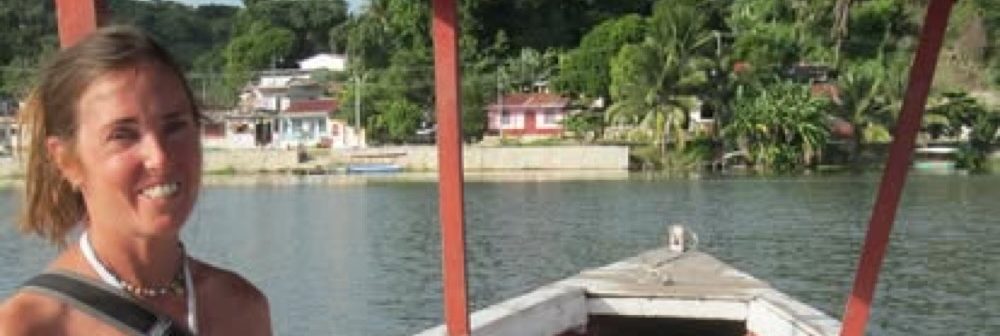
Most days, I’ve found my way to the coast or gone wandering in and out of town. On one boat trip along the river, the sun broke through briefly. Native forests lined the shore, but so did acres of eucalyptus—fast-growing trees harvested for wood chips used in heating and paper production. Much of the landscape bears the scars of non-native logging.
I visited a small museum at the old fort in Niebla, perched above the coast. A kind curator, who happened to be studying English, asked me to help translate some of the signs. I was surprised and a bit proud that my Spanish had improved enough to do it. Lately, I catch myself forgetting English words—language shifting with place and time.
The fort itself held layers of history—beautiful old cannons, sandstone blocks quarried nearby, barracks dating to the late 1700s. The site once guarded the bay during the wars of independence. British commander Lord Cochrane, hired by Chile, led a fierce naval battle here against the Spanish. At the time, Valdivia was the most important port in South America—exporting gold, importing goods from Asia and around Cape Horn. It was fortified with multiple forts, towers, and walls, all designed to repel enemy forces. The rain adds a kind of somber poetry to its ruins.
I spent most of the day translating military terms while rain tapped steadily on the roof. Later, I walked a few miles along the coast road and caught another bus to a beach where a waterfall poured directly into the sea. There, I met a couple gathering flat slate stones. I offered to help, and we hauled two armfuls of stepping stones up a steep cliffside to their car. They turned out to be financiers living in Río Alegre, just south of Valdivia. We had a good conversation—another unexpected chance to stretch my Spanish comprehension and conversation skills. They gave me a ride back to town.
I also visited the botanical garden at the Universidad Austral de Chile. The garden sprawls across the campus and includes species from the local temperate rainforest, as well as Patagonia, Tierra del Fuego, and even distant places—sequoia sempervirens from California, metasequoias from China. I was overjoyed to see my tree friends again and took the time to hug a few new ones. Trees give me a sense of grounding, of deep happiness.
Elsewhere on campus, I explored the arboretum, the animal husbandry center, and Parque Saval—a tree-lined park with a large lagoon and black-necked swans. I wandered through the forested hill above the water, imagining I’d been transported to some dark corner of Eastern Europe.
Down at the fish market, sea lions and seals wait by the pier for scraps. The stalls offer kelp cakes, shellfish with lemon and cilantro, smoked salmon, ají (the local hot paprika), and all kinds of delicacies. I hope I’ll return someday.
From Valdivia, I made my way to Puerto Varas, a town nestled along the shore of Lake Llanquihue. From there, I took a long, slow bus ride to Petrohué—about 45 kilometers, but it took over an hour. The bus crept along at 40 miles per hour and stopped constantly. It runs infrequently and unreliably. Locals advised me to be back by 4:30 p.m. just in case the last bus at 6 didn’t show.
Having a car would’ve helped. Hitchhiking is an option, but in remote areas there’s no guarantee anyone will be driving by. I tried taking photos from the bus, but the windows were so caked in soot—despite the constant rain—that most shots came out blurry.
The architecture here is deeply Germanic. In the 1850s, many Germans left their homeland in frustration and settled in this part of Chile. After World War II, a wave of pro-Nazi sympathizers, including Maria Braun, found refuge in Chile and Argentina. Puerto Varas was one of those landing points.
On the bus, I met a man from Paris who studied geography and now works in the nearby park next to Lago Todos los Santos. He introduced me to his boss, Mario, a biologist who studies the local otter population. We spoke in Spanish as best we could, and I took several short videos of the Petrohué Falls—a breathtaking cascade framed by volcanic stone.
Even in the rain, the beauty was undeniable. I continued on foot to a nearby lagoon, set deep within black volcanic rock. The water was a rich green, colored by its depth and bacterial makeup. I followed several trails from there, taking more videos, trying to capture even a small piece of the atmosphere I was moving through.
 Lisa Karpinski
Wonderful, Lisa. Thanks for brightening my day with your adventures.
LikeLike
Wow! Night day difference from the big city life. Glad you found the beauty and new friends. I can picture the lands as you describe them, biologists playground. Sounds like you found connection in your explorations as I denote we, being said in your posts. Good journey scamp.
LikeLike
HOLAA, como estas gracias por la ayuda con las rocas quedaron bonitas en el jardin.
que te valla bonito en tus siguientes viajes Saludos.
LikeLike
A big hug from Los Gatos !!! Alejandro Bassi.
LikeLike
Great that your spanish is improving so much so quickly! I’m impressed. Don’t remember how much spanish you said you already had.
LikeLike