
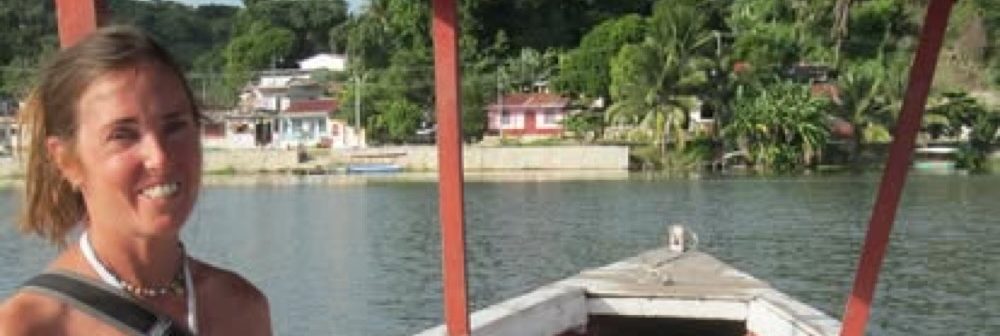
August 12, 2025, Ecuador. I woke up at 5 a.m. for what was supposed to be an 8 a.m. flight. Instead, the plane sat on the ground until 9:30 because of maintenance issues. I asked several times whether they would notify my connecting flight in Miami, but none responded.
When we finally landed, I literally ran a mile through the airport and arrived at the gate two minutes after it closed. The agent was surly and definitely not apologetic, despite what I told him about the previous flight (which was also an American Airlines flight – you’d think they would have communicated). After making me wait about twenty minutes, he directed me to another counter, where I learned I could have simply rebooked the flight on my phone. I wondered whether my luggage would make it.
On the next flight I met a professor who helped distract me from my frustration. We were delayed again because the airline was searching for two missing bags. They kept announcing that it would only be “a few more minutes,” which stretched into another hour. I muttered some uncomplimentary things in Spanish. What bothers me isn’t the delay itself—it’s when people say one thing and do another.
We finally arrived in Quito at 12:40 a.m. My driver, Ober, was waiting for me. Customs took about half an hour, but luckily my bags were not inspected. After such a long day, I was grateful simply to collect my luggage and leave the airport.
Ober was kind and welcoming. By the time we reached my apartment I was exhausted and disoriented. I worried that I had lost several important items and forgot to secure the door properly. Fortunately, nothing happened, and I collapsed into bed.
August 13.
I woke up convinced someone had stolen my SteriPen and a bag of belongings. After some searching I realized nothing was missing; I was simply jet-lagged and exhausted. Around noon I finally left the apartment and headed to Chuta Madre, a local café with excellent bread, croissants, and a beautiful view. After chatting with the staff, I set off for Quito’s historic center.
I wandered without much of a plan and eventually reached the Basilica. Rather than climb the towers, I explored the church itself. Most churches in Quito charge admission, with foreigners paying more than locals. I don’t mind the difference. The Basilica was impressive, though some of the older churches I visited later made an even stronger impression, especially the Jesuit church.
A short walk away I found KITU, a chocolate shop filled with artisanal crafts, alpaca products, and handmade goods. One of the young women gave me a detailed explanation of the chocolate-making process and offered samples of nearly everything. I fell in love with their alpaca products as well, particularly a large llama figurine with real alpaca. I wanted to take it home, but had no extra space. I left with a mandarin chocolate bar and memories of an especially friendly welcome.
I intended to continue on to Mercado Central but was distracted by another chocolate shop, where I bought bars flavored with lemon, orange, and passion fruit. By then rain had begun to fall, so I returned to the apartment, changed into rain gear, and headed back out.
For lunch I stopped at David Tortillas Comida Típica and ordered sopa de gallina along with a completo topped with egg and chorizo. Not long afterward my stomach began protesting, and I suspected the agua fresca might have been the culprit.
Despite that, I spent the afternoon exploring nearby churches, and especially admired the detailed frescos, carvings, and murals created by indigenous artisans. The details were stunning. At one church, Mass was beginning, so I slipped out quietly rather than disturb the service.
Later I bought fruit from a street vendor and then realized I had lost my water bottle. I retraced my route, hoping it might still be sitting somewhere. To my surprise, it was waiting for me at the restaurant where I had eaten lunch. The staff had set it aside. I felt elated.
Not long afterward my stomach problems returned with urgency. When I couldn’t get into my apartment building quickly enough, I left my fruit on the doorstep and ran down the street searching for a bathroom. A security guard took pity on me and allowed me to use one in his building. His kindness saved the day.
That evening I wandered through Plaza Grande and eventually discovered the Jesuit church, La Compañía. For six dollars I spent more than an hour exploring one of the most beautiful churches I have ever seen. I attempted to join a guided tour in Spanish, but the guide spoke so quickly that I understood perhaps half of what he said. Even so, the visit was unforgettable.
As darkness fell, I bought a tamale from a vendor in the plaza and returned to my apartment around 8:45 p.m. I felt completely comfortable walking through the neighborhood after dark, which was reassuring.
Earlier in the day, the staff at the chocolate shop had recommended several guides, and my driver also offered private tours for about $60 per day. I ended the evening researching possibilities and trying to decide how best to explore the rest of Ecuador.
August 14. I set my alarm for 9:30 a.m. and was tempted to sleep longer, but I was glad I got up. After making a smoothie with banana and passion fruit, I wrestled with the apartment door lock and eventually headed out toward a coffee shop near San Blas.
En route, I walked by a woman who asked how I liked Quito. She told me a bit about her work as a high school teacher and described the challenges of teaching today, how difficult it can be to maintain order in the classroom, and her concerns about changes in the educational system. We discussed politics in both Ecuador and the United States, including the impact of Trump’s policies on Latino communities. Before we parted, she shook my hand, asked where I had learned Spanish, and wished God’s protection over my travels. It was a lovely encounter.
A few minutes later, while photographing a mural, a young man called down to me from the window of a colonial building. He had spent time working in Minnesota and was eager to practice English. He seemed genuinely surprised that I was traveling alone and asked about my plans. His warmth and enthusiasm made me smile.
Eventually I reached Zular, a coffee roastery housed in a beautifully restored colonial building over a century old. I joined a tour led by one of the family members. His grandfather had started a bakery and café decades earlier, and we learned about the German machinery still used in the roasting process. A German couple and another traveler joined the tour, and afterward I spent some time talking with the owner’s mother, who was originally from Bogotá.
Later I walked through the nearby park, following winding trails and enjoying the views. At one point I noticed a solitary man sitting in a field. From a distance his face appeared almost mask-like, and for a moment I felt uneasy before realizing he was simply resting and looking in my direction.
Following the coffee guide’s recommendation, I climbed toward a park near the famous yellow stairs. The views over Quito were spectacular. Near an old stone building I met two grandmothers and their young granddaughter. We chatted for a while, and one of the women called me valiente—brave—for traveling alone.
After descending, I wandered north toward Mercado Central. I bought fruit, peas, and corn but arrived at the market just as it was closing at three o’clock. Disappointed but not deterred, I continued wandering and found a small establishment run by a woman from Ecuador’s coast. She served fresh sugarcane juice blended with coconut water.
There I met a young man from the Amazon who jokingly proposed marriage after learning I was unmarried and had no children. His playful humor entertained everyone around him.
I lingered over my drink before continuing into the commercial district. Along the way I discovered a museum dedicated to an Ecuadorian painter whose works in the 1940s and 1950s depicted various indigenous communities. The paintings and the historic house that contained them were both beautiful.
The shopping district was crowded with stalls selling imported goods. One vendor joked with me while I tried on hats. He talked about wanting to move to the United States, and I gently suggested that life there might not be as ideal as he imagined.
At one point locals advised me not to continue farther in a particular direction because of safety concerns, so I turned back and headed toward Plaza Grande. There I bought a fried plantain stuffed with cheese and struck up a conversation with a man named Manuel, who seemed determined to convince me that he knew everyone important in Quito. After a while I excused myself and continued on.
In La Ronda, a charming historic district, I spoke with a restaurant promoter who strongly encouraged me to take Ubers everywhere. Only later did I learn that he was also an Uber driver, which explained his enthusiasm.
By evening I was hungry but unwilling to pay six dollars for a bowl of soup, so I returned to the plaza, bought another tamale, and headed home. Before bed I finalized transportation plans with Raúl. It made more sense to meet him in Mindo than hire him to drive around Quito.
The night turned cold, and unfortunately I began coming down with a cold.
August 15. I woke around 9:30 but lacked the energy to get moving and stayed in bed until nearly eleven. My cold was settling in. After making a smoothie and gargling with salt water, I asked my host whether she knew any local remedies. Her brother, she told me, was a doctor.
Feeling weak, I ventured out in search of supplements. I quickly discovered that natural health products were surprisingly expensive in Ecuador. A probiotic containing only six billion cultures cost about two dollars per capsule. The selection was limited as well.
At one natural food store I spent time talking with a pharmacist who patiently helped me search for fragrance-free soap. We never found exactly what I wanted. The rose soap I purchased turned out to be heavily scented and bright pink, so later I gave it away to the owner of Zular Coffee.
At a second health store I met the owner and a teacher who happened to be shopping there. Our conversation drifted from education to politics to the challenges families face when parents work long hours. They spoke about teachers increasingly filling parental roles for children who receive little support at home.
As we talked, I became noticeably weaker and had to sit down. I purchased a syrup for respiratory symptoms and made my way to Zular.
Beatriz, the owner whom I’d met on my first visit to Zular the day before, immediately noticed I wasn’t feeling well. She brought me yogurt and water and asked whether I had seen a doctor. We discussed herbal remedies, and she prepared a soothing lemon verbena tea. Her kindness reminded me how fortunate I had been to meet so many generous people in Quito.
After resting, I headed to Mercado Central to buy ginger, limes, and other ingredients for cold remedies. Inside the market I stumbled upon a lecture about medicinal herbs and traditional foods. The speaker discussed local plants and their uses, and I listened for a while with interest.
Hungry and exhausted, I finally ordered encebollado, a traditional fish and onion soup. Despite my concerns about the water, it was delicious and exactly what I needed.
A mariachi band began playing upstairs, but I was too tired to stay. On the way home I visited a small archaeological exhibit about the ancient La Florida culture and their burial practices. It was fascinating, though my energy was fading rapidly.
By four o’clock I was back at the apartment, barely able to keep my eyes open. I crawled into bed and slept.
August 16. I slept until nearly eleven, made a smoothie, swallowed another round of supplements, and promptly went back to bed.
The cold had fully taken hold. My sinuses streamed, my energy disappeared, and even simple tasks felt overwhelming.
Around four in the afternoon I finally managed to get up. I reheated a tamale, cooked a couple of eggs, and ate them with bread. While cleaning up, I accidentally knocked over my water bottle and spilled water everywhere, soaking the strange herbal concoction I had been brewing for my cold.
Normally I would have been irritated, but by then I was too tired to care.
Outside, rain was falling steadily. Watching it through the window brought an unexpected sense of comfort. By evening I actually felt a little better than I had earlier in the day.
Not much happened beyond that. I ate, took more supplements, listened to the rain, and went back to bed.
August 17. The night was miserable. Between my cold and a six-hour battle with heartburn triggered by garlic and, later, sleeping pills, I barely slept at all. My thoughts kept circling back to the Santa Cruz house project and the stress it had been causing me.
For months I had been carrying the responsibility largely on my own. Questions about design, finances, logistics, and expectations had followed me all the way to Ecuador.
The next morning I reached out to several friends, including Scott Ross, Paul Fortis, and Katka. Katka offered thoughtful questions and genuine empathy. Eventually I spoke with Shawn.
That conversation changed everything.
I admitted my doubts about the project and explained how overwhelmed I had become. Shawn listened carefully and then said something simple: if the project was causing this much distress, it wasn’t worth sacrificing my happiness or health.
He reminded me that the idea of building a new house had never truly been his priority. More than anything, he wanted me to be happy.
As we talked, I realized that much of the vision for the new house had originated elsewhere. The fantasy of living in Santa Cruz had appealed to me for years, but the reality looked different. What I truly valued was being close to friends and community in the Bay Area. I didn’t want to spend my life driving over the hill.
By the end of the conversation, I felt lighter than I had in months.
Later, feeling somewhat better physically, I ventured out for ceviche. While waiting for my meal, I chatted with another customer about the differences between ceviche in various Latin American countries and his recommendations for Quito.
After lunch I wandered through Plaza San Francisco and unexpectedly ran into Marcos. We walked together for a while before parting ways.
I attempted to visit a couple of museums, but both were closing. Instead I stopped at the tourist information office, picked up maps, and sat down to rest.
In Plaza Grande I found myself drawn into a long political discussion with a group of locals. What began as a brief exchange lasted nearly two hours.
We talked about Ecuador’s adoption of the U.S. dollar, economic inequality, colonialism, Indigenous history, racism, and politics in both Ecuador and the United States. One Indigenous man spoke about visiting Native American reservations in Oklahoma and being shocked by what he saw. Others shared memories of Ecuador’s financial crisis and the dramatic effects it had on ordinary people.
The conversation was thoughtful, passionate, and surprisingly welcoming. By the end, photos had been taken, phone numbers exchanged, and I felt less like a tourist and more like a participant in the life of the city.
Around 6:30 the group urged me to head home before dark. I was more concerned about the cold air than anything else, so I followed their advice.
That evening I received encouraging messages from Scott and Paul, both of whom agreed with my growing conviction: focus on the existing Santa Cruz structure and forget the new house.
For the first time in a long while, I felt at peace.
August 18. I woke around eleven and left the apartment shortly after noon. My original plan had been to meet friends later in the day, but Quito once again had other ideas.
I stopped at Chuta Madre for a latte and a croissant. The croissant turned out to be filled with what was advertised as pistachio cream but tasted mostly of sweetened milk, so I left most of it behind and continued walking toward Parque La Carolina.
Along the way I noticed a bookstore and decided to step inside. What I expected to be a brief visit turned into an hour-long conversation with a young man named Vicente. His grandfather had founded the bookstore years earlier, and his uncle now managed it. Vicente explained how difficult it is to run an independent bookstore in Ecuador, where literacy rates remain low and most books must be imported, making them expensive.
He talked about the government’s educational book programs and shared his concerns about the quality of the materials being distributed. Despite the challenges, the store was impressive—shelves packed with Spanish-language books, children’s literature, and titles covering every imaginable subject.
A block away, I wandered through Alameda Park and hoped to visit the observatory, but it was closed for repairs. Even so, I enjoyed learning about its history. French and German scientists had helped establish Ecuador’s astronomical tradition in the nineteenth century, and research continues there today.
Vicente had recommended visiting La Floresta, so I took a taxi. The driver pointed out landmarks along the way and dropped me near a roundabout overlooking a broad valley. I spent some time walking quiet back streets, enjoying the views and photographing murals.
At one overlook I met Mary, a student studying English. She told me I was welcome to ask her questions if I needed help. Encounters like that continued to reinforce my impression that Ecuadorians were remarkably friendly and open.
As I wandered through La Floresta, I found Ocho y Medio, a well-known cinema and cultural space that Vicente had recommended. The desserts looked wonderful, though my stomach still wasn’t entirely recovered, so I resisted temptation and kept walking.
Not far away I discovered a beautifully curated artisanal shop run by a woman named Karin. Located in the garage of a large home, it felt more like a gallery than a store. We talked about Ecuadorian festivals, traditions, and local customs. She was knowledgeable, welcoming, and, like many others I had met, complimentary about my Spanish.
By six o’clock darkness was approaching. I asked a woman where I could find a taxi back to the historic center, but she suggested taking the bus to El Ejido instead. I followed her advice and was glad I did. It was my first time using public transportation in Quito. The bus was crowded but comfortable.
At El Ejido Park I browsed stalls selling artisanal goods and purchased a beautiful green alpaca scarf for ten dollars. From there I wandered through the commercial district, buying an empanada, a homemade tortilla, and eventually a chicken dinner after a surprisingly long wait at what was supposed to be a fast-food restaurant.
By the time I returned to Plaza San Francisco and walked to Plaza Grande, it was already seven o’clock. The friends I had hoped to see were gone.
I ran into a man who called himself “Dick Tracy” and asked him to tell them I had been looking for them if he happened to see them. I felt guilty for missing the opportunity, even though the day had been rewarding in its own way.
Back at the apartment, I searched for Facebook requests and WhatsApp messages in case they had tried to contact me, but found nothing. I went to bed around 9:30, tired but content after another day of unexpected discovery.
August 19. For the first time since arriving in Ecuador, I woke up with real energy. After cleaning up a bit, I headed to the Basilica and decided to climb the towers. At the ticket office, the clerk asked where I lived. Feeling mischievous, I answered, “Aqui.”
When he requested identification, I admitted I didn’t have it with me and told him it was perfectly fine to charge the foreigner’s rate. Instead, he asked my age. When I said sixty-two, he informed me that I had just missed qualifying for the senior discount. To my surprise, he charged me the local rate anyway.
The Basilica was magnificent. I spent over an hour exploring towers, stairways, and viewpoints, taking photographs of the city and admiring the Gothic architecture. In one of the shops I purchased an infinity scarf, another alpaca scarf, and a wool hat.
From there I returned to KITU, the chocolate shop that had become one of my favorite places in Quito. I ended up buying ginger and walnut chocolate bars and spent time talking with the family who owned the business. The mother was peeling cacao beans when I arrived. We spoke about chocolate making, and I shared my own experiences working with cacao in California. She showed me their tiny production area, where much of the work was still done by hand using simple equipment. Everything about the operation felt personal and authentic.
Several Spanish tourists arrived while I was there and were equally impressed. Ecuadorian chocolate is widely regarded as some of the finest in the world, and tasting it directly from a family-run producer made that reputation easy to understand.
Later I headed toward Plaza Grande, hoping once again to find my friends, but without success.
Instead I spent several hours at the Casa de la Cultura and its library. The exhibits explored Ecuador’s intellectual and political history, including early independence movements and the role of writers, journalists, and reformers who challenged colonial rule.
I learned about Eugenio Espejo, one of Ecuador’s most important intellectual figures, whose writings helped shape early independence movements. His criticisms of colonial authority ultimately led to imprisonment.
Earlier that day I had also spent time in the cathedral overlooking Plaza Grande. While exploring, I accidentally followed other visitors through a dark passageway leading toward the dome, only to discover that I lacked the proper ticket. A guard politely sent me back through the tunnel.
Preparations were underway for what appeared to be a major funeral or state ceremony. Uniformed military personnel filled the plaza, and musicians were rehearsing outside. It offered a glimpse of a very different side of Ecuador from the one I usually encountered among market vendors and Indigenous families.
After leaving the cultural center, I purchased a metro card and decided to take the metro simply because I finally could. It was efficient, clean, and easy to use.
At El Ejido I exchanged the green alpaca scarf I had bought the day before for a black one and then wandered into neighborhoods that locals had previously described as dangerous. They turned out to feel perfectly ordinary—busy commercial districts filled with people shopping and going about their daily lives.
I visited another church, explored an artisanal market, and eventually purchased a poncho and a cashmere scarf. The woman helping me choose colors had strong opinions and steered me toward shades she felt suited me best.
Back in the historic center, I encountered Dick Tracy again. This time I listened as he described the spirits, visions, and supernatural forces he believed influenced his life. It quickly became clear that he struggled with serious mental illness. I felt sympathy for him. Beneath the extraordinary stories was a lonely man looking for someone willing to listen.
By evening I was exhausted. I returned home, took my medication, and asked my host whether I might leave some belongings behind when I departed Quito. My possessions suddenly felt heavier than they had when I arrived.
August 20. I woke late again, around 10:45, and spent nearly an hour getting organized.
The question of what to do with my extra belongings was becoming increasingly urgent. My host declined to store them, but when I contacted Raúl, he immediately offered to help. His generosity relieved a great deal of stress.
After packing most of the bag, I headed to the City Museum. I asked whether my admission ticket could also be used the following day because there was more to see than I could possibly absorb in one visit.
As I moved through the exhibits, I found myself simultaneously communicating with friends back home about the Santa Cruz house project. After several conversations, I finally succeeded in explaining my concerns to Pete. We began discussing alternatives that felt much more aligned with what I actually wanted.
The museum closed at four, but not before teaching me a great deal about Quito’s history. Afterwards I spent time on a beautiful balcony overlooking a boulevard where people were dancing and exercising below.
I then wandered through parts of the city that others had warned me against visiting. To my surprise, the streets felt lively, attractive, and entirely manageable.
Near Plaza Grande I discovered a section of town filled with elegant Art Deco buildings, including a beautifully restored theater that had benefited from international preservation funding. Nearby I stumbled into an unexpectedly artistic neighborhood close to Santo Domingo Church, full of murals, galleries, and creative spaces.
I made a mental note to return.
Later Raúl arrived with his nephew to collect my bag. I invited them inside, offered tea and some of my extra food, and thanked him repeatedly for helping me.
They were on their way to a family gathering and couldn’t stay long, but their kindness reminded me once again how fortunate I had been throughout this trip.
That evening I made tuna quesadillas, exchanged messages with Katka, and celebrated the simple pleasure of being in bed by nine o’clock.
August 21. I woke unusually early at 7:45 and waited until nine before heading to Chuta Madre. There I met Edward, the owner, and what began as a brief conversation became one of the most interesting discussions of my trip.
Edward had trained as a physician and spent years working in Ecuador’s healthcare system. He described the bureaucracy, low salaries, and frustrations that eventually drove him to seek opportunities elsewhere. He spent five years in Colombia, where he found work more easily and developed a deep affection for the country and its people.
During those years he discovered another passion: baking.
Eventually he returned to Quito and opened the café. Business had been slower than he hoped, largely because many local residents lacked disposable income, but he remained optimistic.
After we finally succeeded in connecting on Facebook, I continued toward the Basilica and then returned once more to KITU, where I bought yet another chocolate bar.
Later I joined part of a walking tour being given to guests from Secret Garden Hostel. The guide was excellent. We sampled local ice creams, pastries, and traditional sweets while learning about Quito’s history, including the independence movement and the city’s role in the exploration of the Amazon.
One highlight was a visit to a chocolate producer specializing in rare yellow cacao varieties native to Ecuador. After tasting nearly everything available, I purchased three more bars.
By then I was hungry and stopped for fresh juice and a delicious rice-and-chicken meal.
In the afternoon I returned to the City Museum and finished exploring the exhibits I had missed the previous day. On my way out I unexpectedly ran into Jimmy, one of the men from the political discussion in Plaza Grande. We exchanged WhatsApp numbers and promised to look for each other on Sunday.
Back in the plaza I found Tola, an indigenous man who told me about how he descended from Inca, and Marcos, who was as full of jokes as ever. We spent time talking before going our separate ways.
As darkness approached, I wandered through San Marcos, sampled traditional sweets, and asked locals for recommendations on where to eat dinner.
Their suggestion led me to a restaurant with a beautiful interior and a balcony overlooking the street. Sitting there, watching people pass below while reflecting on the past ten days, felt like the perfect ending to my time in Quito.
I returned home around eight o’clock, far too tired to pack.
That could wait until tomorrow.

